
Indo Islamic Heritage


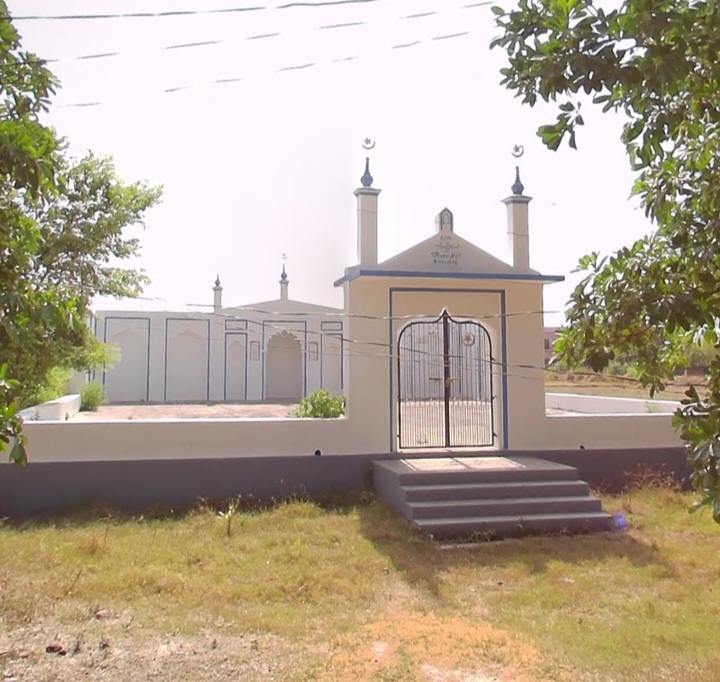
The Eidgah of Sarai Sadi stands as a modest yet enduring symbol of communal faith in the heart of rural Azamgarh, serving as the primary open-air prayer ground for Eid celebrations in this historic village. As a local mosque and assembly site, it reflects the simple, functional Islamic architecture typical of eastern Uttar Pradesh's countryside, fostering spiritual gatherings amid the fertile plains of the Tons River basin.
Nestled in the verdant landscape of Sarai Sadi village, within the culturally rich Azamgarh district, the Eidgah emerges as a poignant testament to the seamless integration of Islamic devotion into the agrarian life of 17th-century Uttar Pradesh. Founded amid the expansive parganas granted to early Muslim settlers following the establishment of Azamgarh in 1665 by Azam Khan—son of the converted Gautam Rajput Vikramajit—this prayer enclosure embodies the unadorned piety of local Muslim communities during the late Mughal period. Unlike the grand imperial Eidgahs of urban centers such as Delhi or Mathura, the Sarai Sadi Eidgah prioritizes communal utility over opulence, its open courtyard designed to accommodate hundreds for the solemn Eid al-Fitr and Eid al-Adha prayers, echoing the egalitarian spirit of Islamic worship. Architecturally, the site adheres to the traditional Eidgah form: a rectangular walled enclosure oriented toward the qibla, with a prominent mihrab niche carved into the western wall for the imam’s recitation. Constructed primarily from locally sourced bricks and lime mortar—a hallmark of regional Indo-Islamic building techniques—the structure features minimal embellishments, save for subtle arched openings that allow breezes from the nearby Tons River to cool the assembly during humid monsoons. The enclosing walls, rising modestly to about 10-12 feet, provide a sacred boundary while permitting the vast Gangetic plain to frame the horizon, symbolizing the boundless mercy invoked in Eid sermons. Though no inscriptions survive to pinpoint its exact inception, historical records of Azamgarh's formation suggest it was erected shortly after 1665, as part of the infrastructural endowments by Mughal subahdars to support the growing Muslim populace in pargana Sagri and adjacent areas. This era saw the proliferation of such sites along trade routes like the Uttarapath, where sarais (rest houses) often adjoined prayer grounds to serve pilgrims and merchants, underscoring the Eidgah's role in both spiritual and social cohesion. Over centuries, the Eidgah has weathered the vicissitudes of history—from the 1857 Revolt, in which Azamgarh's Rautara landowners rallied against British forces, to the independence movements that drew villagers into the Quit India fervor of 1942—yet it remains a steadfast anchor for Sarai Sadi's approximately 1,500 residents. Today, it continues to host not only Eid congregations but also occasional Jumu'ah prayers and community iftars during Ramadan, preserving rituals passed down through generations. Its preservation, though challenged by rural urbanization, highlights the resilience of vernacular Islamic heritage in Purvanchal, where such sites quietly narrate tales of faith's quiet endurance amid the rhythm of harvest and monsoon. For those tracing Uttar Pradesh's understated Islamic legacy, the Eidgah of Sarai Sadi offers a serene portal into a world where history unfolds not in marble grandeur, but in the shared silence of collective prostration.
Year of Built: Not Available
Address: 25FM+36X, Sarai Sadi, Uttar Pradesh 276128
Country: India
State: Uttar Pradesh
District: Azamgarh
Pincode: 276128
Longitude: 83.1838° E
Latitude: 26.0671° N