
Indo Islamic Heritage


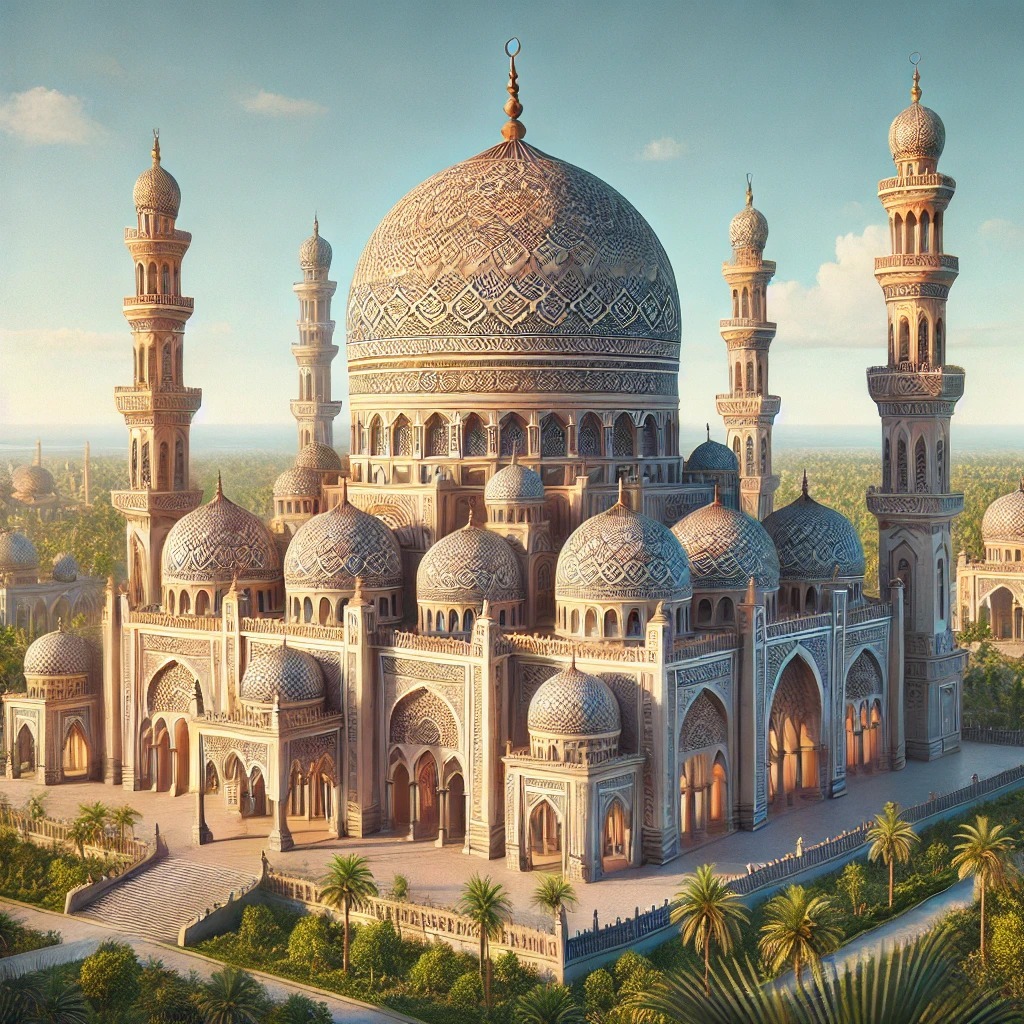
Masjid Al-Aqsa in Jamuri village, Azamgarh district, Uttar Pradesh, stands as a modest yet cherished local mosque embodying the enduring Islamic heritage of rural eastern India. Named after the revered Al-Aqsa Mosque in Jerusalem, it serves as a spiritual hub for the Jamuri community, fostering daily prayers, communal gatherings, and cultural continuity in a serene village setting. Constructed in the mid-20th century, the mosque reflects simple Indo-Islamic architectural influences, with a prayer hall, minaret, and ablution area, quietly preserving the faith's traditions amid the lush plains of the Tons River basin.
Nestled in the verdant heart of Jamuri village, a quiet hamlet in the Sathiyaon Block of Azamgarh tehsil, Masjid Al-Aqsa emerges as a poignant testament to the resilient Islamic legacy woven into the fabric of Uttar Pradesh's countryside. Azamgarh, founded in 1665 by Azam Khan—a local chieftain under Mughal influence—has long been a cradle of Islamic scholarship and piety, often hailed as the "City of Sages and Saints" for its constellation of Sufi shrines and madrasas. Within this historical tapestry, Jamuri, situated just 7-8 kilometers east of Azamgarh town along the fertile plains irrigated by the Tons River (a tributary of the Ghaghara), represents the unassuming rural extension of that legacy. Here, Masjid Al-Aqsa, a local edifice of devotion, quietly anchors the spiritual life of its residents, drawing its name from Islam's third holiest site in Jerusalem to evoke a sense of sacred connection across continents. The mosque's origins trace back to the 1950s, a transformative post-independence period when newly empowered Muslim communities in eastern Uttar Pradesh sought to reaffirm their identity through acts of piety and construction. Amid the socio-economic shifts following India's partition and the nation's rebirth, local benefactors and villagers pooled resources to erect this sanctuary, blending traditional Indo-Islamic motifs with practical simplicity suited to agrarian life. Unlike the grand imperial mosques of urban centers such as Delhi's Jama Masjid or Lucknow's Asafi Imambara, Masjid Al-Aqsa embodies the grassroots ethos of rural Islam—humble in scale yet profound in purpose. Its structure features a rectangular prayer hall oriented toward the qibla (the direction of Mecca), supported by sturdy brick walls plastered in white lime, and crowned by a modest dome or flat roof typical of mid-20th-century vernacular designs. A slender minaret rises at one corner, its call to prayer (adhan) echoing across Jamuri's 113-hectare expanse, where fields of rice, wheat, and sugarcane stretch toward the horizon. Adjacent facilities include a wudu (ablution) area and a small courtyard, fostering intimate congregational prayers and occasional community iftars during Ramadan. Historically, the mosque's establishment aligns with Azamgarh's broader narrative of Islamic resilience. The district, with its roots in Mughal-era settlements, witnessed waves of Muslim migration and cultural flourishing from the 17th century onward, including the arrival of Sufi orders that emphasized devotional practices. By the mid-20th century, as India grappled with secular nation-building, local mosques like Al-Aqsa became vital centers for preserving Quranic education and social cohesion. Though records of its exact founding ceremony are sparse—typical of village-level constructions reliant on oral histories—the mosque likely emerged from a waqf (endowment) initiative by Jamuri's Muslim families, many of whom trace descent from early settlers in the region. Its naming honors the Al-Aqsa in Jerusalem, symbolizing aspirations for unity in the ummah (global Muslim community), a poignant choice in an era of post-colonial identity formation. Today, Masjid Al-Aqsa remains a living monument to this heritage, accommodating the village's approximately 1,000 residents for five daily salah, Jumu'ah prayers, and festivals like Eid al-Fitr. Its unadorned mihrab (prayer niche) and minimalist mihman (pulpit) underscore a focus on spiritual purity over opulence, inviting worshippers to reflect amid the simplicity. As Azamgarh continues to evolve—its landscape dotted with over 500 historic mosques and shrines, from the 18th-century Shahi Masjid in the district headquarters to Sufi dargahs in nearby Mehnagar—Masjid Al-Aqsa stands as a microcosm of how Islam has adapted to India's rural rhythms. In an age of rapid urbanization, it endures as a beacon of continuity, where the adhan's timeless cadence harmonizes with the seasonal cycles of the Ganga-Yamuna doab, reminding all who visit of faith's quiet, unyielding presence in the everyday sacred.
Year of Built: Not Available
Address: 26WM+H23, Jamuri, Uttar Pradesh 276406
Country: India
State: Uttar Pradesh
District: Azamgarh
Pincode: 276406
Longitude: 82.2167° E
Latitude: 26.1167° N