
Indo Islamic Heritage


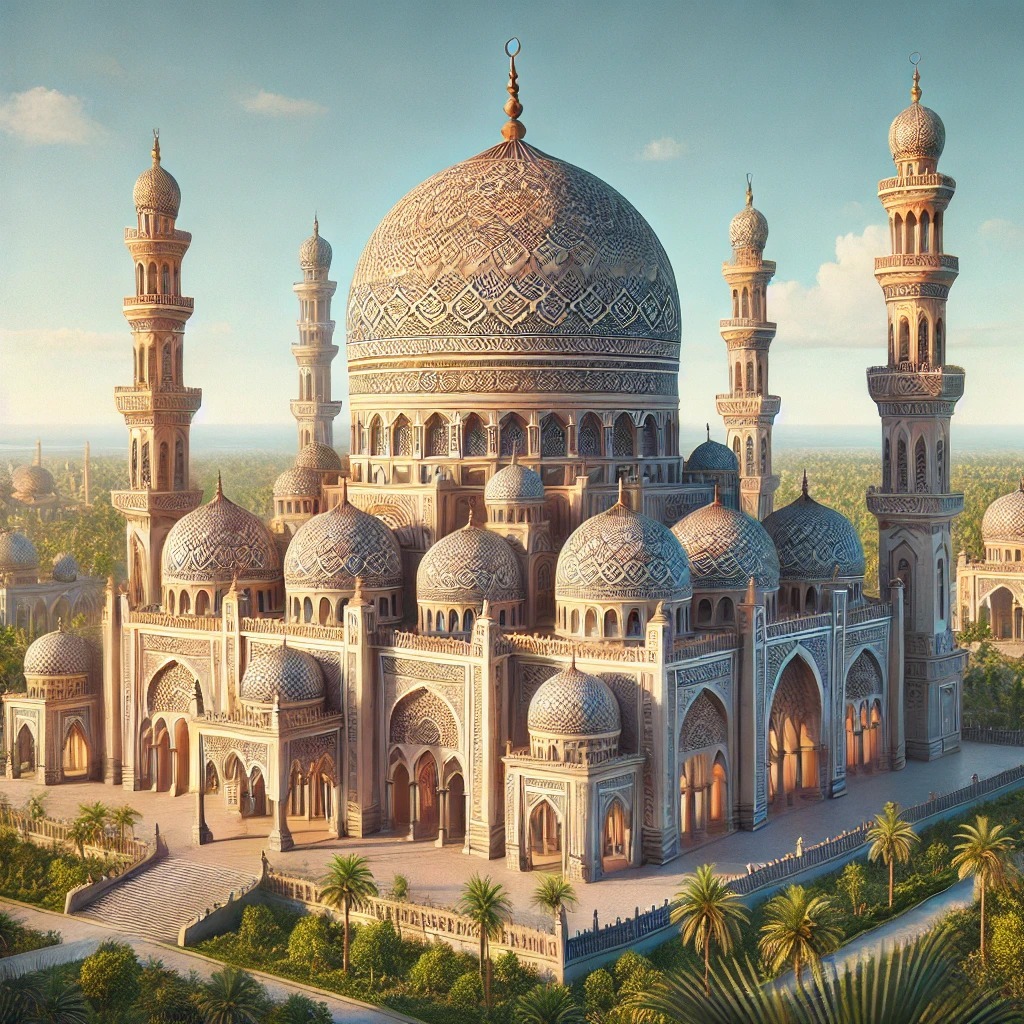
Masjid Abubaker Siddique Lohia stands as a modest yet cherished local mosque in the heart of Mubarakpur, Azamgarh district, Uttar Pradesh, serving as a vital center for the Muslim community in this historic weaving town. Named in honor of Abu Bakr al-Siddiq, the first Caliph of Islam and closest companion of Prophet Muhammad, it embodies the enduring legacy of Islamic devotion amid the region's rich cultural tapestry. With its simple architecture reflecting local traditions, the mosque facilitates daily prayers, community gatherings, and spiritual reflection, quietly contributing to the spiritual fabric of eastern Uttar Pradesh.
Nestled in the vibrant town of Mubarakpur, a renowned hub for silk saree production in Azamgarh district, Masjid Abubaker Siddique Lohia emerges as a poignant emblem of Islamic heritage and communal resilience. This unassuming local mosque, situated in the Lohia Mohalla neighborhood, draws its name from Abu Bakr al-Siddiq (573–634 CE), the revered first Caliph whose unwavering faith and leadership shaped the nascent Muslim ummah following the Prophet's passing. While grander monuments like the Jama Masjid of Agra or the iconic mosques of medieval Delhi dominate narratives of Islamic architecture in India, Masjid Abubaker Siddique Lohia represents the intimate, grassroots expressions of faith that have sustained Islam's presence in rural Uttar Pradesh for centuries. Mubarakpur itself traces its roots to the 14th century, when it flourished as a center for fine silk weaving and zari embroidery, attracting artisans and traders under the patronage of regional Muslim rulers. The town's Islamic landmarks, including the nearby Mosque of Raja Mubarak Shah, underscore a legacy of religious harmony and cultural exchange in this fertile Gangetic plain. Within this context, Masjid Abubaker Siddique Lohia likely originated as a response to the growing needs of the local Muslim population during the early 20th century—a period marked by economic vitality from the saree trade and social shifts under British rule. Though precise archival records remain elusive, oral histories among residents point to its establishment around the 1920s, coinciding with community efforts to formalize places of worship amid rapid urbanization. This era saw many such mosques built with contributions from weavers and merchants, using locally sourced bricks and lime mortar to create functional spaces that prioritized devotion over opulence. Architecturally, the mosque adheres to the understated Indo-Islamic style prevalent in eastern Uttar Pradesh: a rectangular prayer hall oriented toward the qibla, flanked by a modest minaret that calls the faithful to prayer five times daily. Its facade features subtle geometric motifs etched into plaster, echoing the intricate patterns of Mubarakpur's famed sarees, while an open courtyard allows for congregational prayers during festivals like Eid-ul-Fitr and Eid-ul-Adha. The mihrab, the niche indicating Mecca's direction, is adorned with simple Arabic calligraphy invoking verses from the Quran, serving as a focal point for the imam's sermons on themes of unity and piety—core tenets exemplified by Abu Bakr's life. Unlike imperial mosques with expansive domes or marble inlays, this structure's humility fosters an intimate atmosphere, where the rustle of prayer mats and the murmur of recitations blend with the distant hum of handlooms from nearby households. Beyond its physical form, Masjid Abubaker Siddique Lohia pulses with the rhythms of daily life in Mubarakpur. It hosts not only the obligatory salahs but also educational sessions for youth on Quranic studies and the seerah (biography) of the Prophet's companions, reinforcing Abu Bakr's role as a model of steadfastness during trials like the Battle of the Trench. Community iftars during Ramadan transform the courtyard into a space of shared meals, drawing families from Lohia Mohalla and beyond, while charitable initiatives—such as aid for the needy—echo the Caliph's emphasis on social welfare. In a region where Islam has intertwined with local customs since the Delhi Sultanate's influence in the 13th century, this mosque quietly preserves rituals that bridge historical migrations of Sufi saints and traders with contemporary devotion. Today, as Mubarakpur's population exceeds 70,000 and its sarees grace global markets, Masjid Abubaker Siddique Lohia endures as a sanctuary of solace amid modernity's pace. Visitors, though few compared to tourist-laden sites, find in its serene environs a microcosm of India's pluralistic soul—where the adhan's call harmonizes with temple bells from the adjacent Thakurji Mandir. For those tracing the threads of Islamic history in Uttar Pradesh, this local gem offers a profound reminder: true historical significance lies not in grandeur, but in the quiet fidelity of spaces that have witnessed generations kneel in submission to the Divine.
Year of Built: Not Available
Address: Kauriya, Mubarakpur, Uttar Pradesh 276404
Country: India
State: Uttar Pradesh
District: Azamgarh
Pincode: 276404
Longitude: 83.2900° E
Latitude: 26.0900° N