
Indo Islamic Heritage


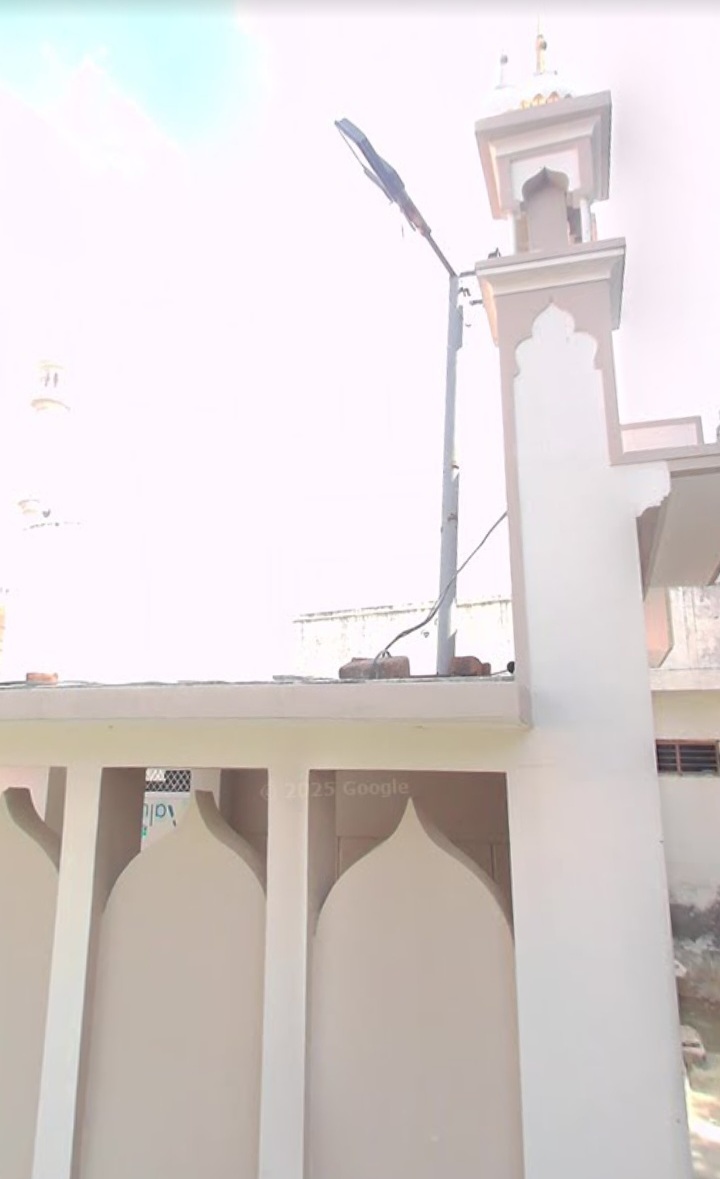
Jadeed Masjid, located in the serene village of Bamhaur in Azamgarh district, Uttar Pradesh, stands as a modest yet cherished local mosque serving the Muslim community. Built in the early 20th century, it embodies simple Islamic architectural elements adapted to rural life, fostering daily prayers and communal gatherings in a region steeped in historical Islamic heritage.
Nestled amid the verdant fields and quiet hamlets of Bamhaur village, Jadeed Masjid emerges as a poignant emblem of local Islamic devotion in the heart of Azamgarh, a district renowned for its deep-rooted connections to India's Sufi and Mughal past. Though not a grand imperial edifice like the Jama Masjids of Delhi or Fatehpur Sikri, this unassuming mosque holds its own quiet significance as a community anchor, reflecting the enduring spirit of grassroots Islamic practice in rural Uttar Pradesh. The name "Jadeed," meaning "new" in Urdu, hints at its relatively recent origins compared to the ancient shrines dotting the region, yet it weaves seamlessly into the fabric of Azamgarh's historical landscape—a land once part of the ancient Kosala kingdom and later shaped by Mughal influences during the 17th century. Constructed around the 1920s, during the waning years of British colonial rule, Jadeed Masjid was likely erected by local Muslim benefactors responding to the growing needs of Bamhaur's population. This period marked a time of subtle resurgence in community-led religious infrastructure across eastern Uttar Pradesh, as villages sought to preserve Islamic traditions amid socio-political flux. The mosque's architecture, while straightforward, draws from vernacular Indo-Islamic styles prevalent in the Gangetic plains: a rectangular prayer hall oriented toward the qibla, supported by sturdy brick walls plastered in lime, and crowned with a modest dome or flat roof typical of smaller rural mosques. Flanking the entrance are twin minarets, slender and unadorned, which serve both functional and symbolic purposes—calling the faithful to prayer while echoing the geometric elegance of Islamic design. The mihrab, the niche indicating the direction of Mecca, is simply arched, often embellished with subtle calligraphy from the Quran, underscoring the mosque's role as a space of spiritual focus rather than ostentatious display. At its core, Jadeed Masjid functions as the spiritual nucleus of Bamhaur, a village of approximately 2,000 residents primarily engaged in agriculture. It hosts the five daily salah, with special vibrancy during Jumu'ah (Friday) congregations, where villagers gather under the shade of adjacent neem trees for sermons on faith and community welfare. During Ramadan and Eid, the courtyard—paved with local stone and occasionally used for overflow prayers—transforms into a hub of iftar feasts and celebrations, strengthening social bonds in this close-knit agrarian society. The mosque's maintenance, handled by a local waqf committee, ensures its preservation, with periodic whitewashing and repairs funded through community contributions, a testament to the egalitarian ethos of Islamic philanthropy. Geographically, Bamhaur lies about 15 kilometers northeast of Azamgarh town, accessible via narrow rural roads lined with mustard fields and mango groves. Its coordinates (26.0721° N, 83.2427° E) place it in the fertile alluvial plains of the Tons River basin, where the subtropical climate nurtures a landscape that has sustained generations of worshippers. The pincode 276406 links it to the broader postal network, facilitating connections to Azamgarh's tehsil headquarters and beyond, while underscoring its integration into Uttar Pradesh's administrative mosaic. In the broader tapestry of India's Islamic historical sites, Jadeed Masjid may lack the monumental scale of sites like the Bara Imambara in Lucknow or the dargahs of Ajmer, but it exemplifies the decentralized vitality of local mosques that have quietly sustained the faith for over a century. As a repository of oral traditions and daily rituals, it invites reflection on how ordinary spaces become sacred through collective memory and devotion, offering a humble counterpoint to the grandeur of empire-built wonders. For those tracing the subtle threads of Islamic history in rural India, Jadeed Masjid in Bamhaur remains a vital, if understated, chapter—one that continues to echo the adhan across the fields at dawn.
Year of Built: Not Available
Address: 36JW+6VQ, Bamhaur, Uttar Pradesh 276406
Country: India
State: Uttar Pradesh
District: Azamgarh
Pincode: 276406
Longitude: 83.2427° E
Latitude: 26.0721° N