
Indo Islamic Heritage


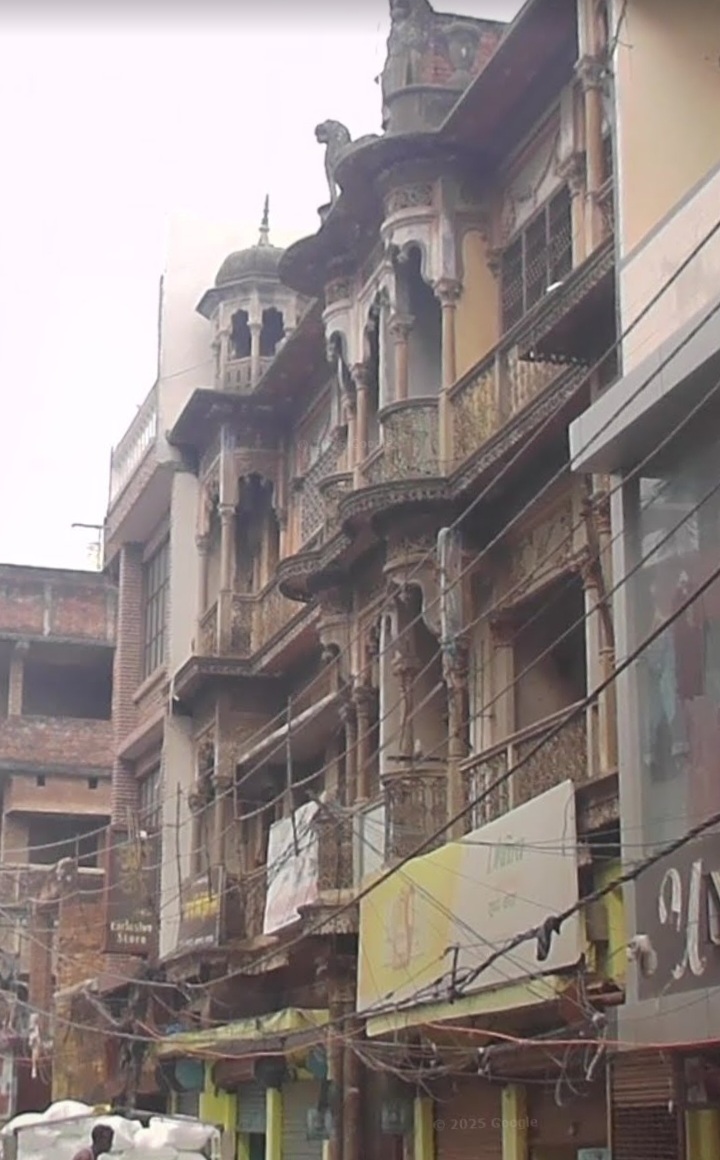
Masjid Purani Kotwali is a modest yet enduring local mosque nestled in the historic heart of Azamgarh, Uttar Pradesh, adjacent to the remnants of the town's old police outpost (kotwali). Serving as a vital spiritual hub for the Muslim community in the Sita Ram locality, it embodies the quiet resilience of Islamic heritage in a region shaped by ancient Kosala influences and later Mughal-era settlements. With its simple architecture and central location, the mosque facilitates daily prayers and communal gatherings, reflecting the syncretic cultural fabric of eastern Uttar Pradesh.
In the verdant expanse of eastern Uttar Pradesh, where the ancient kingdom of Kosala once flourished amid the fertile plains of the Tons and Majhuee rivers, lies Azamgarh—a district steeped in the echoes of sages, saints, and shifting empires. Founded in 1665 by Azam, son of the Rajput convert Vikramajit, the town emerged as a beacon of Indo-Islamic synthesis, drawing from the Gautam Rajput lineages of Mehnagar who embraced Islam while retaining ties to their ancestral lands. It is within this tapestry of transformation that Masjid Purani Kotwali stands, a humble sentinel of faith overlooking the Purani Kotwali, the "old kotwali" or police outpost that once enforced colonial and pre-colonial order in the bustling bazaars of Jama Masjid Road. The mosque's origins are intertwined with Azamgarh's nascent years, a period when Mughal influence waned and local nawabs asserted autonomy amid the declining empire. Though precise inscriptional evidence remains elusive—likely due to the mosque's status as a community-built structure rather than a grand imperial commission—its establishment is reasonably traced to the late 17th century, contemporaneous with the town's founding. This era saw the proliferation of small masjids across the Purvanchal region, erected by devout locals to anchor prayer and piety in everyday life. Positioned in the Sita Ram locality, named perhaps for the revered Hindu figures of Rama and Sita yet hosting this Islamic edifice, the site exemplifies the region's harmonious religious coexistence, where Hindu epics and Islamic traditions have long coexisted along the same riverine corridors that nurtured Buddha's contemporaries. Architecturally, Masjid Purani Kotwali eschews the opulent domes and minarets of iconic Mughal masterpieces like Delhi's Jama Masjid, favoring instead a restrained vernacular style suited to its provincial context. Its prayer hall, oriented toward the qibla, features unadorned brickwork and arched openings that allow gentle breezes from the surrounding Takia neighborhood to filter through, cooling the faithful during the humid summers. The mihrab, the niche denoting Mecca's direction, is a focal point of subtle craftsmanship, possibly adorned with faded geometric motifs echoing the Islamic aversion to idolatry while celebrating infinite patterns of divine order. Flanking the entrance, modest ablution areas facilitate wudu, the ritual purification that precedes salat, underscoring the mosque's role as a living institution rather than a static monument. Over centuries, it has weathered monsoons, colonial surveys, and the fervor of India's independence movement, its walls bearing silent witness to the 1857 uprising that rippled through Azamgarh's streets. Today, at coordinates 26.0735° N, 83.1835° E—mere heartbeats from the district's geographic core—the mosque pulses with quiet devotion. Devotees from the nearby Sita Ram and Chakla wards gather five times daily, their adhan calls mingling with the calls of koels in the mango groves. During Ramadan and Eid, the courtyard swells with iftar feasts shared under starlit skies, fostering bonds that transcend the mosque's modest footprint. As Azamgarh evolves into a modern administrative hub, Masjid Purani Kotwali remains a poignant reminder of the district's layered past: a local gem where the faith of Islam, introduced through Rajput conversions and sustained by community resolve, continues to illuminate the path of the faithful. In an age of rapid change, it stands as a testament to enduring spirituality, inviting reflection on the quiet sacred spaces that define India's pluralistic soul.
Year of Built: Not Available
Address: 35CM+3W9, Rajesultanpur - Azamgarh Rd, Puranikotwali, Sita Ram, Azamgarh, Uttar Pradesh 276001
Country: India
State: Uttar Pradesh
District: Azamgarh
Pincode: 276001
Longitude: 83.1835° E
Latitude: 26.0735° N