
Indo Islamic Heritage


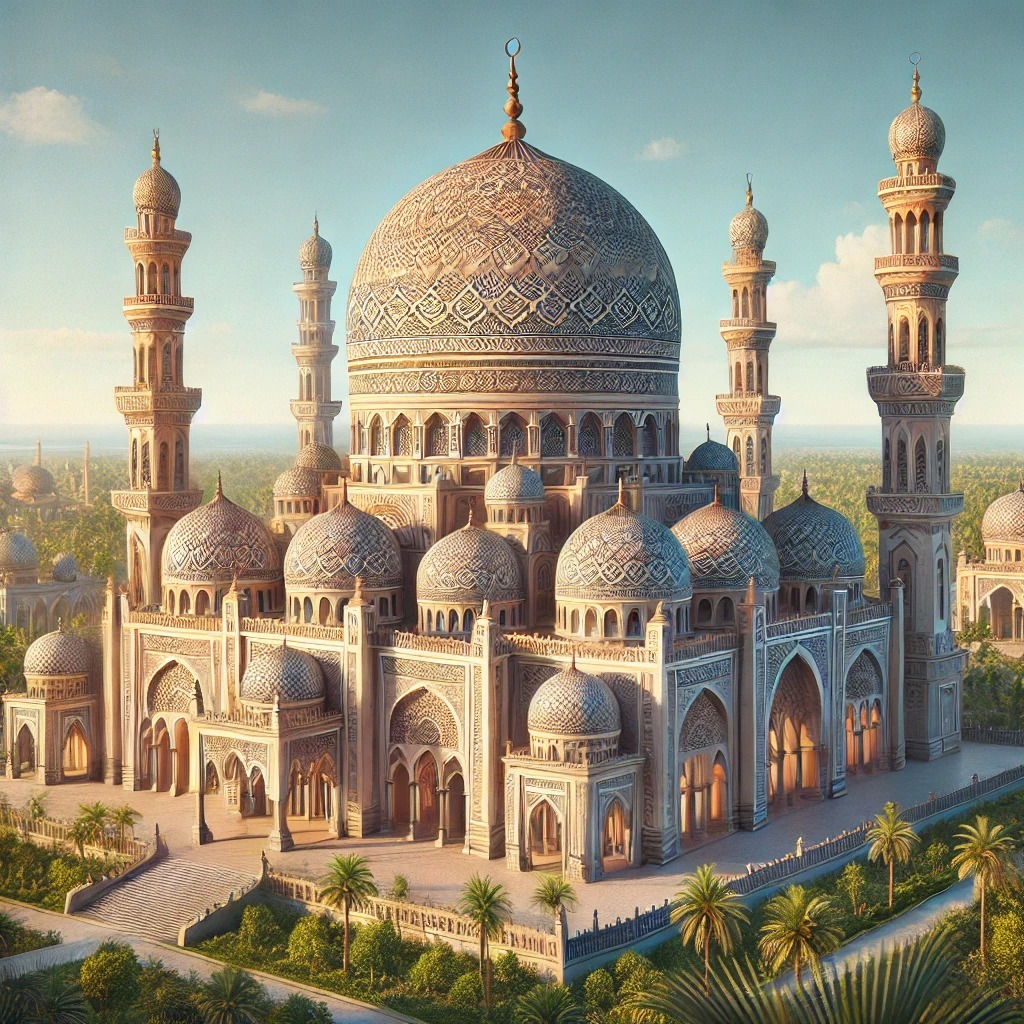
Jama Masjid Bankat, nestled in the serene village of Bankat near Tanduwa in Azamgarh district, Uttar Pradesh, stands as a modest yet enduring symbol of local Islamic heritage. This unpretentious Friday mosque serves the spiritual needs of the surrounding rural community, embodying the simplicity and devotion characteristic of regional religious architecture in eastern Uttar Pradesh.
In the verdant heart of Azamgarh district, where the fertile plains of Uttar Pradesh stretch under vast skies, lies the quiet village of Bankat—a place where history whispers through the fields and the call to prayer echoes across modest hamlets. Here, amid the patchwork of rice paddies and sugarcane groves, stands Jama Masjid Bankat, a local Friday mosque that anchors the spiritual life of its community. Tucked near the neighboring hamlet of Tanduwa, this unassuming edifice represents the grassroots evolution of Islamic worship in rural Purvanchal, far removed from the grandeur of imperial monuments yet deeply intertwined with the daily rhythms of faith and fellowship. Though precise records of its founding remain elusive—typical of many village mosques shaped by oral traditions and communal efforts—Jama Masjid Bankat is believed to have been constructed in the late 19th or early 20th century, aligning with the period of heightened local mosque-building during British colonial rule and the early independence era. This timeframe saw a surge in such structures across eastern Uttar Pradesh, often funded by agrarian landowners and devout villagers pooling resources to create spaces for collective prayer. Unlike the opulent Mughal-era mosques of urban centers like Delhi or Agra, Jama Masjid Bankat embodies vernacular simplicity: its walls, likely of baked brick plastered with lime, rise modestly to shelter a prayer hall oriented toward Mecca. The mihrab, the niche indicating the qibla, would have been handcrafted with care, perhaps adorned with subtle geometric motifs drawn from regional Islamic artistry, while an open courtyard allows the faithful to gather for Jumu'ah prayers under the open sky. The mosque's architecture reflects the pragmatic adaptations of rural builders in Azamgarh, a district long known for its resilient Muslim populace tracing roots to medieval migrations and Sufi influences. Low-domed pavilions, if present, would echo the flat-roofed designs common in the Gangetic plain, designed to withstand monsoons and the humid subtropical climate. Minarets, if any, are slender and functional rather than ornate, serving more as calls to prayer than architectural statements. Over the decades, the structure has likely undergone periodic renovations—repointing of walls, replacement of worn mihrabs—sustained by the village's imams and elders, ensuring its role as a living sanctuary. At its core, Jama Masjid Bankat is more than stone and mortar; it is the pulsating heart of community devotion. On Fridays, villagers from Bankat and nearby Tanduwa converge here, their footsteps mingling with the azan's resonant timbre, fostering bonds that transcend generations. In a region where Islam has flourished alongside Hindu traditions for centuries, the mosque quietly upholds rituals of taraweeh during Ramadan and Eid celebrations, its courtyard alive with the scent of incense and shared iftar meals. As a protected vestige of local history, it invites reflection on the enduring legacy of faith in India's countryside—where even the humblest places of worship bear witness to the quiet strength of belief. For those seeking the authentic pulse of rural Islamic heritage, Jama Masjid Bankat offers a poignant, unadorned portal into that timeless narrative.
Year of Built: Not Available
Address: 46JJ+6W2, Tenduwa, Uttar Pradesh 276125
Country: India
State: Uttar Pradesh
District: Azamgarh
Pincode: 276125
Longitude: 83.1833° E
Latitude: 26.0833° N