
Indo Islamic Heritage


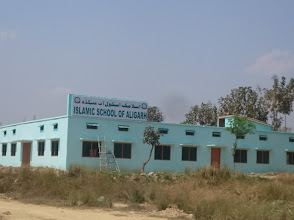
The Islamic School of Aligarh, located in Saraimeer (also spelled Sarai Meer), Azamgarh district of Uttar Pradesh, is a historic madrasa and mosque complex renowned for its contributions to Islamic scholarship. Established in 1908 as Madrasatul Islah, it integrates Quranic studies with modern subjects, serving as a key center for oriental and Islamic learning.
Nestled in the verdant landscapes of eastern Uttar Pradesh, the Islamic School of Aligarh—formally known as Madrasatul Islah—stands as a venerable testament to the enduring legacy of Islamic education in India. Founded in the early 20th century amid the fervor of the Aligarh Movement's push for modernized Muslim learning, this institution in Saraimeer, Azamgarh, embodies the harmonious fusion of traditional Islamic pedagogy with contemporary academic disciplines. Its mosque, an integral part of the complex, serves not only as a place of worship but as the spiritual heart of the madrasa, where generations of scholars have gathered for prayer, reflection, and the dissemination of Quranic wisdom. The origins of Madrasatul Islah trace back to 1908, when it was established by the visionary scholar Maulana Muhammad Shafi, with the active involvement of local ulama and prominent religious seminaries in the region. This founding year marked a pivotal moment in Azamgarh's intellectual landscape, a district long revered as the "City of Sages and Saints" for its rich tradition of Islamic scholarship. Under the subsequent guardianship of luminaries such as Allama Shibli Nomani—a poet, historian, and co-founder of the Darul Musannefin Shibli Academy—and Maulana Hamiduddin Farahi, a pioneering Quranic exegete, the madrasa flourished into one of India's oldest and most distinguished Islamic seminaries. Nomani's influence, in particular, infused the institution with a rigorous emphasis on Arabic literature and historical studies, while Farahi's methodologies centered the curriculum on a holistic interpretation of the Quran, positioning it as the lens through which all other sciences—be they religious or secular—are understood. Architecturally modest yet profoundly functional, the mosque within the Madrasatul Islah complex reflects the simplicity of Indo-Islamic design prevalent in rural Uttar Pradesh during the early colonial era. Constructed concurrently with the madrasa in 1908, it features a prayer hall oriented toward the qibla, with arched mihrab and minbar crafted from local materials, evoking the unadorned piety of traditional madrasa mosques. The structure's courtyard, surrounded by student quarters and a library, fosters an environment conducive to communal worship and scholarly discourse. Though not as opulent as urban Mughal-era mosques, its enduring presence underscores the madrasa's role as a living sanctuary, where the adhan echoes daily amid the rustle of mango groves and the distant hum of the Ghaghara River. What sets Madrasatul Islah apart is its innovative syllabus, a hallmark of its historical significance. Unlike rigidly traditional institutions, it mandates a balanced curriculum that places Quranic studies at the core while incorporating English, mathematics, science, social sciences, and political science. This approach, born from the reformist zeal of the Aligarh Movement, has produced alumni who have advanced Islamic thought globally, including scholars like Zafarul Islam Islahi, who later contributed to Aligarh Muslim University. The madrasa's full-fledged hostel, library, and facilities for extracurricular activities further enhance its role as a nurturing hub, ensuring that Islamic values of ethics, wisdom, and service permeate every aspect of education. Today, over a century since its inception, the Islamic School of Aligarh remains a beacon of verified historical importance, drawing seekers of knowledge to its serene precincts in Saraimeer. Visitors to this site, accessible via the Azamgarh-Mau road, can appreciate its quiet dignity—a reminder of how faith and intellect have intertwined to shape India's pluralistic heritage. As sunlight filters through the mosque's latticed windows during fajr prayers, one senses the timeless rhythm of a institution that continues to illuminate minds, much as it has since 1908.
Year of Built: 1908.
Address: Beena para Road, Rajapur Sikrour,, Sarai Meer, Azamgarh, Uttar Pradesh 276305
Country: India
State: Uttar Pradesh
District: Azamgarh
Pincode: 276305
Longitude: 83.1333° E
Latitude: 26.0667° N