
Indo Islamic Heritage


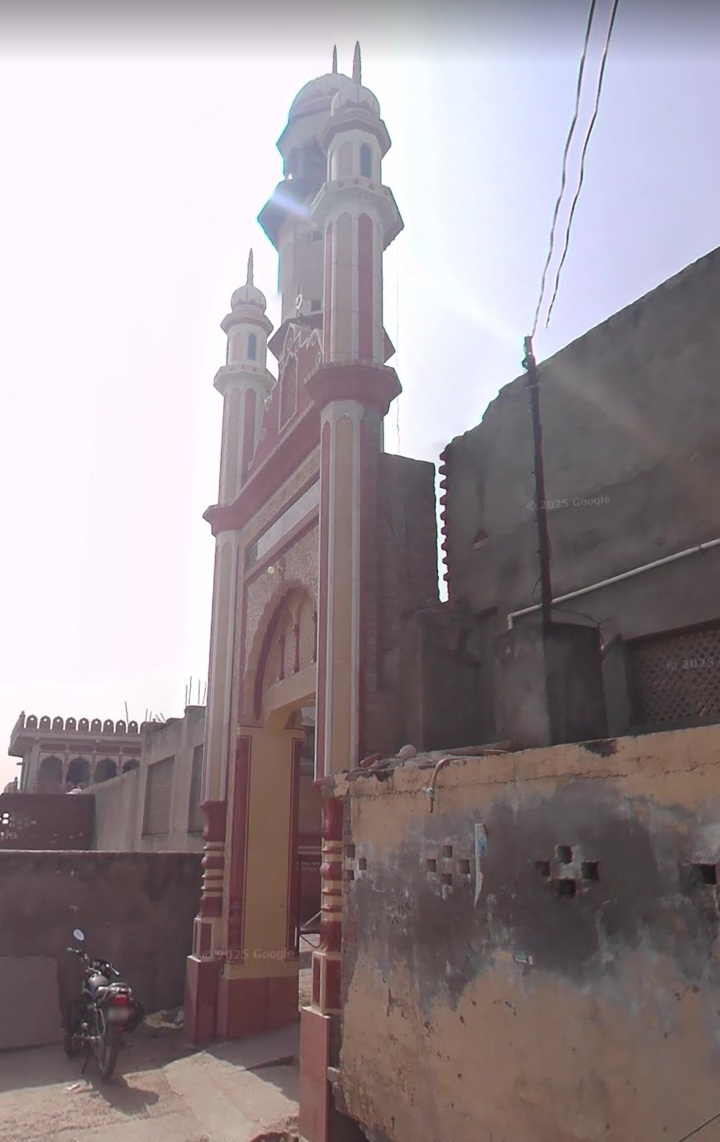
Masjid Jannatul Ferdous is a modest local mosque nestled in the heart of Desraj Mohalla, Baghpat, serving as a serene place of worship for the Muslim community in this historic town on the banks of the Yamuna River. Reflecting the simple yet enduring architectural traditions of rural Uttar Pradesh, it stands as a quiet testament to the region's longstanding Islamic heritage amid a landscape rich in Mughal-era influences.
In the verdant plains of western Uttar Pradesh, where the Yamuna River has long nurtured fertile lands and ancient settlements, Baghpat emerges as a district steeped in history, its name evoking the tiger-haunted groves (Vyaghrasth) of yore and the eloquent discourses (Vakyaprasth) that once echoed through its courts during the Mughal era. Amid this tapestry of agrarian life and resilient communities, Masjid Jannatul Ferdous in Desraj Mohalla quietly embodies the understated grace of local Islamic architecture—a humble edifice that anchors the spiritual rhythms of its neighborhood without the grandeur of imperial monuments. Named after Jannat al-Firdaws, the highest paradise in Islamic eschatology symbolizing divine reward and eternal tranquility, the mosque's very title invokes a profound sense of aspiration and peace. Constructed in an era when Baghpat transitioned from a tehsil under Meerut to a distinct district in 1997—though its roots trace back to the 16th-century Mughal expansions under emperors like Akbar—the masjid likely emerged in the 18th or 19th century, a period marked by the proliferation of community-built prayer halls across rural Doab. While precise construction dates elude archival records, this timeframe aligns with the architectural patterns seen in Baghpat's other modest mosques, which blend indigenous brickwork with subtle Indo-Islamic motifs, fostering spaces for daily salah and communal iftars rather than ostentatious display. The mosque's design adheres to the pragmatic vernacular style prevalent in Uttar Pradesh's smaller towns: a rectangular prayer hall oriented toward the qibla, constructed primarily from locally sourced bricks plastered with lime, and crowned by a modest dome or flat roof supported by sturdy arches. Its facade, facing the narrow lanes of Desraj Mohalla, features simple mihrab niches and perhaps faint traces of geometric stucco patterns—echoes of the more elaborate terracotta work found in nearby Sharqi-era structures like Jaunpur's Atala Masjid, but scaled down for intimate use. Unlike the sprawling complexes of Fatehpur Sikri's Jama Masjid or Delhi's iconic counterpart, Masjid Jannatul Ferdous prioritizes functionality: an open courtyard for wudu, shaded verandas for respite during summer heats, and ablution facilities drawing from the area's abundant groundwater. This unpretentious form not only withstands the subtropical climate but also mirrors the ethos of Baghpat's multi-faith ethos, where Hindu temples and Jain shrines coexist harmoniously alongside such mosques, underscoring the district's role as a crossroads of religious traditions since medieval times. At its core, the masjid serves as more than a site of ritual; it is the pulsating heart of Desraj Mohalla's Muslim residents, who form a vibrant thread in Baghpat's diverse social fabric. Here, the adhan calls the faithful to prayer five times daily, weaving the cadence of Quranic recitation into the hum of agricultural life. During Ramadan, the mosque transforms into a beacon of communal solidarity, hosting taraweeh prayers under starlit skies and breaking fasts with shared dates and sheer khurma. Its imam, often a local scholar versed in Hanafi jurisprudence, leads not only worship but also modest madrasa sessions for children, preserving oral traditions of tafsir and hadith amid the challenges of modern education. In a region where Islam arrived with Sufi missionaries in the 12th century and flourished under Mughal patronage—evident in Baghpat's proximity to Akbar's Agra—the masjid quietly upholds this legacy, fostering a sense of continuity for families whose forebears may have tilled the same fields under nawabi rule. Though overshadowed by Uttar Pradesh's more famed Islamic landmarks, such as the poignant Gyanvapi Mosque in Varanasi or the majestic Taj Mahal in Agra, Masjid Jannatul Ferdous holds its own quiet historical resonance. It represents the grassroots endurance of faith in post-Mughal India, where local benefactors—perhaps Jat or Muslim zamindars—commissioned such structures to affirm community identity amid shifting political tides. Today, at coordinates 28.9444° N, 77.2188° E within pincode 250609, it invites pilgrims and locals alike to pause in reflection, offering a microcosm of how Islam has woven itself into the warp and weft of Uttar Pradesh's rural soul. In an age of rapid urbanization, this unassuming mosque endures as a living archive, its minarets silhouetted against the Yamuna's flow, whispering of paradises both promised and present.
Year of Built: Not Available
Address: W6MF+JF2, Desraj Mohalla, Baghpat, Uttar Pradesh 250609
Country: India
State: Uttar Pradesh
District: Baghpat
Pincode: 250609
Longitude: 77.2188° E
Latitude: 28.9444° N