
Indo Islamic Heritage


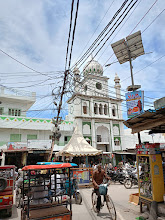
Phoons Wali Masjid, a modest yet enduring local mosque nestled in the heart of Baraut town, Baghpat district, Uttar Pradesh, stands as a quiet testament to the region's Islamic heritage. Situated in the bustling Naya Bazar area, it serves as a vital community hub for prayer and reflection, embodying the simple architectural ethos of vernacular mosques in rural Uttar Pradesh.
Tucked away in the vibrant lanes of Naya Bazar, Phoons Wali Masjid emerges as an unassuming jewel among India's myriad Islamic sites, particularly in the fertile Doab landscape of Uttar Pradesh where Muslim communities have flourished since the Delhi Sultanate era. This local mosque, though not as grandiose as the imperial structures of Agra or Delhi, encapsulates the essence of grassroots Islamic architecture—functional, community-oriented, and deeply woven into the daily rhythms of small-town life in Baraut, a historic trading hub just 50 kilometers from the national capital. The mosque's name, "Phoons Wali Masjid" (often rendered as "Phoos Wali Masjid" in local dialects), likely derives from a historical or linguistic nuance tied to the surrounding bazaar, possibly referencing a family lineage, a notable benefactor, or a phonetic echo of the area's pastoral roots—though precise etymology eludes documented sources. Positioned at the coordinates 29.10°N latitude and 77.27°E longitude, it occupies a strategic spot in Baraut's old quarter, where the hum of merchants and the call to prayer have intertwined for generations. The full address—Naya Bazar, Baraut, Baghpat, Uttar Pradesh 250611—places it within PIN code 250611, a postal zone encompassing Baraut's central commercial and residential enclaves, facilitating easy access for the town's diverse Muslim populace. While comprehensive records on its construction year are scarce, reflecting the challenges of archiving modest local edifices, the mosque's presence aligns with the broader wave of Islamic building activity in Baghpat during the 16th to 18th centuries under Mughal influence. Baghpat itself, with roots tracing back to the Mahabharata-era Vyagraprastha, saw accelerated Islamic development post-1857, when the region solidified as a tehsil headquarters amid the aftermath of the Indian Rebellion. It is plausible that Phoons Wali Masjid was erected in this transitional phase, perhaps as a response to the growing Rohilla and Mughal settler communities, though no inscriptions or plaques confirm an exact date. This absence of fanfare underscores its role not as a monumental landmark but as a living sanctuary, where the faithful gather without the pomp of royal patronage. Architecturally, Phoons Wali Masjid adheres to the understated vernacular style prevalent in Uttar Pradesh's countryside mosques, diverging from the opulent red sandstone and marble of grander sites like the Jama Masjid in Delhi. Constructed likely from locally sourced bricks and lime plaster, it features a compact prayer hall oriented toward the qibla (Mecca-facing wall), with a simple mihrab niche for the imam during sermons. The facade, facing the lively bazaar, incorporates arched openings and minimal stucco ornamentation, allowing natural light to filter into the interior while shielding worshippers from the dust of passing carts. Flanking the main structure are modest ablution areas and perhaps a small courtyard, fostering communal ablutions and post-prayer gatherings—hallmarks of mosques designed for intimate, neighborhood devotion rather than mass congregations. Beyond its physical form, the mosque's historical significance lies in its role as a cultural anchor in Baraut's socio-religious fabric. In a district where the Yamuna River has long irrigated fields and minds alike, Phoons Wali Masjid has quietly facilitated the transmission of Islamic traditions, from Ramadan iftars to Eid celebrations, amid the town's agrarian economy of sugarcane and wheat. Its endurance through colonial shifts, partition upheavals, and modern urbanization speaks to the resilience of local Islamic sites, which often outlast their more celebrated counterparts by virtue of their embeddedness in everyday life. Today, it remains a beacon for Baraut's residents, inviting reflection on the harmonious blend of faith and locality that defines India's pluralistic heritage. For those tracing the quieter threads of Islamic history in the heartland, Phoons Wali Masjid offers a poignant reminder: true sanctity often resides not in splendor, but in steadfast service to the soul of the community.
Year of Built: Not Available
Address: 4726+3Q7, SaraI Bazaar, Baraut, Uttar Pradesh 250611
Country: India
State: Uttar Pradesh
District: Baghpat
Pincode: 250611
Longitude: 77.27°E
Latitude: 29.10°N