
Indo Islamic Heritage


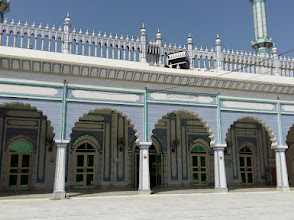
Nestled in the rural heart of Hilwari village, Jama Masjid Hilwari stands as a modest yet enduring symbol of Islamic heritage in Baghpat district. This local congregational mosque serves as the spiritual focal point for the village's predominantly agrarian community, reflecting the syncretic cultural fabric of western Uttar Pradesh through its simple brick-and-plaster construction reminiscent of late Mughal provincial architecture.
In the verdant plains of Baghpat, where the Yamuna River's gentle curve has long nurtured fertile fields and ancient settlements, Jama Masjid Hilwari emerges as a quiet testament to the enduring legacy of Islamic devotion amid rural tranquility. Situated in Hilwari village—a settlement of over 8,000 souls in Baraut tehsil, approximately 5 km from the bustling town of Baraut and 23 km from Baghpat's district headquarters—this unassuming mosque embodies the grassroots evolution of faith in a region steeped in historical layers from the Mahabharata era to Mughal dominion. Though precise records of its founding remain elusive in broader historical annals, the mosque's design aligns with the provincial adaptations of Mughal aesthetics prevalent in 18th- to 19th-century Uttar Pradesh. Constructed primarily from locally sourced bricks plastered with lime, it features a compact prayer hall oriented toward Mecca, flanked by modest minarets that rise just enough to call the faithful to prayer across the surrounding farmlands. The central mihrab, etched with subtle geometric motifs, and the open courtyard—shaded by neem trees—evoke the communal ethos of jama'ah, the Friday congregational prayer that defines its name. Unlike the grand imperial mosques of Delhi or Agra, Jama Masjid Hilwari eschews opulent marble or towering domes, favoring instead a functional humility that mirrors the village's agrarian rhythm: prayers here pause amid the harvest cycles, with the adhan blending into the rustle of sugarcane fields. Historically, Baghpat's landscape has been a crossroads of empires, from the Doab's strategic role in Mughal campaigns to the Rohilla Afghans' 18th-century strongholds nearby. While no direct patronage by emperors or nawabs is attributed to this site, its presence underscores the organic spread of Islam in rural Doab communities, where Sufi influences and local benefactors quietly fostered places of worship. The mosque's endurance through colonial transitions and post-independence land reforms speaks to its role as a social anchor, hosting not only daily salat but also village eid celebrations and quiet iftars during Ramadan. Today, it remains under the stewardship of local imams, preserving oral traditions of piety amid Hilwari's evolving demographics—where over 58% literacy and a workforce tied to cultivation reflect a community balancing tradition with modernity. Visiting Jama Masjid Hilwari offers a rare glimpse into India's understated sacred spaces: a realm where history whispers through weathered walls, and devotion unfolds under the vast Uttar Pradesh sky. For those tracing the threads of Islamic heritage beyond urban icons, this local gem invites reflection on faith's quiet resilience in the countryside.
Year of Built: Not Available
Address: Baraut-Hilwari Road, Hilwari, Uttar Pradesh 250611
Country: India
State: Uttar Pradesh
District: Baghpat
Pincode: 250611
Longitude: 77.2667° E
Latitude: 29.1833° N