
Indo Islamic Heritage


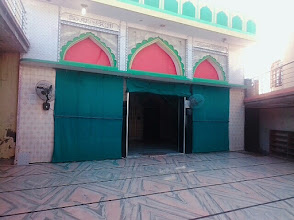
The Badi Masjid, a prominent local mosque in Baraut, Baghpat district, Uttar Pradesh, stands as a modest yet enduring symbol of Islamic heritage in this agrarian town. Nestled near Rashidiya Hospital, it serves as a vital community prayer space amid Baraut's multi-religious fabric, reflecting the town's historical blend of Hindu, Jain, and Muslim influences.
Tucked away in the bustling heart of Baraut, a tehsil town in Uttar Pradesh's Baghpat district, the Badi Masjid—meaning "Great Mosque" in Urdu—embodies the quiet resilience of local Islamic architecture. Constructed during the 18th century under the influence of the Rohilla Nawabs, who held sway over the region following the decline of Mughal authority, this unassuming edifice emerged as a cornerstone of Muslim life in an area once known as Vyagraprastha in ancient texts. The Rohillas, Afghan-origin rulers who established a semi-autonomous state in the early 1700s, fostered cultural and religious development across western Uttar Pradesh, and the Badi Masjid likely dates to this era, around 1750, as part of efforts to consolidate community spaces amid shifting political tides. Though not a grand imperial structure like those in Delhi or Agra, its founding reflects the localized adaptation of Indo-Islamic styles, with simple brickwork and arched facades that echo the practicality suited to Baraut's rural-urban interface. Architecturally, the Badi Masjid adheres to the understated vernacular of provincial mosques, featuring a rectangular prayer hall oriented toward the qibla, supported by sturdy brick walls typical of Rohilla-era builds. Its mihrab, the niche indicating Mecca's direction, is modestly adorned with geometric stucco motifs, while the flat roof—possibly with remnants of lime plaster—avoids the elaborate domes of larger counterparts, prioritizing functionality over ostentation. The mosque's compound, enclosed by low boundary walls, includes an ablution area for wudu, underscoring its role as a daily hub for the faithful. Over centuries, it has weathered the socio-political upheavals of the region, from the 1857 Revolt—when Baghpat became a tehsil headquarters—to the post-independence integration into modern India. Today, it remains a serene enclave amid Baraut's 45 mosques, drawing locals for the five daily salah and Jumu'ah prayers, fostering a sense of continuity in a town where agriculture and trade dominate daily rhythms. The Badi Masjid's significance extends beyond its physical form, symbolizing the syncretic ethos of Baraut, a place where 21 mosques coexist harmoniously with 32 temples, two gurdwaras, and two churches. Its location near Rashidiya Hospital enhances its communal accessibility, serving not only as a site of worship but also as a gathering point for charitable activities and religious education. Preserved through community stewardship rather than state patronage, it stands as a testament to grassroots Islamic devotion in the Doab region, between the Ganga and Yamuna rivers. Visitors to this historical gem will find a poignant reminder of how faith adapts and endures in India's diverse heartland.
Year of Built: Not Available
Address: 37V7+V49, Baraut, Uttar Pradesh 250611
Country: India
State: Uttar Pradesh
District: Baghpat
Pincode: 250611
Longitude: 77.2633° E
Latitude: 29.1020° N