
Indo Islamic Heritage


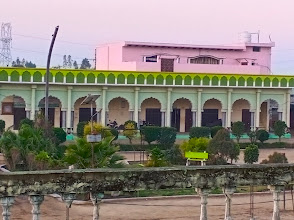
Jama Masjid Asara, a revered local mosque in the village of Asara, Baghpat district, Uttar Pradesh, stands as a cornerstone of the community's Islamic heritage. Nestled in a predominantly Muslim Jat village with a literacy rate exceeding 75%, the mosque serves as the primary place of worship and communal gathering, reflecting the enduring spirit of faith amid the fertile Doab plains. Built in the early 20th century, it embodies simple yet elegant Mughal-inspired architecture, fostering daily prayers and fostering unity since its inception.
Nestled along the banks of the Yamuna Canal in the verdant landscapes of Uttar Pradesh's Baghpat district, Jama Masjid Asara emerges as a poignant emblem of quiet devotion and historical continuity in the heart of Asara village. This expansive rural settlement, spanning over 960 hectares and home to approximately 15,959 residents—predominantly Muslim Jats—owes its origins to a poignant tale of love and exile from the 12th century. Legend holds that Mubarak Khan, a soldier in Prithviraj Chauhan's army, forsook his ancestral village of Kirthal after falling in love with an Iranian woman during travels to Persia. Naming their new forest cottage after her hometown of Asara in Iran's Alborz province, the site gradually blossomed into a thriving community, a sanctuary for those seeking solace in faith and agrarian life. By the early 20th century, as the village solidified its identity under British colonial rule, the need for a dedicated house of worship became paramount. Constructed in 1924, Jama Masjid Asara was erected contemporaneously with the establishment of Muslim Inter College, underscoring the era's emphasis on Islamic education and spiritual fortification amid the socio-political upheavals of pre-independence India. The mosque's founding reflects the resilience of the local Muslim populace, who, drawing from their Jat agrarian roots, channeled communal resources into building a structure that would anchor their religious practices for generations. Unlike the grand imperial mosques of Delhi or Agra, Jama Masjid Asara embodies the understated elegance of vernacular Islamic architecture—its modest minarets and arched mihrab evoking subtle echoes of Mughal influences adapted to rural simplicity. Crafted from locally sourced bricks and lime mortar, the edifice features a spacious prayer hall oriented toward the qibla, with intricate jaali work allowing gentle breezes from the nearby canal to permeate the space during summer congregations. At its core, the mosque functions as the village's spiritual nucleus, accommodating the five daily salah and the bustling Jumu'ah prayers that draw hundreds from Asara and neighboring hamlets like Kakripur and Ramala. The courtyard, shaded by neem trees planted decades ago, serves not merely as a prelude to prayer but as a forum for community discourse—where elders deliberate on matters of faith, harvest yields, and family welfare. Its adjacency to Muslim Inter College, founded the same year, has woven education into its fabric; generations of students have paused their studies to heed the adhan, blending scholarly pursuit with pious observance. Though spared the opulent tilework or towering domes of more famed sites, the mosque's unadorned yet harmonious design—whitewashed walls framing a central dome—radiates an austere beauty that mirrors the unyielding faith of its builders.
Year of Built: Not Available
Address: 68X5+988, SH 57, Asara, Uttar Pradesh 250623
Country: India
State: Uttar Pradesh
District: Baghpat
Pincode: 250623
Longitude: 77.266695° E
Latitude: 29.100005° N