
Indo Islamic Heritage


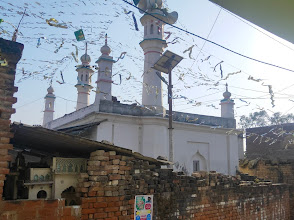
Jumma Masjid in Jagdishpur, a modest yet enduring local mosque in Ballia's rural heartland, stands as a vital center of Islamic worship for the surrounding Muslim community. Nestled in the verdant plains of eastern Uttar Pradesh, it embodies the simple yet profound architectural ethos of regional Islamic heritage, serving as a serene space for daily prayers and communal gatherings.
In the tranquil expanse of Jagdishpur village, within the Murlichhapra Block of Ballia district, Jumma Masjid emerges as a humble testament to the enduring Islamic legacy woven into the fabric of eastern Uttar Pradesh's rural landscape. Ballia, with its ancient roots tracing back to the post-Kushana period and influences from the Maukhari and Gahadavala dynasties, has long been a crossroads of cultural and spiritual traditions. Amid this historical continuum, the mosque occupies a central role in the daily lives of Jagdishpur's residents, offering a sanctuary for reflection and devotion in a region where the Ganges' fertile banks have nurtured generations of faith and community. Though specific records of its founding remain elusive—characteristic of many grassroots Islamic structures in 19th-century Uttar Pradesh—the mosque's origins align with the broader surge of local mosque construction during the British colonial era. This period saw the proliferation of modest Friday mosques (Jumma Masjids) in agrarian villages like Jagdishpur, built by community patrons to foster religious cohesion amid evolving socio-political shifts. Unlike the grand imperial edifices of Mughal Delhi or Agra, Jumma Masjid exemplifies vernacular Islamic architecture: a straightforward rectangular prayer hall oriented toward the qibla, likely constructed from locally sourced bricks and lime mortar, with minimal ornamentation that prioritizes functionality over opulence. Its design draws from the Indo-Islamic traditions prevalent in the Gangetic plains, featuring a mihrab niche for the imam and an open courtyard for congregational prayers, accommodating the village's devout on Fridays and during festivals like Eid. The mosque's significance transcends its physical form, serving as a spiritual anchor for Jagdishpur's Muslim populace in a predominantly agrarian setting. Positioned at the village's core, it facilitates the five daily salahs and weekly Jumma khutbahs, reinforcing communal bonds in a locality where the rhythm of life is dictated by the monsoon cycles and the Ganges' ebb. Historical echoes of Ballia's revolutionary past—particularly the 1857 uprising, when local fighters retreated through nearby areas—underscore the mosque's quiet resilience, standing as a symbol of continuity amid upheaval. Today, it remains a preserved relic of local heritage, maintained through community efforts, inviting visitors to appreciate the understated beauty of rural Islamic devotion in one of India's most storied riverine districts.
Year of Built: Not Available
Address: X28Q+56G, vill+post jagadra, Ballia, Uttar Pradesh
Country: India
State: Uttar Pradesh
District: Ballia
Pincode: 277001
Longitude: 84.2500° E
Latitude: 25.7600° N