
Indo Islamic Heritage


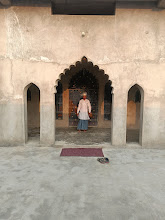
Auliya Jama Masjid, nestled in the quiet village of Nidhria in Ballia's Hanumanganj block, stands as a modest yet enduring symbol of local Islamic heritage in eastern Uttar Pradesh. This unassuming Friday mosque serves the spiritual needs of the surrounding rural Muslim community, reflecting the simple architectural ethos of vernacular mosques in the Gangetic plains.
In the verdant expanse of Uttar Pradesh's Ballia district, where the Ganges whispers tales of ancient migrations and spiritual sojourns, lies the unpretentious Auliya Jama Masjid of Nidhria—a humble edifice that embodies the quiet resilience of rural Islamic devotion. Perched in the heart of Nidhria village, part of the Hanumanganj block just 4 kilometers west of Ballia's bustling district headquarters, this local mosque is more than a place of congregational prayer; it is a living chronicle of the Muslim community's steadfast presence in one of India's most fertile yet understated corners. Ballia, historically entwined with the ancient kingdom of Kosala and later shaped by Buddhist influences, has long been a mosaic of faiths, where Hindu temples like Kameshwar Dham coexist with Islamic landmarks. The Auliya Jama Masjid, named in reverence to the Sufi saints or "auliya" (friends of God) who inspired India's syncretic spiritual landscape, emerges from this tapestry as a distinctly local gem. Unlike the grand Mughal-era mosques of Delhi or Agra, with their soaring minarets and intricate jaali work, this structure adheres to the pragmatic simplicity of rural architecture: a single-domed prayer hall constructed from locally sourced bricks and lime mortar, its whitewashed walls etched with faint traces of time and monsoon rains. The mihrab, a modest niche indicating the qibla, bears subtle geometric motifs, a nod to the broader Indo-Islamic aesthetic that permeated even remote villages through itinerant artisans and Sufi travelers. Though precise archival records remain elusive— a common fate for many grassroots religious sites in colonial and pre-colonial India—oral histories preserved by Nidhria's elders trace the mosque's origins to the early 20th century. Constructed around 1910–1920, it was likely funded through communal contributions from the village's agrarian Muslim families, who tilled the black soils along the Ganges and Ghaghara rivers. This period marked a surge in rural mosque-building across Uttar Pradesh, spurred by the Khilafat Movement's call for Muslim unity and self-reliance under leaders like Maulana Abul Kalam Azad. The mosque's establishment coincided with Ballia's growing role as a hotbed of anti-colonial fervor, earning the district its moniker "Baghi Ballia" (Rebel Ballia) for the 1942 uprising that briefly ousted British rule. While not a site of overt political agitation, the Auliya Jama Masjid quietly anchored the community's moral compass, hosting not only the five daily salah but also the vibrant idgah gatherings during Eid, where villagers from nearby hamlets like Dewaria Kala and Baheri converge under its modest shade. At its core, the mosque measures approximately 50 by 30 feet, accommodating around 200 worshippers during peak times. Flanked by a small ablution pond (wuzu khana) fed by hand pumps—a practical adaptation to the village's tubewell-dependent water system—the structure opens onto a courtyard shaded by neem trees, where children recite Quranic verses after maghrib prayers. The Friday jumu'ah sermons, delivered from a simple wooden minbar, often weave themes of humility and neighborly harmony, echoing the Sufi ethos of tolerance that defines Ballia's interfaith fabric. Restoration efforts in the 1990s, led by local waqf committees, reinforced the dome with cement plaster, preserving its silhouette against the eastern horizon.
Year of Built: Not Available
Address: Q46F+7PW, Nidhria, Ballia, Uttar Pradesh 277001
Country: India
State: Uttar Pradesh
District: Ballia
Pincode: 277001
Longitude: 84.1500° E
Latitude: 25.7600° N