
Indo Islamic Heritage


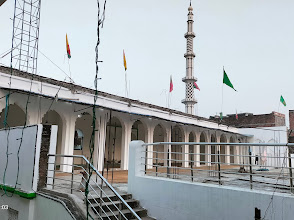
Jama Masjid Premchakurf Umarganj is a modest local mosque serving the Muslim community in the rural village of Premchakurf, near Umarganj in Ballia district, Uttar Pradesh. Nestled in the fertile Gangetic plains, it stands as a simple yet vital center for daily prayers and Friday congregations, reflecting the enduring Islamic heritage of eastern Uttar Pradesh amid its agricultural landscape.
In the heart of Ballia district, where the Ganges and Ghaghra rivers converge to nurture the verdant fields of eastern Uttar Pradesh, lies the unassuming yet spiritually resonant Jama Masjid of Premchakurf Umarganj. This local mosque, situated in the quiet village of Premchakurf—a small settlement under the Umarganj postal jurisdiction—embodies the quiet resilience of rural Islamic life in one of India's most ancient cultural heartlands. Ballia, with its deep-rooted history tracing back to the Kushana era and mentions in medieval inscriptions, has long been a cradle for diverse faiths, and this mosque contributes to that tapestry as a humble beacon for the faithful. Though not a grand monument like the Mughal-era masterpieces of Delhi or Agra, Jama Masjid Premchakurf Umarganj represents the grassroots evolution of Islamic architecture in the region. Built likely in the 20th century by local artisans and community contributions— a common practice for village mosques in post-colonial Uttar Pradesh—it features a straightforward design typical of vernacular Indo-Islamic style. The structure comprises a central prayer hall oriented toward the qibla (direction of Mecca), flanked by modest minarets that call the adhan five times a day, echoing across the paddy fields and mango groves. Constructed primarily from locally sourced bricks and lime plaster, with subtle whitewashing that gleams under the relentless Gangetic sun, the mosque's mihrab (niche indicating Mecca) and minbar (pulpit) are adorned with simple geometric motifs, evoking the broader traditions of Persian-influenced designs adapted to rural simplicity. The mosque's significance extends beyond its physical form; it serves as the communal nucleus for Premchakurf's residents, a village of around 1,000 souls engaged in farming rice, wheat, and sugarcane. On Fridays, it swells with worshippers from neighboring hamlets, fostering a sense of unity in a district known for its syncretic Hindu-Muslim ethos—evident in Ballia's historical role during the 1942 Quit India Movement, where interfaith solidarity was forged. Unlike the opulent domes of imperial jama masjids, this one lacks elaborate calligraphy or marble inlays, yet its courtyard, shaded by neem trees, hosts not only namaz but also village discussions, Eid celebrations, and Ramzan iftars, preserving oral histories of the area's Bengal Sultanate influences from the 16th century, when mosques like the one at Kharid were erected under Nusrat Shah.
Year of Built: Not Available
Address: Q45R+88P, Baheri, Ballia, Uttar Pradesh 277001
Country: India
State: Uttar Pradesh
District: Ballia
Pincode: 277001
Longitude: 84.1500° E
Latitude: 25.8000° N