
Indo Islamic Heritage


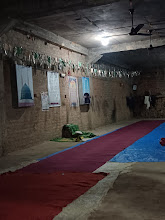
Masjid al-Suffah is a modest local mosque nestled in the rural village of Umarganj, Ballia district, Uttar Pradesh, serving as a vital spiritual center for the Muslim community in this Ganges-adjacent region. Named after the historic shaded platform in the Prophet's Mosque in Medina, it embodies simplicity and devotion, offering a serene space for daily prayers and communal gatherings amid the agrarian landscape of eastern Uttar Pradesh.
Tucked away in the verdant plains of Umarganj, a quiet village in Ballia's tehsil, Masjid al-Suffah stands as a humble testament to the enduring Islamic heritage woven into the fabric of rural Uttar Pradesh. This unassuming mosque, bearing the evocative name "al-Suffah"—evoking the revered raised platform in Al-Masjid an-Nabawi where the Prophet Muhammad sheltered and taught early companions—serves primarily as a place of worship for the local Muslim populace, whose lives revolve around the fertile fields nourished by the nearby Ganges and Ghaghara rivers. Architecturally, Masjid al-Suffah reflects the straightforward vernacular style common to village mosques across northern India, characterized by its single-domed prayer hall, whitewashed walls, and a modest minaret that calls the faithful to prayer five times a day. Constructed likely in the mid-20th century, though precise records remain elusive, the mosque's design prioritizes functionality over grandeur, with an open courtyard that fosters community during Eid celebrations and Friday congregations. Its mihrab, oriented toward the qibla, and simple geometric motifs on the interior walls subtly nod to broader Islamic artistic traditions, adapted to the modest resources of a rural setting. In the context of Ballia's rich historical tapestry—once part of the ancient Kosala kingdom and later influenced by Buddhist and Mughal eras—the mosque occupies a space where Islam has quietly thrived since the medieval period. Ballia, with its strategic location along ancient trade routes, saw the gradual establishment of Muslim communities under Mughal suzerainty, and Masjid al-Suffah continues this legacy as a local anchor of faith. For residents of Umarganj, a village of farmers and artisans, the mosque is more than a structure; it is a repository of oral traditions, where elders recount tales of piety inspired by the original Suffah's role in nurturing the Ahl al-Suffah, the devoted learners of the Quran. Though not a grand monument like the Jama Masjids of Agra or Delhi, its significance lies in its role as a living heritage site, preserving the rhythms of daily ibadah and fostering intergenerational bonds in a rapidly modernizing countryside. Visitors to Masjid al-Suffah, reachable via the narrow village lanes off Ballia's main thoroughfares, are often struck by its tranquil ambiance, where the adhan echoes against the backdrop of swaying mustard fields. As a protected community space under local waqf administration, it underscores the resilience of India's syncretic Islamic traditions, inviting reflection on how even the smallest mosques contribute to the nation's mosaic of sacred sites.
Year of Built: Not Available
Address: Ahamad nagar premchak, urf, Umarganj, Ballia, Uttar Pradesh 277001
Country: India
State: Uttar Pradesh
District: Ballia
Pincode: 277001
Longitude: 84.18°E
Latitude: 25.75°N