
Indo Islamic Heritage


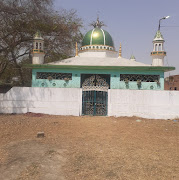
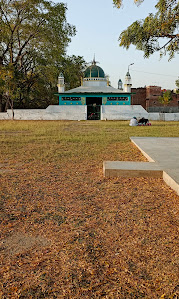
Eidgah Masjid in Aliganj, Banda, stands as a modest yet enduring symbol of Islamic devotion in the heart of Bundelkhand's historical landscape. Primarily serving as an open-air eidgah for congregational Eid prayers, this local mosque exemplifies the simple, functional architecture typical of regional prayer grounds established during the waning years of Mughal influence. Nestled along Eidgah Road, it continues to draw the Muslim community of Banda for annual observances, reflecting the area's layered Islamic heritage amid the Ken River's fertile plains.
The Eidgah Masjid of Aliganj, Banda, emerges from the rich tapestry of Uttar Pradesh's Bundelkhand region, a land marked by ancient forts, riverside settlements, and a blend of Hindu and Islamic architectural legacies. Constructed in the late 18th century—during the transitional era when Mughal authority waned and local Nawabi influences rose—this unassuming structure embodies the practical piety of Eid observances in provincial India. While grander monuments like the Jama Masjid in nearby locales boast ornate domes and minarets, the Eidgah Masjid prioritizes communal gathering over opulence, aligning with the traditional Islamic concept of the eidgah as an expansive, open enclosure dedicated to the two major festivals: Eid al-Fitr and Eid al-Adha. Historically, Banda's evolution as a cultural crossroads under rulers like the Bundela Rajputs and later Mughal subahdars set the stage for such sites. The district's name derives from the sage Vamadeva, whose ancient tapasya grounds underscore its spiritual antiquity, but the arrival of Islam in the region dates to the 13th century with Delhi Sultanate incursions. By the 18th century, as Mughal governors navigated alliances with local chieftains, modest prayer facilities like this eidgah proliferated to serve growing Muslim populations engaged in trade along the Ken River. Archival references to Banda's Islamic landmarks, including several masjids and shrines, place the Eidgah Masjid's origins around 1780–1800, a period when structures were often built using locally sourced brick and lime mortar, raised on earthen platforms to accommodate seasonal floods from the Ken. Though no surviving inscription pinpoints the exact patron—unlike more documented sites such as Mathura's Shahi Eidgah—it likely owes its foundation to a local nawab or merchant philanthropist, common in Bundelkhand's syncretic courtly culture where Hindu and Muslim artisans collaborated. Architecturally, the masjid adheres to the eidgah's archetypal form: an oblong walled courtyard, elevated slightly above the surrounding terrain, oriented toward the qibla (Mecca). The western wall, facing the prayer direction, features a prominent mihrab—a shallow arched niche for the imam—flanked by smaller recesses for acoustic projection during sermons. Measuring approximately 100–150 feet in length, the enclosure allows for thousands to assemble shoulder-to-shoulder, with the eastern entrance facilitating processions from Aliganj's narrow lanes. Simple arched gateways and low parapets define its boundaries, evoking the austerity of early Indo-Islamic designs influenced by Tughlaq minimalism, yet adapted to the humid Bundelkhand climate with lime-plastered walls for breathability. Over centuries, minor renovations—likely in the 20th century under British colonial oversight or post-Independence community efforts—have preserved its integrity, though it remains free of lavish embellishments like glazed tiles or calligraphy seen in urban counterparts. Beyond its physical form, the Eidgah Masjid holds profound cultural resonance as a living repository of Banda's Muslim traditions. On Eid mornings, as dawn breaks over the dusty plains, the air fills with takbirs and the scent of attar, drawing families from Aliganj and adjacent neighborhoods like Chhoti Bazar. These gatherings, rooted in the Prophet Muhammad's Sunnah, reinforce communal bonds in a region historically scarred by famines and rebellions, including the 1857 uprising where Banda served as a focal point. The site's proximity to the Ken River, revered in local lore for its gemstone yields like hessonite, adds a poetic layer: just as the river nurtures the land, the eidgah sustains spiritual renewal. Today, amid Banda's evolving urban fabric—with its 210001 pincode encompassing a post office, markets, and modest residences—the masjid quietly endures, a testament to the resilience of everyday faith. Visitors, though few compared to iconic sites like Agra's Taj Mahal, find in its serene expanse a microcosm of India's pluralistic soul, where history whispers through the rustle of prayer mats on sun-baked earth.
Year of Built: Not Available
Address: F8FR+289, Aliganj, Banda, Uttar Pradesh 210001
Country: India
State: Uttar Pradesh
District: Banda
Pincode: 210001
Longitude: 80.35°E
Latitude: 25.45°N