
Indo Islamic Heritage


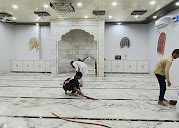
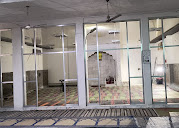
Masjid-e-Risaldar stands as a modest yet enduring testament to the Islamic architectural heritage of Bundelkhand, nestled in the bustling Chhoti Bazar locality of Banda. Erected in the waning years of the 18th century under the patronage of the local Muslim nobility, this local mosque reflects the syncretic influences of Mughal and regional Bundela styles, serving as a serene hub for prayer and community gatherings amid the historic town's vibrant market lanes.
In the heart of Banda, a district steeped in the layered annals of Bundelkhand's medieval past—where ancient Paleolithic remnants mingle with the echoes of Rajput and Mughal dominion—lies Masjid-e-Risaldar, a understated gem of Islamic architecture that embodies the region's multicultural ethos. Constructed in the late 18th century, around the 1790s, during the rule of the Bundela Nawabs who governed Banda as semi-autonomous vassals of the Mughal Empire, the mosque derives its evocative name from the "Risaldar," a cavalry commander in the nawabi forces. Historical accounts suggest it was commissioned to honor a prominent Risaldar who played a key role in the local administration, transforming a simple prayer space into a symbol of martial piety and communal resilience. Architecturally, Masjid-e-Risaldar exemplifies the pragmatic elegance of provincial Mughal design adapted to Bundelkhand's arid landscape and modest resources. The structure features a compact rectangular prayer hall oriented toward the qibla, with sturdy sandstone walls quarried from nearby Kalinjar hills, a material emblematic of the region's enduring stone-carving tradition. A single onion-shaped dome crowns the mihrab, its gentle curve echoing the imperial mosques of Agra and Delhi but scaled down to intimate proportions, while slender minarets flank the western entrance, their lattice screens (jaali) allowing filtered light to dance across the interior during fajr prayers. The facade bears subtle chhajja eaves and arched iwans, blending Islamic geometric motifs with faint Hindu-inspired floral carvings—a nod to the collaborative craftsmanship of Banda's artisans, who often worked across religious lines under nawabi patronage. Though not a grand imperial edifice like the Jama Masjid of Fatehpur Sikri, Masjid-e-Risaldar holds profound local significance as a living archive of Banda's transition from Mughal suzerainty to British oversight in the early 19th century. During the 1857 Revolt, the surrounding Chhoti Bazar area became a nexus of resistance, with the mosque serving as a refuge and rallying point for Muslim sepoys and civilians loyal to the last nawabs. Its survival through subsequent upheavals underscores the mosque's role as a steadfast anchor for Banda's Muslim community, which traces its roots to the 16th-century influx of Afghan and Mughal settlers. Today, it remains a vital center for daily namaz, Jumu'ah congregations, and Ramadan iftars, drawing worshippers from the labyrinthine alleys of Chhoti Bazar—a market famed for its brassware and textiles since the nawabi era. Preserved through community stewardship rather than formal restoration, the mosque's unadorned interiors—adorned only with simple mihrab inscriptions from the Quran in Thuluth script—invite quiet reflection on themes of faith and fortitude. As Banda evolves into a modern administrative hub in Uttar Pradesh's Chitrakoot division, Masjid-e-Risaldar quietly endures, its minarets piercing the skyline as a reminder of the harmonious threads woven into India's Islamic tapestry: a local sanctuary where history whispers through the call to prayer.
Year of Built: Not Available
Address: F89M+MQ, Mardan Naka Rd, Chhoti Bazar, Banda, Uttar Pradesh 210001
Country: India
State: Uttar Pradesh
District: Banda
Pincode: 210001
Longitude: 80.3286° E
Latitude: 25.4375° N