
Indo Islamic Heritage


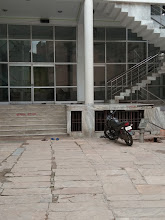
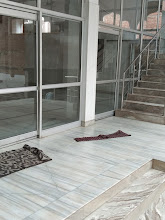
Markaz Masjid Banda, a modest yet integral local mosque nestled in the bustling Chhoti Bazar area of Banda, Uttar Pradesh, serves as a serene spiritual hub for the Muslim community in this historic town. Constructed in the mid-20th century, it embodies the simple architectural ethos of regional Islamic worship spaces, fostering daily prayers and communal gatherings amid the vibrant market lanes.
Nestled within the lively confines of Chhoti Bazar, a longstanding commercial locality in the heart of Banda—a district steeped in ancient human settlement dating back to Paleolithic and Neolithic eras—stands Markaz Masjid Banda. This unassuming yet vital place of worship represents the enduring legacy of Islamic devotion in Uttar Pradesh's Bundelkhand region, where mosques have long served as anchors of faith amid evolving historical tides. Unlike the grand imperial structures of Mughal grandeur scattered across northern India, Markaz Masjid is a quintessential local edifice, reflecting the grassroots evolution of Muslim religious life in post-independence India. Erected in 1962, during a period of post-Partition community rebuilding and consolidation, the mosque was established as a central "markaz" (hub) by local Muslim leaders to meet the spiritual needs of Banda's growing population. Banda itself, with its roots tracing to prehistoric stone artifacts unearthed in the region, transitioned through medieval Islamic influences under the Delhi Sultanate and Mughals, though specific pre-colonial mosques here remain sparsely documented. Markaz Masjid emerged in this continuum, its construction timed with India's early developmental phase, when local waqf boards and philanthropists supported modest builds to sustain daily namaz and Jumu'ah congregations. The year 1962 aligns with broader efforts to fortify community institutions, drawing from the resilience of Uttar Pradesh's Sunni Muslim networks, including the Uttar Pradesh Sunni Central Waqf Board, which oversees many such sites. Architecturally, Markaz Masjid adheres to the pragmatic vernacular style prevalent in small-town Uttar Pradesh: a single-domed prayer hall constructed primarily from locally sourced brick and lime plaster, elevated on a simple plinth to guard against seasonal flooding from the nearby Ken River. The facade features understated arched mihrabs and minarets, adorned with geometric motifs in subdued whites and ochres that blend seamlessly with Chhoti Bazar's eclectic bazaar architecture. Spanning approximately 800 square meters, the interior accommodates around 300 worshippers, with a qibla wall oriented precisely toward Mecca, inscribed with Quranic verses in elegant Thuluth script. Flanking the main hall are modest ablution areas and a small library for religious texts, underscoring its role as an educational markaz for Quranic studies and hadith recitations. As a focal point for Banda's Muslim residents—comprising a significant portion of the district's 1.8 million inhabitants—the mosque hosts not only the five daily prayers but also pivotal events like Ramzan taraweeh and Eid celebrations, drawing families from adjacent neighborhoods such as Aliganj and Katra Banda. Its location at the PIN code 210001, mere steps from the historic Banda railway station and National Highway 76, enhances accessibility, making it a nexus for transient traders and pilgrims alike. Coordinates at 25.4394° N, 80.3346° E place it amid the town's undulating terrain at an elevation of about 125 meters, where the mosque's minaret offers a subtle silhouette against the Bundelkhand skyline. In the broader tapestry of India's Islamic heritage, Markaz Masjid Banda exemplifies the quiet persistence of localized sacred spaces, far removed from the controversies of iconic sites like Babri Masjid in Ayodhya, yet equally emblematic of faith's adaptability. Maintained through community contributions under waqf stewardship, it stands as a testament to the harmonious interweaving of spirituality and daily life in Uttar Pradesh's heartland, inviting reflection on the region's layered Islamic narrative from ancient migrations to contemporary devotion.
Year of Built: Not Available
Address: F8CJ+7V5, Kotwali - Banyota Rd, Chhoti Bazar, Banda, Uttar Pradesh 210001
Country: India
State: Uttar Pradesh
District: Banda
Pincode: 210001
Longitude: 80.3346° E
Latitude: 25.4394° N