
Indo Islamic Heritage


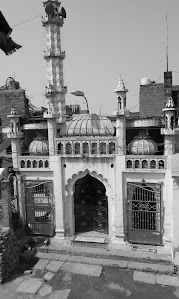
Nestled in the bustling Gular Naka neighborhood of Banda, Uttar Pradesh, Noorani Masjid stands as a serene local place of worship, serving the Muslim community with daily prayers and fostering spiritual tranquility amid the district's historical landscape. Its modest architecture reflects the everyday Islamic heritage of the Bundelkhand region, offering a quiet retreat for devotees in the heart of this southern Uttar Pradesh town.
In the heart of Banda district, a region steeped in antiquity with roots tracing back to Paleolithic settlements and marked by the enduring legacy of Bundela Rajput rulers, Noorani Masjid emerges as a humble yet vital emblem of Islamic devotion. Located at Gular Naka—a vibrant local junction known for its connectivity and daily commerce—this unassuming mosque embodies the resilient spirit of community faith in Uttar Pradesh's Bundelkhand heartland. Though not among the grand Mughal-era monuments that dot northern India, Noorani Masjid represents the grassroots evolution of Islamic worship spaces, where local Muslims have gathered for generations to observe the five daily salahs, celebrate Eid, and seek solace in communal prayer. The mosque's architecture, while simple and functional, echoes the understated elegance typical of regional Indian mosques from the 19th and early 20th centuries. Its prayer hall, oriented toward the qibla, features whitewashed walls adorned with subtle geometric motifs and Arabic calligraphy invoking divine blessings—a nod to the Islamic prohibition on figurative art while inviting contemplation. The minaret, modest in height, calls the faithful to prayer with the adhan resonating through Gular Naka's narrow lanes, blending seamlessly with the sounds of everyday life. Flanked by small ablution areas and a courtyard that accommodates overflow during peak times, the structure prioritizes accessibility and modesty, serving as a neighborhood anchor rather than a tourist spectacle. Historically, Banda's Islamic heritage is intertwined with the broader narrative of the Indian subcontinent, influenced by the Bhakti movement's syncretic ethos and the administrative imprints of Nawabi rule under the Awadh kingdom in the 18th century. While grand sites like the Jama Masjid in nearby areas boast documented Mughal ties, Noorani Masjid's story is one of organic growth, likely emerging during the British colonial period as the town developed into a key rail and trade hub along the Banda-Atarra line. Though precise construction records remain elusive—possibly due to its status as a waqf-managed local endowment rather than a state-commissioned edifice—the mosque's enduring presence underscores its role in sustaining Islamic practices amid the district's agrarian rhythms and seasonal Yamuna floods. Today, Noorani Masjid continues to thrive as a living testament to Banda's multicultural fabric, hosting not only rituals but also educational sessions on Quranic recitation for the youth.
Year of Built: Not Available
Address: pani ki tanki, Mardan Naka, k pass, near police chowki, Banda, Uttar Pradesh 210001
Country: India
State: Uttar Pradesh
District: Banda
Pincode: 210001
Longitude: 80.3428° E
Latitude: 25.4395° N