
Indo Islamic Heritage


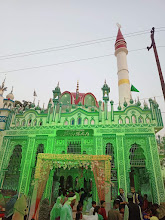

The Saiya E Asia Hazrat Mazahar Rabbani Rehmatulla Alahi, commonly known as the Aastana or shrine of Hazrat Mazahar Rabbani (R.A.), is a revered Sufi mausoleum and local mosque in Kalu Kuwana, Banda, Uttar Pradesh. This serene site serves as a peaceful sanctuary for meditation and devotion, honoring the legacy of the esteemed Sufi saint Allama Alhaj Syed Mazhar Rabbani, a spiritual guide who founded the Rabbani University in his later years.
Nestled in the quiet locality of Kalu Kuwana within the historic town of Banda, Uttar Pradesh, the Saiya E Asia Hazrat Mazahar Rabbani Rehmatulla Alahi stands as a modest yet profoundly spiritual landmark in India's rich tapestry of Islamic heritage. This local mosque and mausoleum, often simply referred to as the Aastana of Sayyed Mazhar Rabbani (R.A.), embodies the essence of Sufi tranquility, drawing devotees to its hallowed grounds for reflection, prayer, and connection to divine grace. Unlike the grand Mughal-era mosques that dominate narratives of Indian Islamic architecture, this site represents the intimate, community-rooted piety of regional Sufism, where the founder's scholarly devotion continues to inspire generations. At its heart lies the mausoleum of Hazrat Mazahar Rabbani, a distinguished Sufi scholar and spiritual mentor known as Murshid-e-Bar Haq (the True Guide). Born into a lineage of Sayyids, he dedicated his life to Islamic scholarship and mysticism, achieving great acclaim for his teachings that blended rigorous religious study with the compassionate outreach of Sufi traditions. In his final years, Hazrat Mazahar Rabbani turned his energies toward education, personally establishing the Rabbani University—a enduring institution that today thrives as a center for Islamic learning in the region. This act of benevolence underscores the site's foundational ethos: a commitment to knowledge, piety, and communal upliftment under the divine mercy (Rehmatulla Alahi) he so exemplified. The mausoleum itself, a simple yet elegant structure, houses his blessed resting place, enveloped in an aura of peace that invites quiet contemplation amid the surrounding bustle of rural Uttar Pradesh. The mosque adjacent to the mausoleum functions as the site's spiritual nucleus, facilitating daily prayers and special observances in the Naqshbandi Sufi tradition. Though modest in scale, its architecture reflects practical vernacular styles common to 20th-century Indian mosques: unadorned walls of local brick and plaster, arched prayer halls oriented toward the Qibla, and subtle calligraphic inscriptions invoking peace and remembrance of the divine. The complex, constructed in the mid-20th century during or shortly after the saint's era, aligns with the post-independence resurgence of local Islamic institutions, emphasizing accessibility over opulence. Devotees frequent the site not for architectural splendor but for its intangible sanctity—a "Peer ka Darbar" (court of the saint) where supplications are believed to find swift favor, fostering a sense of communal harmony in Banda's diverse cultural landscape. Today, the Saiya E Asia remains a living testament to Hazrat Mazahar Rabbani's legacy, where the air carries echoes of recited litanies and the grounds host gatherings for Urs celebrations and scholarly discourses. Protected informally through community stewardship, it endures as a beacon of verified Sufi devotion, reminding visitors of India's layered Islamic past—one where local shrines like this quietly sustain the faith's deepest currents. For those seeking solace in Banda's understated heritage, this mosque offers not just a place of worship, but a portal to enduring spiritual wisdom.
Year of Built: Not Available
Address: F8FW+FP8, Kalu Kuwana, Banda, Uttar Pradesh 210001
Country: India
State: Uttar Pradesh
District: Banda
Pincode: 210001
Longitude: 80.329°E
Latitude: 25.436°N