
Indo Islamic Heritage


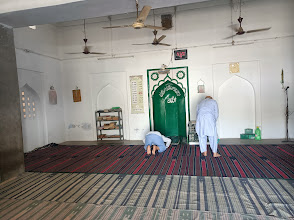
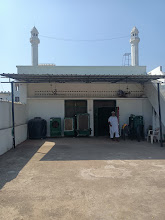
Masjid e Aqsa, a modest yet cherished local mosque in the heart of Gular Naka, Banda, Uttar Pradesh, stands as a serene place of worship for the Muslim community in this historic Bundelkhand region. Named after the revered Al-Aqsa Mosque in Jerusalem, it embodies spiritual continuity and communal devotion, serving as a focal point for daily prayers and Friday congregations amid the town's bustling railway vicinity.
Nestled in the vibrant locality of Gular Naka, adjacent to the Banda Railway Station, Masjid e Aqsa emerges as a poignant emblem of Islamic faith and architectural simplicity in the culturally rich district of Banda, Uttar Pradesh. This unassuming mosque, bearing the evocative name of Islam's third holiest site—the Al-Aqsa Mosque in Jerusalem—reflects the deep-seated reverence Indian Muslims hold for their global spiritual heritage, even in the most local of settings. While grander monuments dot the Islamic architectural landscape of India, from the iconic Jama Masjid in Delhi to the serene Atala Masjid in Jaunpur, Masjid e Aqsa in Banda represents the intimate, community-driven evolution of worship spaces in the Bundelkhand heartland, where history intertwines with everyday devotion. Banda district itself traces its roots to antiquity, with archaeological remnants from the Paleolithic and Neolithic eras underscoring its ancient human habitation. The arrival of Islam in this region, part of the broader medieval expansions under the Delhi Sultanate and later Mughal influences, sowed the seeds for enduring religious sites. However, Masjid e Aqsa appears to be a more contemporary addition, likely erected in the 20th century amid the post-independence surge in local mosque constructions to accommodate growing Muslim populations in small towns. Though precise records of its founding remain elusive in historical archives—unlike the well-documented 16th-century Babri Masjid in nearby Ayodhya or the 18th-century Jama Masjid in Pilibhit—this mosque's understated origins align with the pragmatic spirit of mid-20th-century India, when communities pooled resources to build enduring symbols of faith without the opulence of imperial patronage. Architecturally, Masjid e Aqsa eschews elaborate domes or minarets, favoring a functional design suited to its urban fringe location. Its prayer hall, oriented precisely toward the Qibla, accommodates modest congregations with whitewashed walls adorned with subtle calligraphic inscriptions from the Quran, evoking the sanctity of its namesake. The mihrab, a simple arched niche, serves as the focal point during salat, while an ablution area ensures ritual purity for worshippers. Surrounding the main structure, a small courtyard offers shaded respite under neem trees, fostering a sense of tranquility amid the hum of railway activity. This humility in design mirrors the mosque's role not as a tourist draw but as a vital community anchor, hosting not only five daily prayers but also Ramadan taraweeh sessions, Eid celebrations, and educational madrasa classes for local youth. Geographically, the mosque's placement at the coordinates 25.4392° N, 80.3390° E positions it at the crossroads of Banda's transport and trade networks, making it accessible via National Highway 76 and state buses connecting to Lucknow and nearby Chitrakoot. The pincode 210001 places it within the central postal zone of Banda, facilitating easy reach for residents from surrounding tehsils like Naraini and Atarra. In a district renowned for its Shajar stone quarries—used in jewelry and construction—Masjid e Aqsa subtly integrates local materials, with stone accents lending durability to its facade against the region's monsoon deluges. Beyond its physical form, Masjid e Aqsa embodies the resilient spirit of Banda's Muslim populace, who have navigated the district's layered history—from ancient Hindu-Buddhist settlements to Mughal-era fortifications like Kalinjar Fort. As a local shrine-like haven, it underscores the mosque's Quranic essence: a house of Allah where hearts find solace, much like the blessed precincts described in Surah Al-Isra. In an era of rapid urbanization, this modest edifice endures as a testament to quiet piety, inviting reflection on how sacred spaces, big or small, weave the fabric of India's pluralistic tapestry. For those tracing the footsteps of Islamic heritage in Uttar Pradesh, Masjid e Aqsa offers a humble yet profound chapter—one rooted in locality, yet echoing the eternal call to prayer across continents.
Year of Built: Not Available
Address: F8CP+F56, Gular Naka, Banda, Uttar Pradesh 210001
Country: India
State: Uttar Pradesh
District: Banda
Pincode: 210001
Longitude: 80.3390° E
Latitude: 25.4392° N