
Indo Islamic Heritage


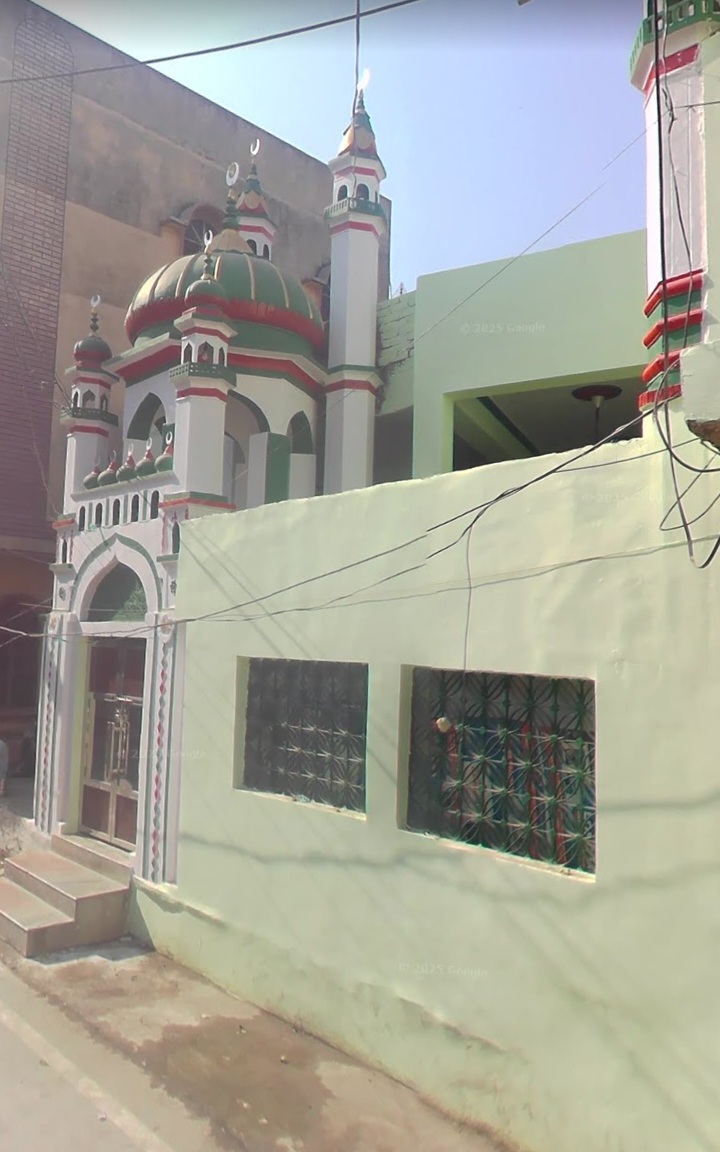
Haji Sardar Wali Masjid, a modest local mosque in the heart of Banda, Uttar Pradesh, stands as a serene place of worship amid the bustling Gular Naka locality. Named in honor of the revered Haji Sardar, it serves as a vital spiritual hub for the Muslim community, embodying the quiet resilience of Islamic heritage in the Bundelkhand region. With its simple yet inviting architecture, the mosque offers a peaceful retreat for daily prayers and communal gatherings.
Nestled in the vibrant Gular Naka neighborhood of Banda—an eastern outpost of the historic Bundelkhand region—Haji Sardar Wali Masjid emerges as a understated yet enduring symbol of Islamic devotion in Uttar Pradesh. This local mosque, dedicated to the memory of Haji Sardar, a figure of quiet piety and community leadership, reflects the intimate scale of religious life in small-town India, where faith intertwines seamlessly with everyday rhythms. Unlike the grand Mughal-era monuments that dot the broader Islamic landscape of the subcontinent, such as the Jama Masjid in Agra or the dargahs of Sufi saints, Haji Sardar Wali Masjid embodies the grassroots essence of worship: a sanctuary built not for spectacle, but for solace and solidarity. The mosque's location at the crossroads of Mayur Talkies Road and the Chitrakoot-Banda Highway (NH 76) places it at the pulse of local life. Gular Naka, derived from the Hindi word for the ancient Ficus religiosa (peepal) tree that once shaded travelers, has long been a transit point near the Banda Railway Station, fostering a diverse congregation of residents, pilgrims, and passersby. Here, the mosque's unassuming facade—characterized by clean whitewashed walls, arched entryways, and a modest minaret—welcomes devotees five times a day, its call to prayer echoing softly against the backdrop of honking rickshaws and roadside vendors. The prayer hall, oriented precisely toward the qibla, accommodates the faithful on woven mats under a vaulted ceiling that hints at influences from regional Indo-Islamic design, though adapted to practical, community-driven construction. While precise records of its founding remain elusive in public archives, the mosque's nomenclature suggests a post-independence origin, aligning with the mid-20th-century surge in local religious infrastructure across Uttar Pradesh. Banda's own history, marked by ancient Paleolithic settlements and later Mughal influences, provides a fertile context: the district, once part of the vast empire under emperors like Akbar, saw the proliferation of smaller mosques as Islam took root among the agrarian populace. Haji Sardar Wali Masjid likely arose during this era of consolidation, possibly funded by philanthropic Haji families who, having completed the sacred pilgrimage to Mecca, sought to leave a legacy of piety. Its endurance through decades of regional upheavals—from the 1930 Civil Disobedience Movement that stirred Banda's streets to the post-Partition migrations—underscores its role as a steadfast anchor for the community.
Year of Built: Not Available
Address: F8CM+2Q9, Mardan Naka Rd, Gular Naka, Banda, Uttar Pradesh 210001
Country: India
State: Uttar Pradesh
District: Banda
Pincode: 210001
Longitude: 80.3343° E
Latitude: 25.4764° N