
Indo Islamic Heritage


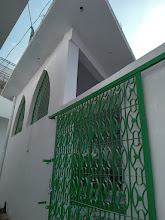
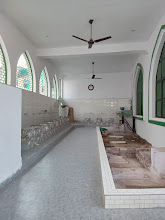
Jama Masjid, also known as Shahi Jama Masjid, stands as a prominent 19th-century Islamic architectural gem in the heart of Banda, Uttar Pradesh. Constructed in 1850 by Nawab Ali Bahadur II, the last Nawab of Banda, this mosque exemplifies Mughal-influenced design with its elegant domes, minarets, and intricate stonework, serving as a vital center for community prayers and cultural heritage.
Nestled in the bustling locality of Gular Naka, adjacent to the historic Pili Kothi area and the railway station path, Jama Masjid emerges as a timeless testament to the Nawabi era's architectural splendor in Banda, Uttar Pradesh. Erected in 1850 under the patronage of Nawab Ali Bahadur II—the final sovereign of the Banda princely state before British annexation—this mosque was envisioned as a grand congregational space, reflecting the fusion of indigenous craftsmanship with the refined aesthetics of Mughal design traditions. Its construction during a period of transition in Indian history underscores the enduring legacy of Muslim rulers in fostering communal and spiritual landmarks amid political upheaval. The mosque's architecture is a harmonious blend of symmetry and subtlety, characteristic of late Mughal influences adapted to the regional context. At its core lies a spacious prayer hall oriented toward the qibla, flanked by slender minarets that rise gracefully, offering a visual anchor against the skyline. These towers, adorned with subtle jaali screens for ventilation and light, echo the verticality seen in iconic structures like Delhi's Jama Masjid, though scaled to suit Banda's modest urban fabric. The central dome, crowned with a finial, dominates the facade, its gentle curve symbolizing the celestial vault and providing acoustic resonance for the adhan. Intricate carvings on the arches and gateways—featuring floral motifs, geometric patterns, and Arabic calligraphy—highlight the skilled masonry of local artisans, who employed red sandstone and lime mortar to withstand the subtropical climate. Historically, Jama Masjid's founding ties directly to Nawab Ali Bahadur II's reign (1835–1858), a time when Banda was a semi-autonomous estate under British paramountcy. As the son of Nawab Izzat Muhi-us-Saltanat, Ali Bahadur II sought to immortalize his rule through enduring public works, commissioning the mosque as a symbol of piety and patronage. Completed just seven years before the Indian Rebellion of 1857, which saw Banda engulfed in conflict and the Nawab's eventual exile, the structure miraculously survived the era's turmoil, becoming a beacon of resilience for the local Muslim community. Post-rebellion, under British administration, it continued to function as the principal site for Friday congregational prayers (Jumma), drawing devotees from surrounding villages and fostering interfaith harmony in a diverse region. Today, Jama Masjid remains an active place of worship, its courtyard alive with the rhythms of daily salah and seasonal festivities like Eid celebrations. Preservation efforts by local waqf authorities have maintained its structural integrity, though subtle restorations address weathering from monsoons and time. For visitors and historians alike, it offers a serene portal into Banda's layered past—where the echoes of nawabi grandeur mingle with the simplicity of everyday devotion—reminding us of architecture's power to bridge epochs in India's rich Islamic tapestry.
Year of Built: 19th Century
Address: F8GP+83M, Pili Koti, Gular Naka, Banda, Uttar Pradesh 210001
Country: India
State: Uttar Pradesh
District: Banda
Pincode: 210001
Longitude: 80.3360° E
Latitude: 25.4780° N