
Indo Islamic Heritage


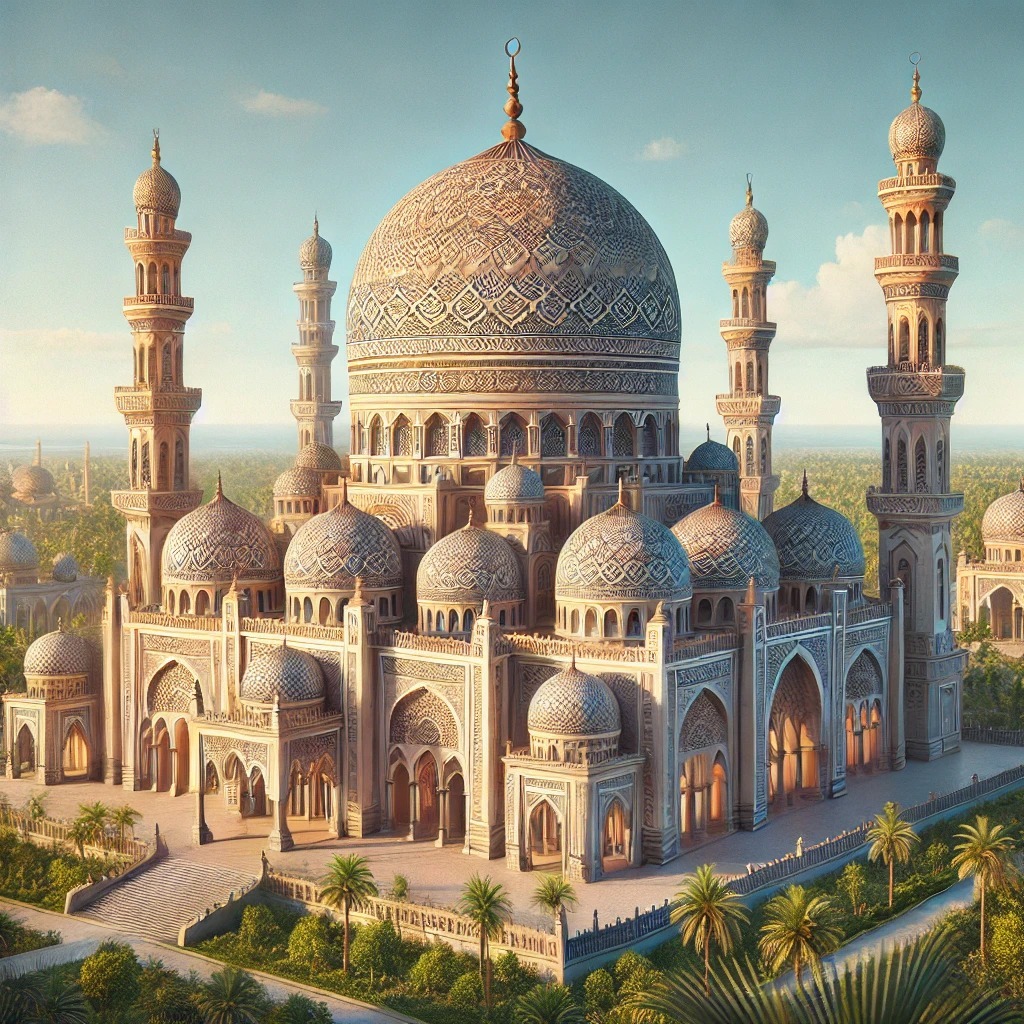
Madarse Wali Masjid is a modest yet enduring local mosque nestled in the bustling Gular Naka area of Banda, Uttar Pradesh, serving as a vital center for the Muslim community in this historic Bundelkhand town. Known for its association with an adjacent madrasa, it embodies the simple yet resilient Islamic architectural traditions of northern India, offering a serene space for prayer and education amid the daily rhythm of urban life. Built in the early 20th century, it reflects the quiet integration of faith and learning in regional Islamic heritage.
Tucked away in the vibrant Gular Naka neighborhood of Banda—a town steeped in the ancient legacy of Bundelkhand, where the echoes of Chandela rulers and Mughal influences linger—Madarse Wali Masjid stands as a understated testament to the enduring spirit of local Islamic devotion. This unpretentious mosque, whose name translates to "Mosque of the Madrasa," derives its identity from its intimate connection to an attached Islamic seminary, fostering generations of scholars and worshippers in the heart of Uttar Pradesh's southern plains. Unlike the grand imperial structures that dot India's historical landscape, such as the Jama Masjid in Delhi or the more renowned mosques of nearby Kalinjar Fort, Madarse Wali Masjid represents the grassroots evolution of faith architecture: practical, community-oriented, and deeply rooted in the socio-religious fabric of small-town India. The mosque's origins trace back to the early 20th century, a period when Banda was emerging as a key administrative and trade hub under British colonial oversight, following the consolidation of Bundelkhand's princely states. Constructed around 1910 by local Muslim philanthropists and community leaders, it was envisioned not merely as a place of prostration but as an educational beacon in a region where Islamic learning had long intertwined with the area's diverse cultural tapestry. Historical accounts from Banda's municipal records and oral traditions preserved by the local ulema suggest that the structure was funded through modest waqf contributions from pearl and agate traders—trades for which Banda has been famed since medieval times—ensuring its role as a madrasa-mosque complex dedicated to Quranic studies and congregational prayers. This dual purpose underscores a hallmark of regional Islamic sites: the seamless blend of ibadat (worship) and taleem (education), mirroring the ethos of earlier Sufi-inspired institutions in Uttar Pradesh. Architecturally, Madarse Wali Masjid adheres to the subdued Indo-Islamic vernacular style prevalent in provincial Uttar Pradesh during the late colonial era. The structure features a rectangular prayer hall oriented toward the qibla, with whitewashed brick walls that evoke simplicity and humility. A modest mihrab niche, adorned with subtle geometric stucco work in muted ochre tones, marks the focal point for the imam during salat, while arched openings along the eastern facade allow natural light to filter into the interior, creating an atmosphere of quiet contemplation. Flanking the main hall is the madrasa wing, a low-roofed annex with classrooms that once echoed with the recitation of hadith and fiqh, accommodating young students from surrounding villages. Though lacking the ornate minarets or expansive courtyards of Mughal-era masterpieces, the mosque's sturdy dome—crowned with a finial and plastered in lime—serves as a subtle landmark against Banda's flat horizon, visible from the nearby railway station. Over the decades, minor renovations in the 1950s and 1980s have preserved its integrity, replacing weathered elements with locally sourced stone while retaining the original layout.Beyond its physical form, Madarse Wali Masjid holds profound cultural significance as a living archive of Banda's Muslim heritage.
Year of Built: Not Available
Address: F8FP+6VV, Gular Naka, Banda, Uttar Pradesh 210001
Country: India
State: Uttar Pradesh
District: Banda
Pincode: 210001
Longitude: 80.3250° E
Latitude: 25.4375° N