
Indo Islamic Heritage


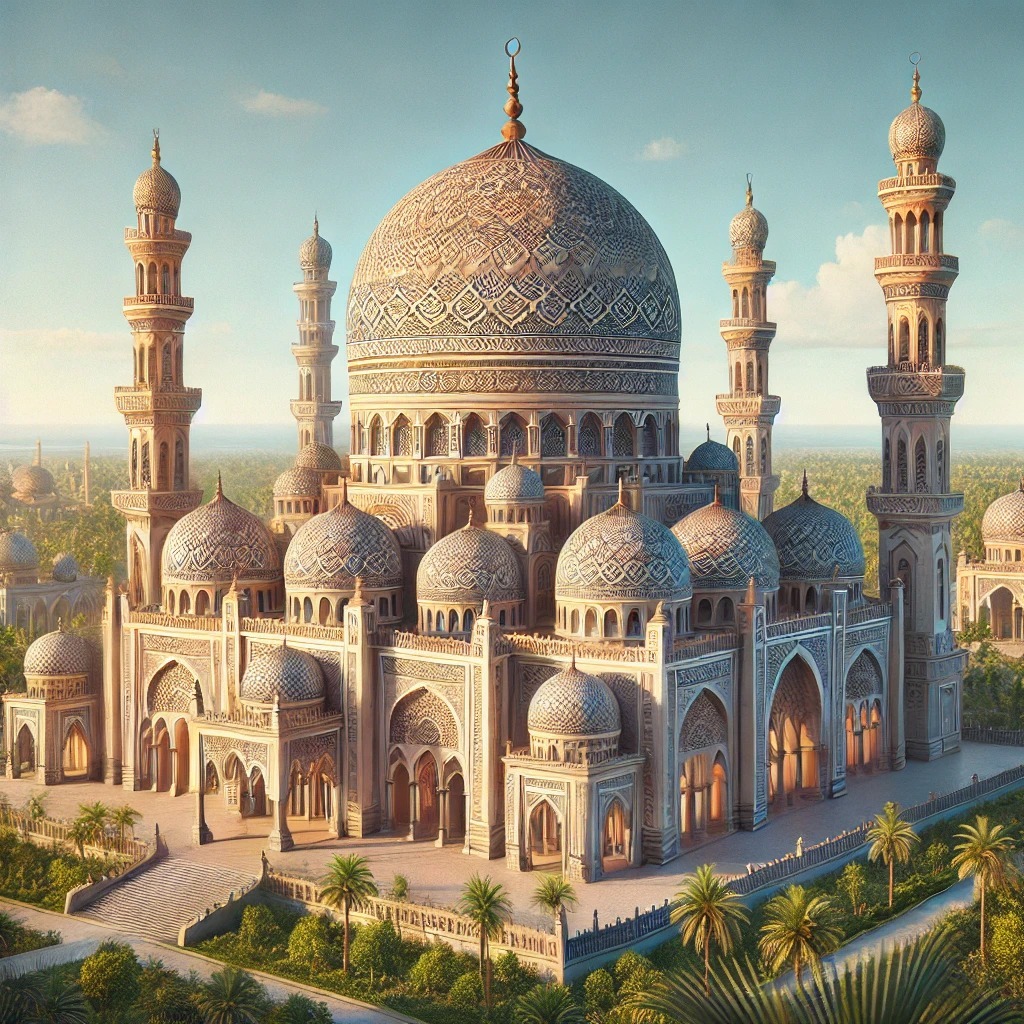
Aisha Masjid, nestled in the bustling Chhoti Bazar locality of Banda, Uttar Pradesh, stands as a serene emblem of Islamic architectural simplicity and community devotion in the heart of Bundelkhand. This modest yet enduring mosque serves as a vital spiritual hub for local Muslims, reflecting the region's layered Islamic heritage amid its historical trade routes.
In the sun-baked landscapes of Bundelkhand, where the Yamuna River's gentle curve has long cradled human settlements, Aisha Masjid emerges as a quiet testament to the enduring legacy of Islamic faith in Uttar Pradesh's Banda district. Tucked within the vibrant Chhoti Bazar—a historic market quarter teeming with the echoes of colonial-era commerce and pre-independence trade—the mosque occupies a pivotal yet unassuming space in Banda's urban fabric. Built during a period of transition in the mid-19th century, when the fading Mughal empire's cultural imprints mingled with emerging British colonial structures, Aisha Masjid embodies the resilience of local Muslim communities who preserved their religious practices amid shifting political tides. Historical records on Aisha Masjid are sparse, a common trait among smaller congregational mosques in provincial Indian towns, yet its origins align with the broader wave of mosque constructions in the Bundelkhand region following the decline of direct Mughal oversight after the 1857 Revolt. Banda, once a strategic outpost under the Nawabs of Awadh and later a British tehsil headquarters, witnessed a surge in such modest edifices as symbols of communal identity. Named after Aisha bint Abi Bakr, the revered wife of Prophet Muhammad and a pivotal figure in early Islamic scholarship, the mosque likely drew inspiration from her legacy of piety and education, fostering a space not just for prayer but for subtle community gatherings. Though not as grandiose as the imperial Jama Masjids of Delhi or Agra, its construction—believed to date to the 1850s—utilizes locally sourced sandstone and lime mortar, hallmarks of vernacular Indo-Islamic design adapted to the arid Bundelkhand terrain. Architecturally, Aisha Masjid adheres to a straightforward yet elegant form typical of 19th-century regional mosques. The prayer hall, oriented toward the qibla, features a rectangular layout with arched mihrabs and minimalistic minarets that rise modestly against the bazaar's skyline, evoking the unpretentious grace of Deccani influences filtered through Awadh's softer aesthetics. Whitewashed walls, periodically renewed by devoted locals, contrast with the intricate stucco work around the entrance portals, where faint traces of geometric motifs hint at the skilled craftsmanship of itinerant Muslim artisans from nearby Allahabad. The courtyard, though compact due to urban encroachment, retains a central ablution pool fed by a hand-pump well—a practical nod to the site's enduring role in daily rituals. Over the decades, the mosque has weathered floods from the nearby Ken River and the socio-economic upheavals of post-independence India, emerging as a steadfast anchor for Banda's Muslim populace, who number significantly in this diverse district. Today, Aisha Masjid pulses with life during Jumu'ah prayers, when the call of the muezzin reverberates through Chhoti Bazar's narrow lanes, drawing worshippers from surrounding hamlets like Gularnaka and Katra Banda.
Year of Built: Not Available
Address: F88P+3CV, Chhoti Bazar, Banda, Uttar Pradesh 210001
Country: India
State: Uttar Pradesh
District: Banda
Pincode: 210001
Longitude: 80.3250° E
Latitude: 25.4360° N