
Indo Islamic Heritage


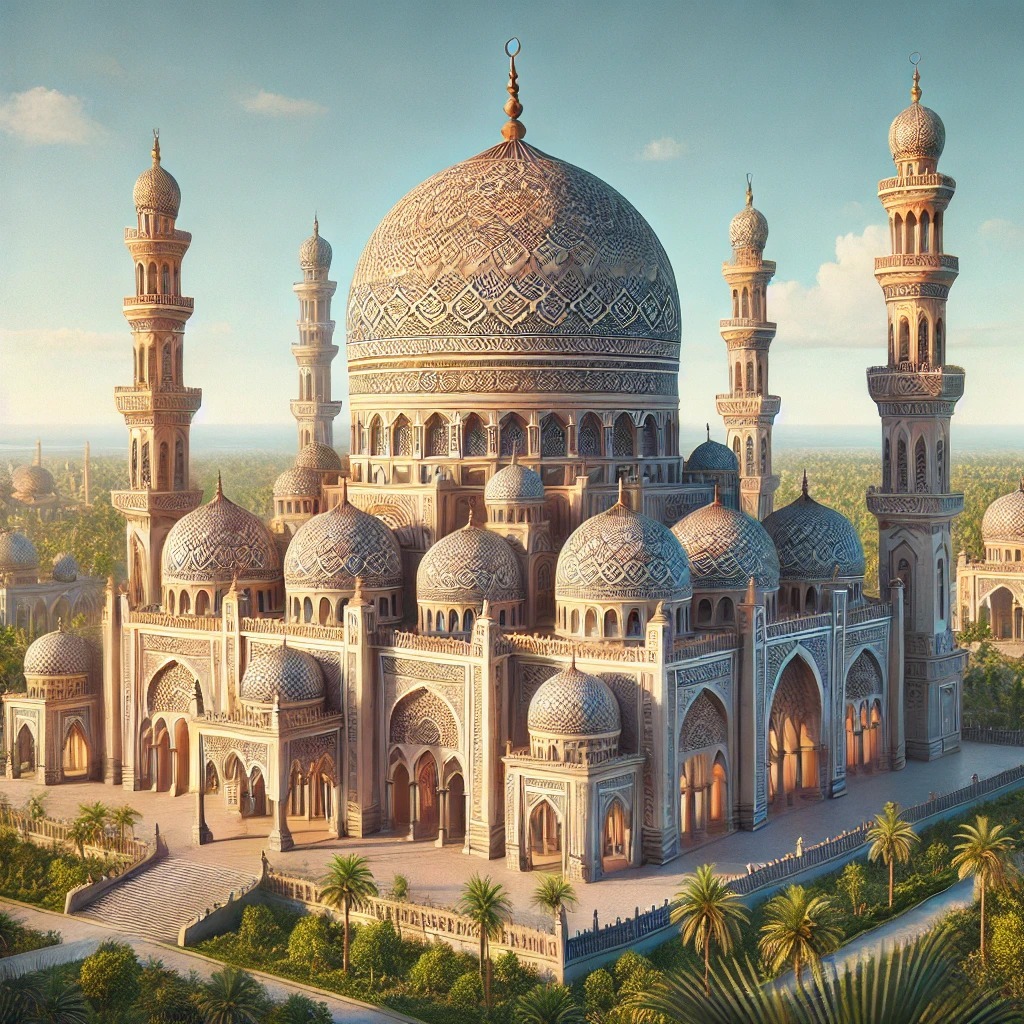
Noraani Masjid, nestled in the historic locality of Bangalipura within Banda district, Uttar Pradesh, stands as a modest yet enduring symbol of Islamic architectural heritage in the Bundelkhand region. Constructed in the early 19th century, this unassuming mosque serves as a vital center for local Muslim worship, reflecting the syncretic cultural fabric of Uttar Pradesh's rural heartland. With its simple design and community-rooted significance, it continues to foster spiritual gatherings amid Banda's ancient landscape.
In the sun-baked plains of Bundelkhand, where the Yamuna River's tributaries carve through ancient rock formations and the echoes of medieval forts linger in the air, Noraani Masjid emerges as a quiet testament to the enduring legacy of Islamic devotion in northern India. Located in the Bangalipura locality of Banda—a district steeped in history from Paleolithic settlements to the turbulent era of the Bundela Rajputs and later British colonial rule—this mosque embodies the understated elegance of 19th-century vernacular Islamic architecture. Built during the early 1800s, a period when the Nawabs of Awadh exerted influence over the region and Muslim communities flourished amid the decline of Mughal authority, Noraani Masjid was erected as a place of communal prayer for the local Muslim populace, many of whom were artisans, traders, and farmers drawn to Banda's fertile agrarian belt. The mosque's construction, likely spanning the 1830s, reflects the transitional architectural style prevalent in Uttar Pradesh at the time: a fusion of Mughal-inspired elements adapted to local resources and modest means. Its facade features a central mihrab niche oriented toward Mecca, flanked by arched openings that allow dappled light to filter into the prayer hall during dawn fajr and evening maghrib services. Constructed primarily from locally sourced sandstone and lime mortar, the structure eschews the grand domes and minarets of imperial mosques like Delhi's Jama Masjid, opting instead for a flat roof supported by sturdy pillars—a practical choice suited to Banda's seismic-prone terrain and monsoon deluges. Subtle terracotta jaali screens adorn the side walls, permitting ventilation while preserving the sanctity of the interior space, where intricate geometric motifs etched into the plaster evoke the infinite patterns of Islamic art, symbolizing divine unity. Noraani Masjid's historical significance lies not in opulent ornamentation but in its role as a steadfast anchor for Bangalipura's Muslim community. In an era marked by the 1857 Revolt, when Banda became a flashpoint of resistance against British expansionism under leaders like Rani Lakshmibai, such local mosques served as covert hubs for cultural preservation and quiet resilience. Archival records from the Uttar Pradesh Waqf Board, though sparse on this particular site, indicate that structures like Noraani were often patronized by petty zamindars or Sufi orders, fostering interfaith dialogues in a region where Hindu and Muslim traditions intertwined through shared festivals and agrarian life. Today, the mosque hosts not only the five daily salah but also Ramadan taraweeh prayers and Eid congregations, drawing devotees from surrounding villages like Atarra and Naraini. Its courtyard, shaded by neem trees planted over generations, remains a space for iftar gatherings and scholarly discussions on Quranic exegesis, underscoring its living heritage.
Year of Built: Not Available
Address: F8HQ+R6R, Bangalipura, Banda, Uttar Pradesh 210001
Country: India
State: Uttar Pradesh
District: Banda
Pincode: 210001
Longitude: 80.3542° E
Latitude: 25.4386° N