
Indo Islamic Heritage


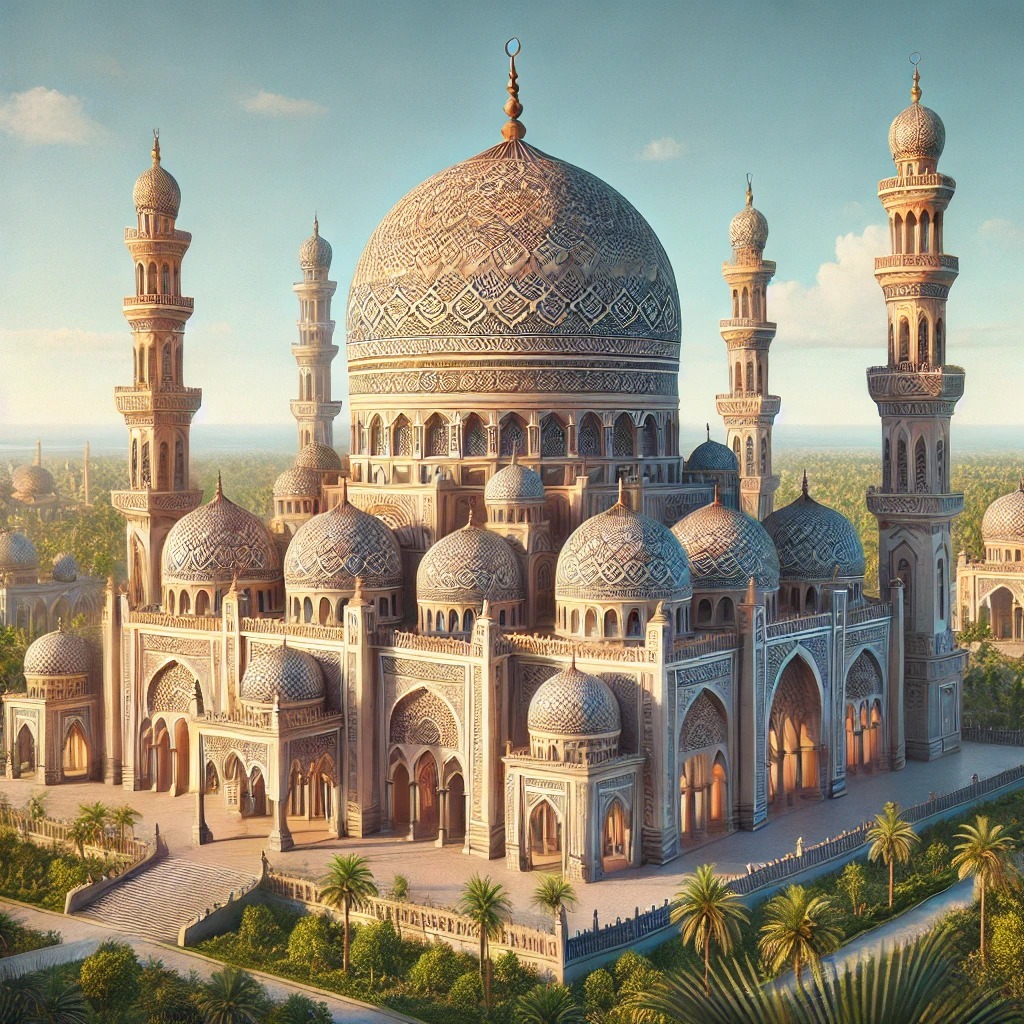
Madina Masjid stands as a modest yet enduring symbol of Islamic devotion in the heart of Chhoti Bazar, a bustling locality in Banda, Uttar Pradesh. Nestled amid the district's rich historical tapestry of Bundelkhand, this unassuming mosque serves as a vital community hub for prayer and reflection, reflecting the quiet resilience of local Muslim heritage amid the area's ancient landscapes.
In the undulating terrain of Banda district, where the echoes of prehistoric settlements mingle with the legacies of Mughal and Bundela rule, Madina Masjid emerges as a poignant emblem of India's layered Islamic history. Situated in the vibrant Chhoti Bazar locality— a compact urban enclave known for its narrow lanes, modest shops, and communal vibrancy—this mosque occupies a central position in Banda's social fabric, fostering daily rituals of faith for generations of residents. Though not among the grand monuments of the Mughal era, its presence underscores the organic growth of Islamic architecture in rural and semi-urban Uttar Pradesh, where mosques often served as anchors of identity during periods of transition and upheaval. Banda's historical narrative, rooted in the ancient Chedi kingdom and later shaped by the strategic Kalinjar Fort—a site of pivotal battles under rulers like Sher Shah Suri—provides a fitting backdrop for structures like Madina Masjid. The district, with its Yamuna River fringes and Bundelkhandi plateaus, witnessed waves of Muslim influence from the 16th century onward, as Mughal subahdars and local nawabs established prayer spaces that blended Persian aesthetics with indigenous craftsmanship. While grander edifices like the Qila-e-Kalinjar mosques (built in the 16th-17th centuries using repurposed temple materials) dominate scholarly accounts of Banda's Islamic heritage, Madina Masjid represents the more intimate, community-driven evolution of such sites in the 19th and early 20th centuries. During British colonial rule, when Banda became a district headquarters in 1819 following the annexation of Bundelkhand, local mosques like this one quietly sustained cultural continuity amid administrative shifts and the 1857 uprising, where figures like Nawab Ali Bahadur II rallied against imperial forces. Architecturally, Madina Masjid adheres to the vernacular style prevalent in post-Mughal Uttar Pradesh: a simple rectangular prayer hall oriented toward the qibla, likely constructed with local brick and lime mortar, topped by a flat or gently curved roof to withstand the region's monsoonal rigors. Its facade, facing the lively bustle of Chhoti Bazar, features modest arched entrances and minimalistic mihrab niches, evoking the humility of neighborhood masjids rather than imperial splendor. Inside, the serene mihrab—adorned perhaps with subtle geometric motifs—invites contemplation, while the surrounding courtyard, though unpretentious, hosts Friday congregations and Ramadan iftars, binding the faithful in shared devotion.
Year of Built: Not Available
Address: Infront of Police Chauki, Mardan Naka Rd, Chhoti Bazar, Banda, Uttar Pradesh 210001
Country: India
State: Uttar Pradesh
District: Banda
Pincode: 210001
Longitude: 80.3292° E
Latitude: 25.4333° N