
Indo Islamic Heritage


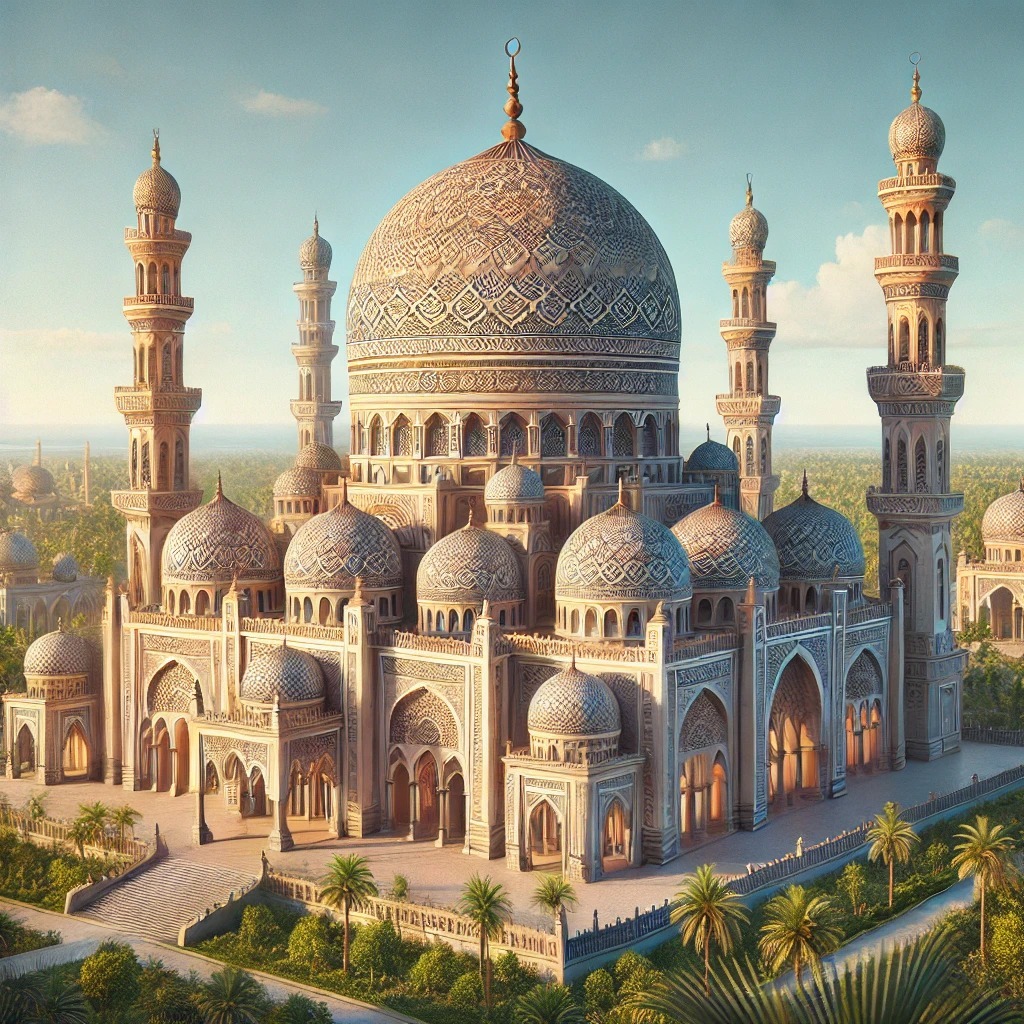
Choti Eidgah is a modest yet historically significant open-air prayer ground and mosque complex in the heart of Katra Bazaar, Banda, serving as a vital site for Eid celebrations in the Bundelkhand region. Erected in the 18th century amid the Maratha era's cultural fusion, it reflects simple Indo-Islamic architectural elements, with a walled enclosure and mihrab for communal prayers, embodying the enduring Muslim heritage of Uttar Pradesh's southern plains.
Nestled in the bustling lanes of Katra Bazaar within Banda's historic Choti Bazar locality, the Choti Eidgah stands as a quiet testament to the layered Islamic architectural legacy of Bundelkhand, a region where Mughal decline gave way to Maratha ascendancy in the 18th century. Constructed during this transitional epoch—likely in the mid-1700s under the extended influence of Peshwa Bajirao I, who consolidated Maratha control over Banda following his campaigns in northern India—the Eidgah was envisioned as an essential communal space for the local Muslim population. Banda, then a strategic frontier town south of the Yamuna River, witnessed the establishment of several Maratha administrative outposts, including battalions stationed in nearby areas like Charkhari and Jhasi, which facilitated the patronage of such religious structures. This Eidgah, meaning "small festival ground" in local parlance, was built to accommodate Eid ul-Fitr and Eid ul-Adha prayers, drawing worshippers from the surrounding agrarian communities amid the district's undulating lowlands and ravine-scarred banks of the Ken River. Architecturally, the Choti Eidgah embodies the understated elegance of regional Indo-Islamic design, adapted to the practical needs of an open-air eidgah rather than the grandeur of urban mosques. The core structure features a rectangular walled enclosure, approximately 100 by 80 meters, paved with weathered stone slabs that have withstood seasonal monsoons and the passage of centuries. At its western end, a prominent mihrab—nicely arched with subtle stucco ornamentation—indicates the qibla direction toward Mecca, flanked by low parapets that once supported minarets, now reduced to sturdy stumps from time and erosion. The enclosing walls, constructed from locally sourced bricks and lime mortar, rise to about 3 meters, pierced by simple gateways on the eastern and northern sides for processional entry during festivals. Unlike ornate Mughal counterparts with bulbous domes or intricate jaali screens, this Eidgah prioritizes functionality: its open courtyard allows for expansive namaz lines, accommodating hundreds during peak observances, while subtle corbelled niches in the walls hint at influences from nearby Chandela-era stonework in sites like Kalinjar Fort, 50 kilometers south. Historically, the site's significance deepened during Banda's Maratha phase, when rulers like Shamsher Bahadur I (son of Bajirao I) integrated Islamic traditions into their governance, stationing diverse battalions that included Muslim soldiers and fostering interfaith harmony in a district already rich with pre-Islamic antiquity—from Paleolithic relics to Chandela monuments. By the early 19th century, as British oversight grew post-1803, the Eidgah served as a social anchor for Banda's burgeoning urban fabric, its location in Katra Bazaar— a commercial hub named after the Persian term for "market enclosure"—placing it amid trade routes linking the Yamuna plains to Madhya Pradesh. Though modest in scale compared to grander shrines like the Jama Masjid in nearby Fatehpur, Choti Eidgah's endurance underscores the resilience of grassroots Islamic practice in rural Uttar Pradesh, where it continues to host dawn-to-dusk prayers and community iftars, preserving rituals that echo the subcontinent's syncretic spiritual tapestry. Today, conserved through local waqf efforts, it remains a serene retreat from Banda's modern bustle, inviting reflection on the quiet intersections of faith, history, and landscape in India's heartland.
Year of Built: Not Available
Address: F8JH+6RJ, Kyotra Rd, Katra Banda, Banda, Uttar Pradesh 210001
Country: India
State: Uttar Pradesh
District: Banda
Pincode: 210001
Longitude: 80.3392° E
Latitude: 25.4375° N