
Indo Islamic Heritage



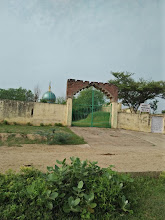
Dargah Kamaliya is a modest yet spiritually significant Sufi shrine in Balkhandi Naka, Banda, Uttar Pradesh, honoring a local saint in the Chishti tradition of Islamic mysticism. Tucked within the historic Bundelkhand region's urban fabric, it attracts devotees for its aura of tranquility and devotion, reflecting the area's deep-rooted Islamic heritage.
In the labyrinthine lanes of Balkhandi Naka, a vibrant yet understated neighborhood in Banda—the ancient heartland of Bundelkhand—stands Dargah Kamaliya, a beacon of Sufi piety amid the district's storied past. This unassuming shrine, dedicated to a revered local saint whose name evokes the essence of divine perfection (Kamaliya, derived from "kamil" meaning complete or perfect in spiritual attainment), encapsulates the Chishti Order's timeless message of love, tolerance, and inner enlightenment. Rooted in the oral traditions of Banda's Muslim community, the dargah commemorates a mystic figure believed to have lived during the transitional Nawabi period, when Sufi influences from Delhi and Awadh permeated the region's feudal courts, fostering spiritual havens that bridged Hindu and Muslim worlds. Banda's antiquity, evidenced by Paleolithic artifacts and its role as a Mughal outpost along the Ken River trade routes, set the stage for such sacred sites. Though archival records on Hazrat Kamaliya remain sparse, local lore portrays him as a wandering faqir whose teachings emphasized tawhid (unity of God) and service to the marginalized, much like the Chishti saints who preceded him in northern India. Devotees flock here seeking intercession for healing, prosperity, and peace, attributing miracles to the saint's enduring barakah (blessings). The shrine's sanctity is palpable in its simple mazar (tomb), where verses from Rumi and Attar adorn the walls, inviting contemplation under the shade of neem trees that whisper tales of bygone eras. Architecturally, Dargah Kamaliya exemplifies the restrained elegance of provincial Sufi mausolea: a low-domed sanctum of lime-plastered brick, encircled by a courtyard for communal ibadat (worship). Flanking it are modest prayer halls with mihrabs etched in stucco arabesques, allowing the faithful to perform salat in serene isolation. Likely erected in the late 18th or early 19th century—contemporaneous with the Bundela Nawabs' patronage of Islamic architecture—the structure bears subtle influences from Awadhi styles, evident in its chhatris (pavilions) and jaali screens that diffuse the harsh Bundelkhand sun. No opulent chandeliers or gilded minbars grace the interior; instead, its allure lies in the flickering diyas and the rhythmic chants of naats during evening mehfil, evoking the dargah's role as a living repository of devotional poetry. The annual urs at Dargah Kamaliya, observed with qawwali sessions and communal iftar during Ramadan, transforms the site into a vibrant tapestry of faith, drawing pilgrims from neighboring hamlets and the distant Vindhyas. Situated at the crossroads of Balkhandi Naka—a locality named for its historical gate (naka) guarding ancient paths—the dargah remains accessible via Banda's colonial-era bazaars, its gates open from fajr to maghrib. In preserving the unadorned piety of Bundelkhand's Islamic legacy, Dargah Kamaliya endures as a quiet testament to the Sufi ideal: in the pursuit of kamaliya, or spiritual completeness, one finds the divine reflected in the humble human soul.
Year of Built: Not Available
Address: F8FH+75J Paragi, Chhabi Talab Rd, Balkhandi Naka, Banda, Uttar Pradesh 210001
Country: India
State: Uttar Pradesh
District: Banda
Pincode: 210001
Longitude: 80.3317° E
Latitude: 25.4375° N