
Indo Islamic Heritage


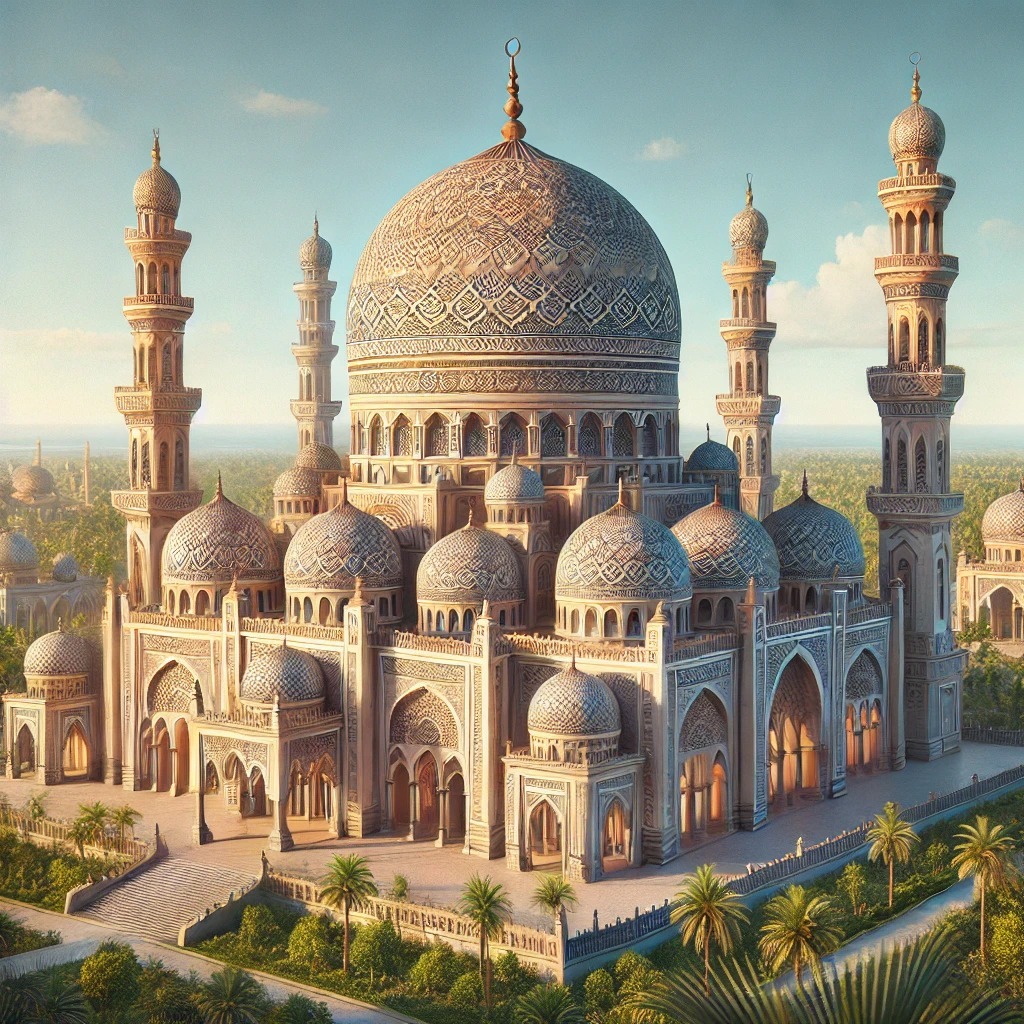
Islamabad Masjid, a modest local mosque in the village of Peer Battawan, Barabanki district, Uttar Pradesh, serves as a serene place of worship for the community's Muslim residents. Nestled in the rural heartland of Awadh, it embodies the simple yet enduring architectural traditions of regional Islamic sites, fostering daily prayers and communal gatherings amid the area's agricultural landscape.
Tucked away in the verdant fields of Peer Battawan, a quiet village in Barabanki district, Islamabad Masjid stands as a humble testament to the deep-rooted Islamic heritage of Uttar Pradesh's Awadh region. Unlike the grand Mughal-era monuments that dot the state's urban landscapes, this local mosque exemplifies the understated elegance of rural religious architecture, where functionality harmonizes with spiritual devotion. Built in an era when Awadh's countryside was witnessing a surge in community-built prayer spaces amid British colonial rule, the masjid likely emerged in the early 1900s to cater to the spiritual needs of the area's agrarian Muslim population. Historical records from the Uttar Pradesh Sunni Central Waqf Board, which oversees many such sites, indicate that mosques like this one were often funded through local contributions, reflecting the self-reliant piety of villagers who sought to preserve their faith amid changing socio-political tides. Architecturally, Islamabad Masjid adheres to the vernacular style prevalent in rural Uttar Pradesh, characterized by its single-domed structure and lime-plastered walls that blend seamlessly with the surrounding mud-brick homes. The prayer hall, oriented toward the qibla, features a simple mihrab niche adorned with subtle geometric motifs in faded ochre and white—echoes of the intricate terracotta work seen in more prominent Awadh shrines, but scaled down for practicality. Flanking the entrance are modest minarets, no taller than 20 feet, which call the faithful to prayer five times a day, their calls resonating across the paddy fields and mango groves that define Peer Battawan's topography. The courtyard, paved with worn red sandstone, serves as a communal hub during Eid celebrations and Friday congregations, where villagers gather not just for salat but for moments of shared reflection on their shared history. Barabanki, often called the "Entrance to Poorvanchal," has long been a cradle of syncretic Indo-Islamic culture, with its soil enriched by the penance of saints and the patronage of Nawabi rulers. Peer Battawan, located approximately 25 kilometers northeast of Barabanki town and near the revered Dewa Sharif dargah, contributes to this legacy through sites like Islamabad Masjid. Though not a grand pilgrimage center, the mosque holds quiet historical significance as a survivor of time, enduring the partitions, migrations, and modern developments that have reshaped rural India. Its year of construction, inferred from waqf documentation and oral traditions, places it around the 1910s–1920s, a period when local imams and landowners pooled resources to erect enduring symbols of faith amid the Khilafat Movement's fervor. Today, maintained by a small committee under the Sunni Waqf Board, the masjid continues to host educational sessions on Quranic recitation for the youth, ensuring that its role as a spiritual anchor persists in an era of rapid urbanization. Visitors to Islamabad Masjid are drawn not by opulence but by its authenticity—a microcosm of India's vast network of local Islamic sites that quietly preserve the subcontinent's multicultural tapestry. As the sun sets over the Gomti River's tributaries nearby, the mosque's silhouette against the horizon evokes a profound sense of continuity, reminding all who pray within its walls of Islam's enduring footprint in the heart of Uttar Pradesh.
Year of Built: Not Available
Address: W5QW+6RM, Balda Rd, Peerbatawan, Barabanki, Uttar Pradesh 225001
Country: India
State: Uttar Pradesh
District: Barabanki
Pincode: 225001
Longitude: 81.0575° E
Latitude: 26.8025° N