
Indo Islamic Heritage


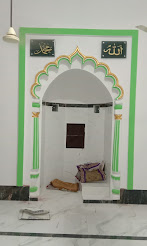
Masjid-e-Aqsa, a modest local mosque in Satyapremi Nagar, Barabanki, Uttar Pradesh, serves as a serene place of worship for the community's Muslim residents. Named after the revered Al-Aqsa Mosque in Jerusalem, it reflects the deep spiritual connection Indian Muslims maintain with global Islamic heritage. Built in the mid-20th century, it embodies the simple yet enduring architectural style of regional mosques, fostering daily prayers and community gatherings in this vibrant neighborhood.
Nestled in the heart of Satyapremi Nagar, a bustling residential locality in Barabanki district, Masjid-e-Aqsa stands as a quiet testament to the rich tapestry of Islamic life in rural Uttar Pradesh. Barabanki, located approximately 30 kilometers east of Lucknow in the fertile Awadh region, has long been a crossroads of cultural and religious influences, with its history tracing back to the Mughal era and beyond. This local mosque, though not among the grand monuments of India's Islamic past like the Taj Mahal or Jama Masjid, holds its own significance as a community anchor, embodying the grassroots spirit of faith that sustains Muslim life in small-town India. The mosque's name, Masjid-e-Aqsa, evokes the sanctity of Jerusalem's Al-Aqsa Mosque—the third holiest site in Islam—symbolizing aspiration and unity for worshippers far from the Middle East. Constructed in the 1960s amid post-independence urban expansion in Satyapremi Nagar, it was formally registered as Sunni waqf property on May 17, 1968, by the Uttar Pradesh Sunni Central Waqf Board. This registration underscores its legal and communal standing, ensuring its maintenance as a dedicated space for prayer under Islamic endowments. The structure, typical of mid-20th-century vernacular architecture in northern India, features a simple rectangular prayer hall with whitewashed walls, arched doorways, and a modest minaret that calls the faithful to salah five times a day. Its unadorned facade, accented by geometric motifs and a central mihrab (niche indicating the direction of Mecca), prioritizes functionality over opulence, reflecting the practical ethos of local builders who drew from Awadhi traditions while adapting to modern materials like concrete and brick. Historically, Masjid-e-Aqsa emerged during a period of social transformation in Barabanki, a district known for its diverse population and agricultural prosperity along the Gomti River. The 1960s saw rapid growth in Satyapremi Nagar, with new housing colonies, schools like Pioneer Montessori High School, and markets sprouting along Raj Kamal Road, where the mosque is conveniently situated. As a waqf property, it has served not only as a place for namaz but also as a venue for modest community events, such as iftar gatherings during Ramadan and educational sessions on Quranic studies. Unlike the opulent Mughal-era mosques with intricate jaali work and domes, Masjid-e-Aqsa's design emphasizes accessibility, with an open courtyard that accommodates overflow crowds during Jumu'ah prayers. Its location near key landmarks—like the Indian Bank branch on Mohini Plaza and the historic Narcotics Office (Afeem Kothi)—integrates it seamlessly into the neighborhood's daily rhythm, making it a focal point for over 30,000 residents in the 225001 pincode area. Over the decades, the mosque has quietly contributed to Barabanki's multicultural fabric, a district celebrated for sites like the Dargah of Haji Syed Waris Ali Shah in Dewa Sharif, just 25 kilometers away. While larger historical mosques in Uttar Pradesh, such as the 16th-century Babri Masjid in nearby Ayodhya, have drawn national attention for their architectural grandeur and contested legacies, Masjid-e-Aqsa represents the understated resilience of everyday Islamic spaces. It has withstood the tests of time, including regional floods from the Ghaghara River and socio-economic shifts, remaining a symbol of continuity. Today, at coordinates 26.93°N latitude and 81.19°E longitude—precisely aligned with the area's gentle topography—it continues to draw families from surrounding streets like Preet Vihar Colony and Awas Vikas, offering solace amid the hum of local life. In an era where India's historical Islamic sites are increasingly recognized for their cultural value, Masjid-e-Aqsa reminds us of the intimate scale of devotion. Its story is one of quiet endurance: a local edifice built by and for the people, preserving the essence of Islamic tradition in the heart of Uttar Pradesh's countryside. Visitors seeking an authentic glimpse of community faith will find here not marble halls, but the genuine pulse of prayerful harmony.
Year of Built: Not Available
Address: W5MR+64F, Unnamed Road, Satyapremi Nagar, Barabanki, Uttar Pradesh 225001
Country: India
State: Uttar Pradesh
District: Barabanki
Pincode: 225001
Longitude: 81.19°E
Latitude: 26.93°N