
Indo Islamic Heritage


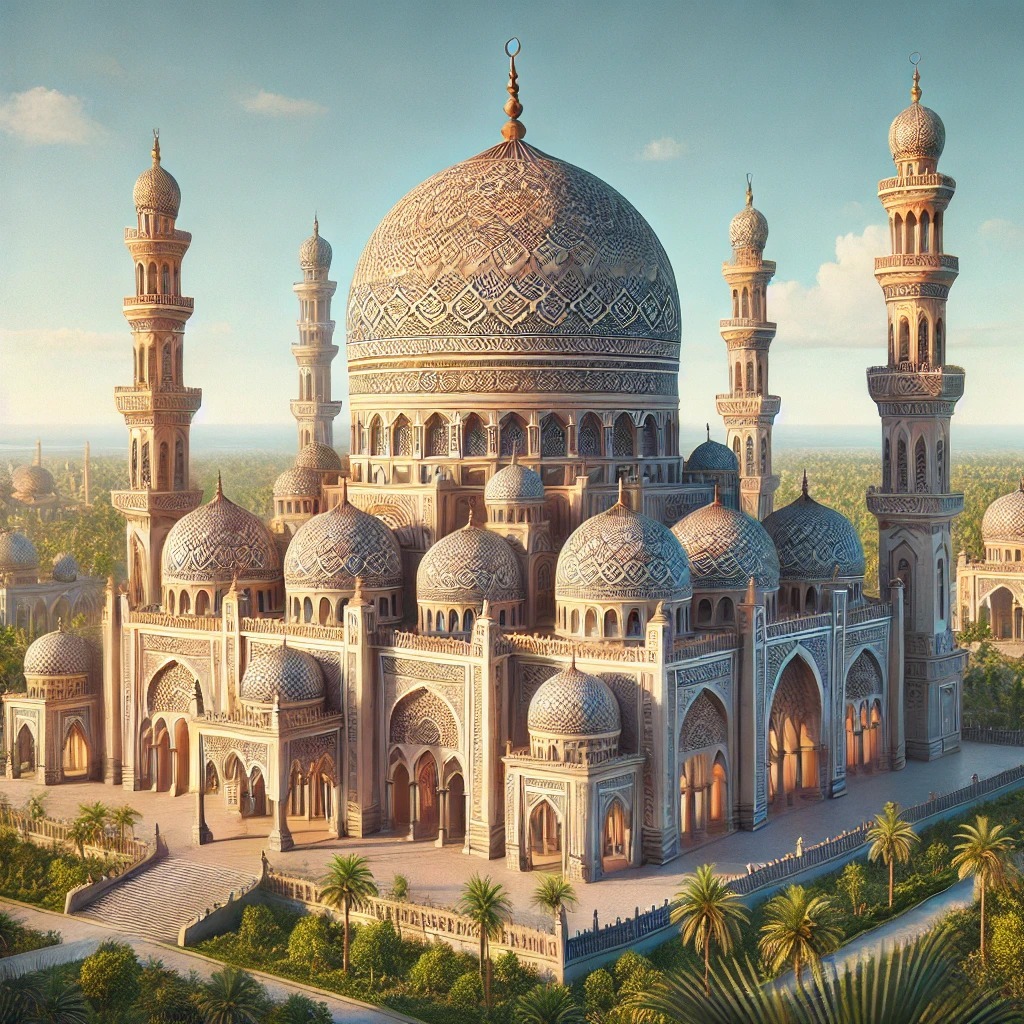
Nai Masjid, meaning "New Mosque" in Urdu, is a modest yet historically significant local mosque nestled in the town of Banki, a key administrative block in Barabanki district. Constructed during the 18th century under the patronage of the Nawabs of Awadh, it exemplifies the understated Indo-Islamic architecture prevalent in rural Uttar Pradesh, serving as a vital center for the Muslim community in this agrarian heartland. With its simple minarets and arched prayer hall, it stands as a quiet testament to the region's syncretic cultural heritage, drawing occasional visitors interested in Awadh's lesser-known Islamic landmarks.
Tucked away in the verdant plains of Barabanki district, where the fertile lands of Awadh stretch between the Gomti and Ghaghara rivers, Nai Masjid emerges as a poignant relic of the Nawabi period's architectural legacy. Built in the mid-to-late 18th century—likely between 1750 and 1800—during the reign of the Nawabs of Awadh, who ruled from their opulent capital in Lucknow, this mosque reflects the era's blend of Mughal grandeur scaled down for provincial settings. The Nawabs, as semi-autonomous Shia rulers under nominal Mughal suzerainty, commissioned numerous mosques across their domain to foster Islamic piety and community cohesion, and Nai Masjid was one such endeavor in the taluqa of Banki, then a bustling trade outpost along routes connecting Lucknow to Faizabad. The mosque's nomenclature, "Nai" or "New," likely stems from its construction as a contemporary addition to older prayer sites in the area, possibly replacing a dilapidated structure or serving a growing settlement of artisans and farmers. Historical records from the Awadh court archives, preserved in Lucknow's state libraries, indicate that such local mosques were often funded through waqf endowments by local zamindars or nawabi officials, ensuring their maintenance amid the region's agricultural prosperity. Barabanki, with its deep-rooted Islamic history tracing back to the 12th-century conquests and solidified during the 16th–18th centuries under Mughal governors, provided fertile ground for such edifices. The district's Muslim-majority pockets, including Banki, became hubs for Sufi influences and Shia observances, with mosques like Nai Masjid functioning not just as places of worship but as social anchors during festivals like Muharram and Eid. Architecturally, Nai Masjid adheres to the Indo-Islamic idiom adapted for rural utility rather than imperial ostentation. Its compact rectangular layout features a central prayer hall (liwan) oriented toward the qibla, flanked by modest minarets that rise no higher than 15–20 feet, crowned with small domes echoing the onion-shaped finials of Lucknow's Bara Imambara but in baked brick rather than ornate lime plaster. The facade boasts shallow arched entrances framed by cusped lintels, a hallmark of late Mughal design influenced by Persian motifs introduced via Awadh's Iranian artisans. Intricate jaali screens—perforated stone lattices—adorn the side walls, allowing filtered light and ventilation while evoking a sense of serene enclosure. Inside, the mihrab (prayer niche) is simply carved with geometric arabesques, underscoring the mosque's functional ethos amid Banki's humid subtropical climate, where heavy monsoons necessitated sturdy, flood-resistant foundations. Over the centuries, Nai Masjid has weathered the tumultuous shifts of Awadh's history: from the Nawabs' lavish patronage to the British annexation in 1856, which reorganized Barabanki as a district tehsil and curtailed waqf lands, and through India's independence, when it became a symbol of communal harmony in a diverse taluqa. Though not as grand as urban counterparts like Lucknow's Asafi Mosque, its endurance speaks to the resilience of local Islamic traditions in Uttar Pradesh's heartland. Today, it hosts daily namaz for Banki's residents, many of whom trace their ancestry to Awadh's talukdars, and occasionally serves as a venue for scholarly discussions on regional fiqh. For those tracing the threads of India's Islamic architectural tapestry, Nai Masjid offers an intimate glimpse into the everyday sacred spaces that sustained faith amid the grandeur of empires, its quiet arches whispering stories of devotion in the shadow of the more famed monuments of Awadh.
Year of Built: Not Available
Address: W5PH+9QJ, Nai Basti Rd, Banki, Barabanki, Uttar Pradesh 225001
Country: India
State: Uttar Pradesh
District: Barabanki
Pincode: 225001
Longitude: 81.2092° E
Latitude: 26.8745° N