
Indo Islamic Heritage


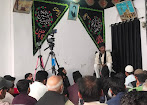
Imambara Meer Masoom Ali is a modest yet spiritually significant Shia congregation hall and shrine in Nawabganj, Barabanki, Uttar Pradesh, dedicated to the revered scholar Mir Masoom Ali Shah. Nestled in the historic Awadh region, it serves as a serene local site for Muharram observances and daily prayers, reflecting the enduring Shia heritage of the area. Built in the 18th century, it embodies simple Mughal-influenced architecture, with arched halls and a central tomb that draws devotees seeking solace and remembrance.
Tucked away in the quiet tehsil town of Nawabganj, within the culturally rich district of Barabanki, Imambara Meer Masoom Ali stands as a poignant testament to the Shia Muslim traditions that flourished under the Nawabs of Awadh. This local imambara, often simply referred to as a mosque-shrine complex by the community, honors Mir Masoom Ali Shah (d. 1593), a celebrated Sufi saint and scholar whose spiritual legacy spans the Indian subcontinent. As a key figure in the Chishti order, Mir Masoom Ali Shah's teachings on devotion and mysticism resonated deeply in Awadh, influencing the construction of shrines like this one, which became focal points for religious gatherings and personal reflection. The imambara's origins trace back to the mid-18th century, a period when Nawab Shuja-ud-Daula (r. 1754–1775), the third Nawab of Awadh, actively patronized Shia institutions to strengthen communal bonds amid political upheavals. Constructed around the 1750s, it was likely commissioned by local taluqdars or Qidwai nobles—prominent Shia landholders in Nawabganj—who received grants from the Nawab for villages like Maila Raiganj, the area's historical core. This era saw a surge in imambara building across Awadh, blending Persian architectural motifs with indigenous craftsmanship to create spaces for majlis (mourning assemblies) during Muharram, commemorating the martyrdom of Imam Hussain at Karbala. Unlike the opulent Bara Imambara in nearby Lucknow, Imambara Meer Masoom Ali exemplifies understated elegance, its construction emphasizing functionality over grandeur to serve the everyday needs of Nawabganj's residents. Architecturally, the imambara features a compact rectangular layout typical of regional Shia halls, with a central arched hall supported by minimal pillars to accommodate congregations of up to a few hundred. The facade, facing the bustling yet serene lanes of Nawabganj, incorporates lime-plastered brickwork and subtle jaali screens for ventilation, allowing natural light to filter into the prayer space. At its heart lies the enshrined tomb (dargah) of Mir Masoom Ali Shah's relics or symbolic representations, adorned with intricate chini-kari tilework in blues and greens—echoing the saint's mystical associations with divine light. Flanking the main chamber are smaller annexes for alam (standards) processions and a modest mihrab oriented toward Mecca, underscoring its dual role as both a mosque and a commemorative site. The structure's low dome, crowned with a finial, rises modestly against the skyline, symbolizing humility in devotion, while surrounding courtyards provide space for tazia (replica mausoleum) preparations during the Islamic lunar month of Muharram. Historically, the imambara has been woven into Nawabganj's narrative of resilience. During the 1857 Indian Rebellion, the town witnessed the Battle of Nawabganj, where local taluqdars rallied against British forces, and such religious sites offered sanctuary and unity to the community. Post-rebellion, under British oversight, the imambara continued as a vital cultural anchor, preserving oral traditions of marsiya recitations and noha readings that evoke the Karbala tragedy. Today, it remains a living heritage, hosting annual Urs (death anniversary) celebrations for Mir Masoom Ali Shah, where qawwali performances and scholarly discourses draw pilgrims from across Uttar Pradesh. Its location at 26.94°N, 81.19°E—precisely aligned with the fertile Gangetic plains—places it amid Barabanki's lush groves, enhancing its tranquil aura. As a cornerstone of Nawabganj's Islamic landscape, Imambara Meer Masoom Ali not only safeguards the saint's spiritual inheritance but also embodies the syncretic ethos of Awadh, where faith intersects with history to foster enduring communal harmony. For those tracing India's Shia architectural tapestry, this unassuming gem offers a intimate glimpse into the soul of local devotion.
Year of Built: Not Available
Address: Nawabganj, Katra, Barabanki, Uttar Pradesh 225001
Country: India
State: Uttar Pradesh
District: Barabanki
Pincode: 225001
Longitude: 81.19°E
Latitude: 26.94°N