
Indo Islamic Heritage


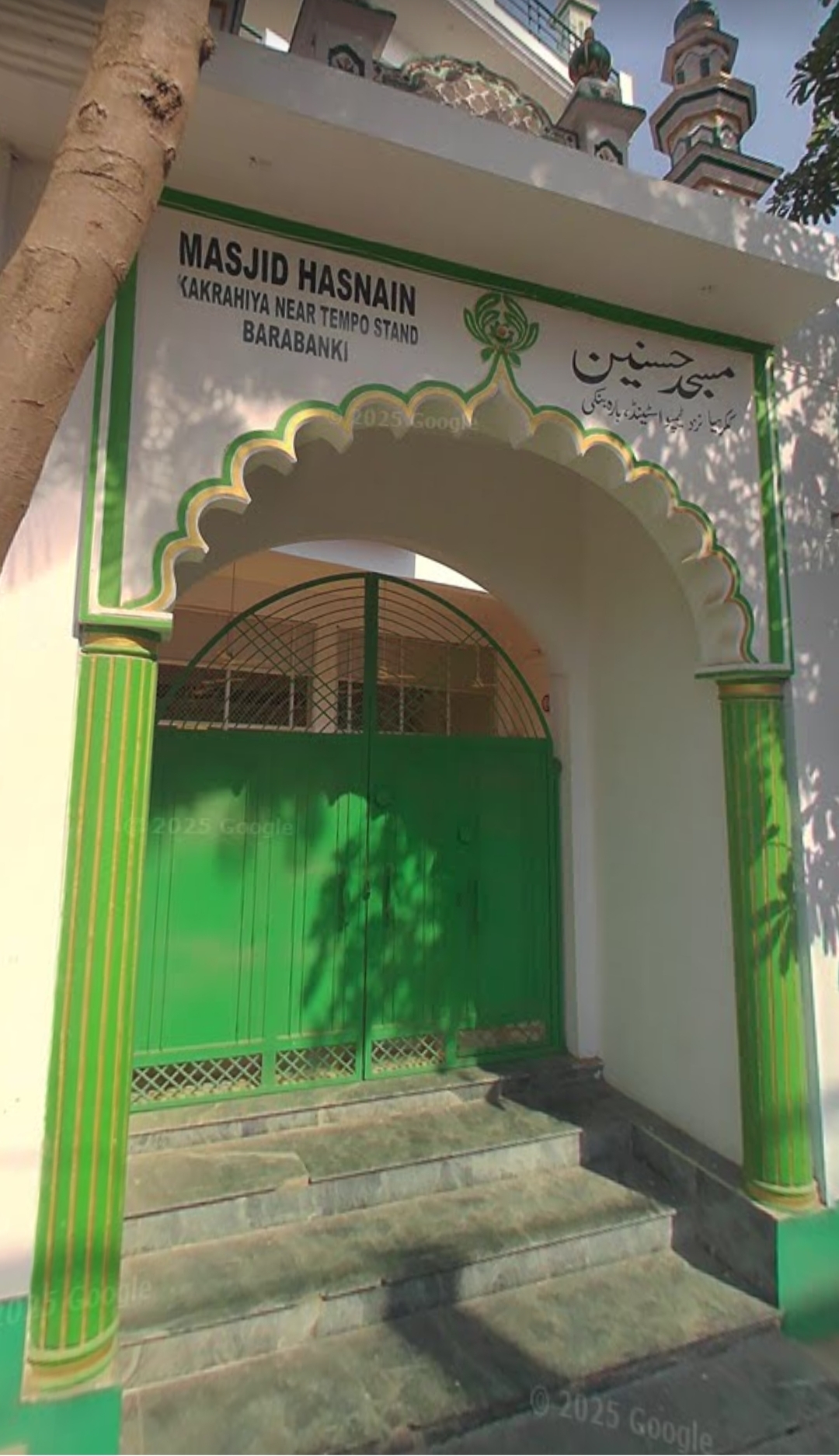
Masjid Hasnain is a modest local mosque nestled in the heart of Palhari village, serving as a spiritual anchor for the Muslim community in this rural pocket of Barabanki district. Situated near the bustling Tempo Stand, it embodies the simplicity and devotion characteristic of vernacular Islamic architecture in Awadh, fostering daily prayers and communal gatherings amid the verdant plains of Uttar Pradesh.
In the fertile expanse of Barabanki district, where the Ghaghara and Gomti rivers carve gentle boundaries through the landscape, lies Palhari—a serene village in the Masauli block, approximately 21 kilometers east of the district headquarters. Here, amid the rhythm of agricultural life and the hum of local transport at the Palhari Tempo Stand, stands Masjid Hasnain, a humble yet vital testament to the enduring Islamic heritage of rural Uttar Pradesh. Though not among the grand Mughal-era monuments that dot the region's historical tapestry, this local mosque quietly upholds the traditions of faith and community in a land steeped in syncretic cultural exchanges. Masjid Hasnain, named in reverence to Hasnain—the honorific for Prophets Hassan and Hussain, grandsons of the Prophet Muhammad—serves as the primary place of worship for Palhari's residents. Its location at the village's tempo stand underscores its role as a communal hub, where the calls to prayer (adhan) resonate not only through narrow lanes but also amid the comings and goings of daily life. The mosque's architecture reflects the unadorned vernacular style prevalent in 19th- and 20th-century rural Awadh: a simple rectangular prayer hall oriented toward the qibla, likely featuring a mihrab (niche indicating Mecca) and minbar (pulpit) crafted from local materials. Whitewashed walls and a modest dome or flat roof provide shelter for the faithful, while an open courtyard invites reflection and ablutions under the open sky. Though detailed records of its construction remain elusive, such mosques in the region often emerged during the Nawabi period or under British colonial influence, evolving from modest prayer spaces to enduring village landmarks as Muslim populations settled and prospered in the post-Mughal era. The mosque's significance extends beyond its physical form, embodying the resilient spirit of Islam in Barabanki—a district renowned for its spiritual diversity, from the Sufi shrines of Dewa to the ancient temples of Mahadeva. For Palhari's inhabitants, Masjid Hasnain is more than a site of ritual; it is a space for tarawih prayers during Ramadan, Eid celebrations that unite families across the village, and quiet moments of sujood (prostration) that connect the community to broader Islamic traditions. In a landscape where elevation hovers around 119 meters above sea level and the air carries the scent of ripening paddy fields, the mosque stands as a subtle architectural echo of Awadh's Islamic legacy—one that prioritizes devotion over ostentation, fostering harmony in a region where faiths have intertwined for centuries. Visitors to this unassuming site may find in its tranquility a poignant reminder of how local mosques like Hasnain preserve the intimate, lived history of India's Muslim heartlands.
Year of Built: Not Available
Address: Palhari Tempo Stand, Near, Barabanki, Uttar Pradesh 225001
Country: India
State: Uttar Pradesh
District: Barabanki
Pincode: 225001
Longitude: 81.3167° E
Latitude: 26.9167° N