
Indo Islamic Heritage


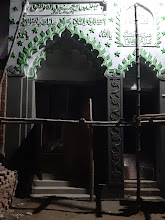
Masjid Al Murtuza is a modest yet revered local mosque nestled in the heart of Akbar Nagar, a quiet residential neighborhood in Barabanki, Uttar Pradesh. Serving as a spiritual anchor for the surrounding Muslim community, it embodies the simplicity and devotion characteristic of smaller Islamic prayer sites in the Awadh region, fostering daily worship and communal gatherings amid the district's rich historical tapestry.
Tucked away along the Nabiganj Road in Akbar Nagar, a locality that echoes the Mughal-era influences of Barabanki district, Masjid Al Murtuza stands as a poignant emblem of local Islamic heritage in Uttar Pradesh. Barabanki, with its storied past dating back to the 11th century under early Muslim rulers like Sayyed Salar Masood and later the Mughals during Emperor Akbar's reign, has long been a cradle for modest religious structures that reflect the everyday piety of its inhabitants rather than grand imperial commissions. While the district boasts more prominent sites like the ancient dargahs and imambaras of nearby Lucknow, Masjid Al Murtuza represents the unassuming yet enduring legacy of grassroots Islamic architecture in rural and semi-urban Awadh. The mosque's name, "Al Murtuza," draws from the honorific title of Imam Ali ibn Abi Talib, the fourth caliph and a central figure in Shia Islam, suggesting possible affiliations with Shia traditions prevalent in the region—though it welcomes worshippers from all sects as a community focal point. Constructed likely in the mid-20th century, though exact records remain elusive in public archives, the structure exemplifies the post-independence era's blend of functionality and subtle aesthetic restraint. Its unpretentious design features a simple rectangular prayer hall with whitewashed walls, arched mihrab facing Mecca, and a modest minaret that calls the faithful to prayer five times a day. The courtyard, shaded by neem trees, provides space for wudu (ablution) and occasional community iftars during Ramadan, underscoring its role beyond mere worship as a hub for social cohesion in Akbar Nagar's close-knit neighborhoods. Historically, Barabanki's landscape has been shaped by waves of Islamic settlement since the 1030 AD incursions, evolving into a mosaic of Sufi shrines and neighborhood mosques that sustained faith amid the Nawabi and colonial periods. Masjid Al Murtuza, while not a monumental edifice like the 16th-century Jama Masjid of Fatehpur Sikri, contributes to this continuum by preserving oral traditions and local rituals. Devotees recount stories of its establishment by community elders post-Partition, a time when displaced families sought solace in rebuilding spiritual homes. Today, it remains a vital thread in the district's Islamic fabric, hosting Jumu'ah prayers and Muharram observances that draw residents from adjacent areas like Peerbatawan and Dayanand Nagar. In an era where grand historical narratives often overshadow local gems, Masjid Al Murtuza quietly endures, its coordinates at 26.93°N, 81.20°E marking a spot of quiet reverence just 30 kilometers from Lucknow. For those tracing Uttar Pradesh's understated Islamic heritage, this mosque offers a glimpse into the lived devotion that has defined Awadh's soul for centuries, reminding visitors of the profound in the prosaic.
Year of Built: Not Available
Address: W6M6+22W, Nabiganj Rd, Akbar Nagar, Barabanki, Uttar Pradesh 225001
Country: India
State: Uttar Pradesh
District: Barabanki
Pincode: 225001
Longitude: 81.20°E
Latitude: 26.93°N