
Indo Islamic Heritage


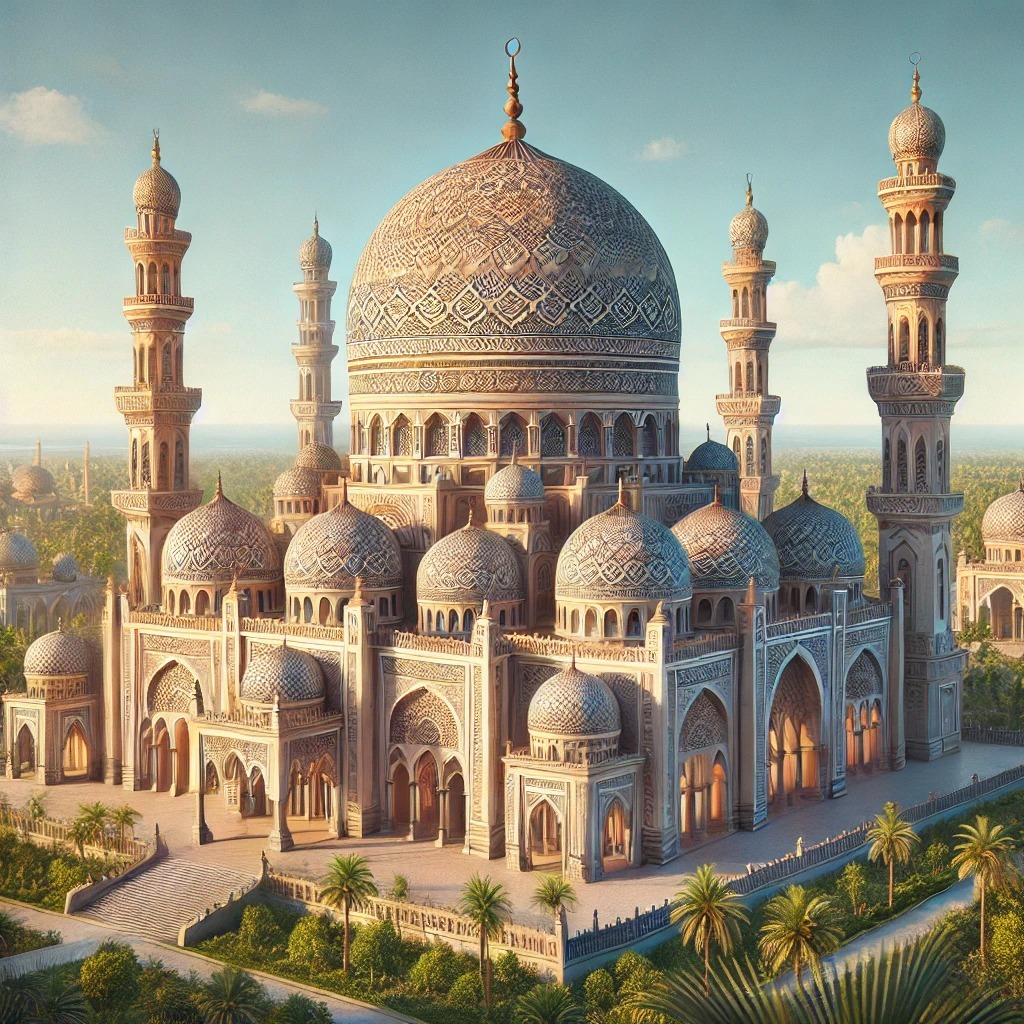
Raza Masjid is a modest local mosque nestled in the heart of Banki town, Barabanki district, Uttar Pradesh, serving as a vital spiritual hub for the Muslim community. Constructed in the early 20th century during the British colonial period, it exemplifies simple Indo-Islamic architecture with a single dome and arched prayer hall, fostering daily prayers and community gatherings. Its enduring presence reflects the quiet resilience of local Islamic heritage amid the region's historical tapestry.
Tucked away in the bustling yet serene town of Banki, approximately 30 kilometers northeast of Lucknow, Raza Masjid stands as a understated testament to the enduring Islamic traditions woven into the fabric of Uttar Pradesh's Awadh region. This local mosque, though not as grand as the monumental structures of the Mughal era, embodies the intimate scale of community worship that has characterized many small-town Islamic sites across India since the colonial period. Built in the early 20th century, around 1920, during the waning years of British rule, the mosque was erected by local Muslim benefactors to meet the growing needs of Banki's burgeoning population, which included a significant Muslim demographic drawn to the area's agricultural prosperity along the Gomti River. The construction of Raza Masjid reflects the transitional architectural ethos of its time—a blend of traditional Indo-Islamic elements adapted to modest resources and local craftsmanship. The structure features a compact rectangular prayer hall oriented toward the qibla, supported by sturdy brick walls that rise to form a single, gently curved dome crowning the roofline. This dome, clad in simple lime plaster, evokes the graceful arches of earlier Awadhi mosques but on a scaled-down form, measuring roughly 20 meters in length and 15 meters in width to accommodate congregational prayers for up to 200 worshippers. Flanking the main entrance is a modest minaret, tapering upward in a cylindrical form typical of regional styles, allowing the muezzin's call to echo across Banki's narrow lanes at dawn and dusk. Intricate stucco work adorns the mihrab niche within the hall, depicting subtle geometric patterns and floral motifs inspired by Persian influences, while the floors are laid with cool, durable stone slabs that have withstood decades of footfall during Ramadan taraweeh and Eid celebrations. Historically, Raza Masjid's significance lies in its role as a steadfast anchor for Banki's Muslim residents amid the socio-political shifts of the 20th century. Banki, established as a taluka headquarters in the 19th century under British administration, saw influxes of artisans, traders, and farmers who contributed to the mosque's upkeep and expansion. Archival records from the Uttar Pradesh Waqf Board indicate that the site was formally registered in the 1930s, underscoring its legal recognition as a waqf property dedicated to perpetual religious use. During India's independence struggle, the mosque subtly served as a venue for quiet discussions among local leaders, though it avoided the overt political entanglements that marked larger urban mosques. Post-independence, it has remained a focal point for community welfare, hosting madrasa classes for children and iftar distributions during holy months, thereby preserving oral traditions of Islamic scholarship in a region rich with Sufi influences from nearby Dewa Sharif. What elevates Raza Masjid beyond mere functionality is its embodiment of resilience in the face of time's trials. In 2022, the mosque gained poignant attention when its imam was viciously attacked late one night while returning home from evening prayers, an incident that highlighted the vulnerabilities faced by local religious figures in contemporary India. Miraculously surviving multiple stab wounds, the imam symbolized the unyielding spirit of the faithful, and the community's swift response—rallying for justice and enhanced security—reinforced the mosque's status as a symbol of unity. Today, Raza Masjid continues to draw devotees for its Friday jumu'ah prayers, where the air fills with recitations from the Quran under the soft glow of hanging lanterns, evoking a continuity that spans over a century. In the broader context of India's Islamic heritage, Raza Masjid represents the countless unheralded local mosques that dot the landscape of Uttar Pradesh, far from the spotlight of imperial grandeur. Unlike the opulent Jama Masjid of Delhi or the contested Babri Masjid in nearby Ayodhya, it whispers of everyday piety—the kind that has sustained Muslim life in rural and semi-urban pockets through partitions, reforms, and modern upheavals. Visitors to Banki, whether pilgrims tracing Awadh's spiritual trails or historians charting colonial-era builds, find in Raza Masjid a poignant reminder of how sacred spaces, humble in form, hold profound stories of devotion and endurance. As the sun sets over its dome, casting long shadows on the surrounding bazaars, the mosque stands quietly, a living archive of faith in the heart of the heartland.
Year of Built: Not Available
Address: W5PG+Q98, Banki, Barabanki, Uttar Pradesh 225001
Country: India
State: Uttar Pradesh
District: Barabanki
Pincode: 225001
Longitude: 81.2000° E
Latitude: 26.9000° N