
Indo Islamic Heritage


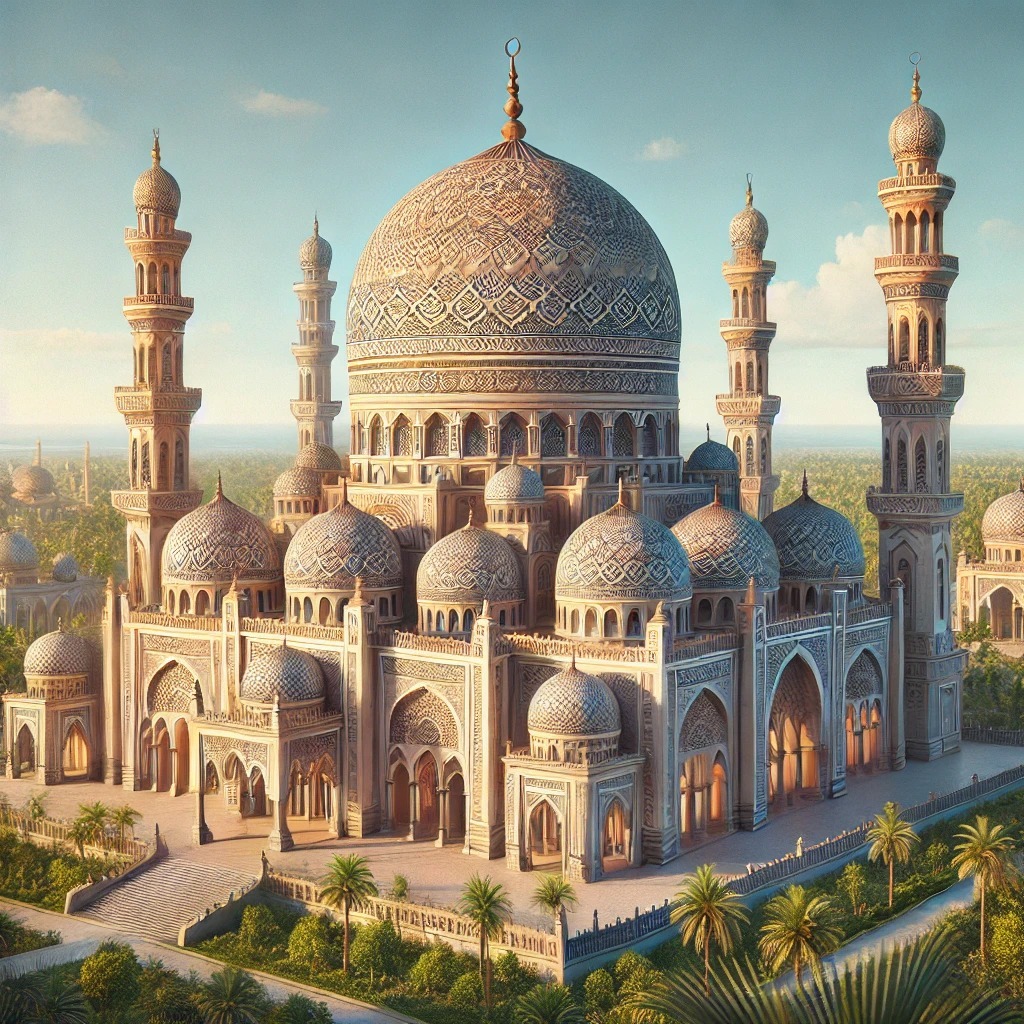
Masjid Allah Badi Rasoolpur stands as a serene testament to the enduring Islamic heritage of rural Uttar Pradesh, nestled in the village of Rasoolpur within Barabanki district. This modest yet spiritually significant mosque serves as a focal point for local Muslim worshippers, embodying the quiet devotion and communal bonds fostered in the region's historic landscape.
In the verdant heart of Barabanki district, where the fertile plains of Uttar Pradesh stretch toward the horizon like an open prayer mat, lies Rasoolpur—a humble village that whispers tales of bygone eras through its unassuming landmarks. Among these, Masjid Allah Badi emerges not as a grand edifice of marble and minarets, but as a poignant emblem of grassroots Islamic piety, its simple form harmonizing with the surrounding fields of sugarcane and mustard that have sustained generations. Built in an era when the Nawabs of Awadh extended their cultural and religious influence across the countryside, the mosque reflects the subtle yet profound ways in which Islam took root in rural India, far from the opulent courts of Lucknow yet deeply intertwined with them. The mosque's name, "Allah Badi"—translating roughly to "the ancient house of Allah"—evokes a sense of timeless reverence, suggesting layers of history accumulated over centuries of daily salat and seasonal celebrations. Though precise archival details remain elusive, its origins align with the 18th-19th century surge in mosque construction under Awadh's Shia Nawabs, who, despite their sectarian leanings, supported Sunni places of worship to foster communal harmony in districts like Barabanki. This period saw the proliferation of modest masjids in villages such as Rasoolpur, often funded by local zamindars or pious endowments (waqfs), designed not for spectacle but for solace. The structure likely features the characteristic Awadhi style: lime-plastered walls that glow golden at dawn, a modest mihrab niche etched with simple Quranic calligraphy invoking divine mercy, and an open courtyard where villagers gather for Jumu'ah prayers, their voices rising in unison against the backdrop of rustling palms. Rasoolpur itself, perched at an elevation of about 125 meters above sea level, has long been a crossroads of spiritual and agrarian life, its soil enriched by the nearby Gomti River and its people bound by traditions of hospitality and faith. The mosque, situated amid clustered homes and narrow lanes, serves as more than a place of worship; it is the village's spiritual anchor, hosting not only the five daily prayers but also pivotal moments like Eid ul-Fitr feasts and taraweeh recitations during Ramadan. In Barabanki's storied past—once a penance ground for saints and ascetics during medieval times—the masjid quietly upholds this legacy, its minaret casting long shadows that trace the footsteps of devotees who have sought refuge here since its inception. Today, Masjid Allah Badi endures as a living archive of Islamic continuity in Uttar Pradesh, where the call to prayer (adhan) mingles with the rhythms of rural existence. It invites reflection on the resilience of faith amid India's diverse tapestry, reminding visitors that true historical sanctity lies not in grandeur, but in the unbroken thread of devotion that binds a community to its sacred spaces. For those tracing the footsteps of Islamic heritage in the Gangetic plains, this unpretentious mosque offers a profound pause—a badi, or ancient, echo of Allah's eternal presence.
Year of Built: Not Available
Address: VJ38+42, Rasoolpur, Imiliha, Barabanki, Uttar Pradesh 225001
Country: India
State: Uttar Pradesh
District: Barabanki
Pincode: 225001
Longitude: 81°11'50"E
Latitude: 26°55'45"N