
Indo Islamic Heritage


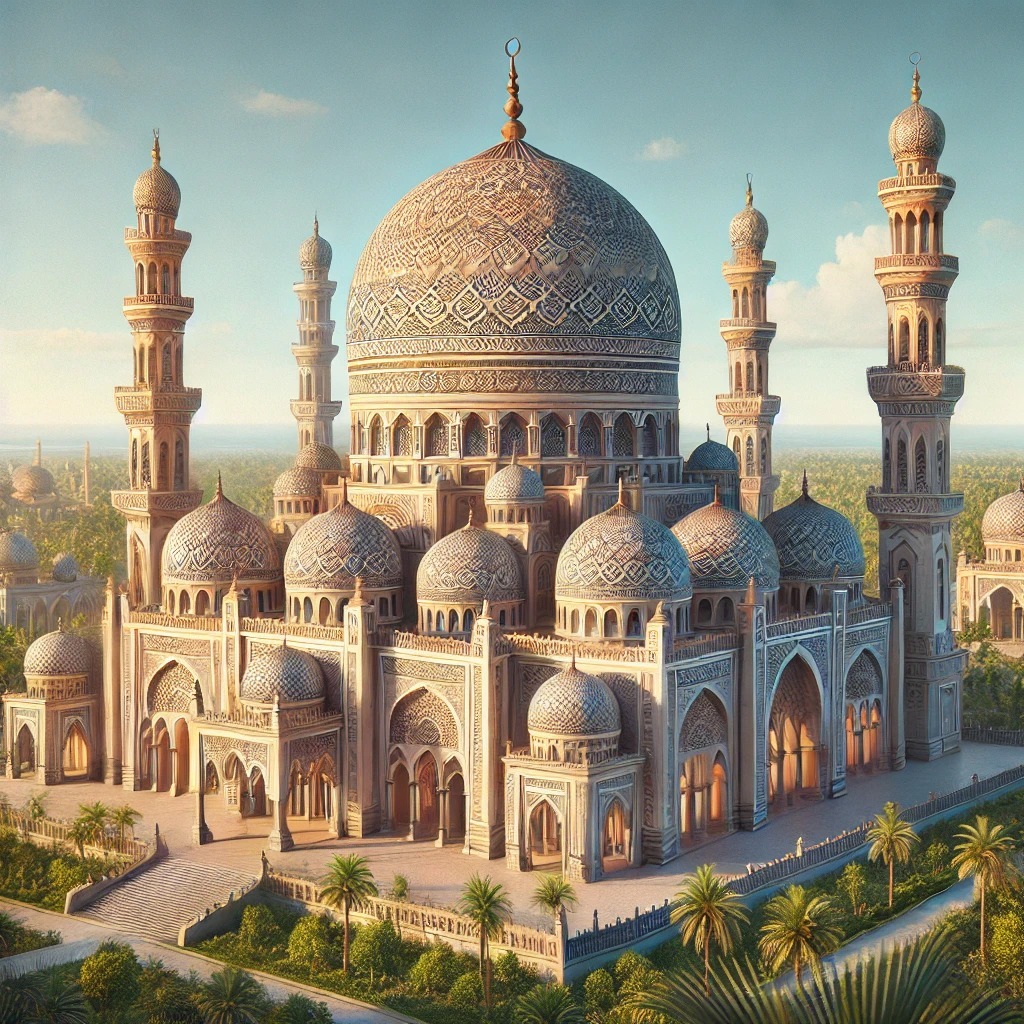
Nestled in the historic town of Banki within Uttar Pradesh's Barabanki district, Bade Miya Mazar stands as a revered Islamic shrine honoring Ghazi Saiyyad Salar Masud, a semi-legendary 11th-century warrior-saint and nephew of Mahmud of Ghazni. This modest yet spiritually significant site, often simply called the "Mazar of Bade Miya" (Elder Master), draws pilgrims seeking blessings for protection and valor, reflecting the syncretic traditions of Awadh's Sufi heritage. Its simple architecture belies a profound legacy of devotion spanning centuries.
In the verdant heart of Awadh, where the Ghaghara River's gentle flow has long nurtured fertile lands and ancient tales, lies the Bade Miya Mazar—a poignant testament to the intertwined histories of conquest, faith, and cultural fusion in medieval India. Situated in the bustling town of Banki, approximately 30 kilometers northeast of Lucknow, this shrine commemorates Ghazi Saiyyad Salar Masud (1014–1034 CE), a figure whose life and martyrdom have inspired generations of devotees across the subcontinent. Salar Masud, born in Ajmer to a noble Ghaznavid family, emerged as a young military leader during the early invasions of northern India. Accompanying his uncle, Sultan Mahmud of Ghazni, on campaigns, he is remembered not merely as a conqueror but as a saintly warrior who embodied chivalric ideals and Sufi piety. Legends recount his campaigns through the Gangetic plains, where he established outposts of Islamic learning and devotion amid the dense forests and riverine settlements of present-day Uttar Pradesh. His untimely death in battle at Bahraich in 1034 CE, at the tender age of 20, transformed him into "Ghazi Miyan" (Victorious Lord), a title evoking both martial prowess and spiritual grace. Over time, local traditions elevated him further as "Bade Miya" among Hindu and Muslim communities alike, symbolizing a protective elder whose intercession transcends sectarian boundaries. The mazar in Banki represents one of several satellite shrines erected in honor of Salar Masud, as the primary dargah in Bahraich became overwhelmed by pilgrims by the 12th century. Historical accounts suggest these secondary sites proliferated during the Delhi Sultanate, particularly under rulers like Nasiruddin Mahmud (r. 1246–1266 CE), who formalized veneration at Bahraich in 1250 CE by constructing an architectural complex around the tomb. While precise records for Banki's shrine are scarce—typical of many regional mazars preserved through oral tradition and communal upkeep—its establishment aligns with this 13th-14th century expansion, when Sufi orders like the Chishti and Qadiri wove Islamic mysticism into the fabric of Awadh's diverse society. The structure itself is unassuming: a low-domed mausoleum of brick and lime plaster, adorned with simple mihrabs and calligraphy invoking Quranic verses on mercy and fortitude. Flanking it are modest prayer chambers, where the air carries the faint scent of rose attar from offerings, evoking the timeless rituals of urs (death anniversary) celebrations marked by qawwali and communal feasts. What elevates Bade Miya Mazar beyond its modest form is its role in the syncretic spiritual landscape of Uttar Pradesh. In Awadh, where Hindu and Muslim traditions have mingled for centuries, Salar Masud's cult exemplifies this harmony. Devotees, regardless of faith, approach the shrine with vows for courage—be it in battles of the heart or field—offering chadars (embroidered sheets) and lighting incense in earthen lamps. Historical gazetteers of Barabanki district, compiled during British rule, note the site's enduring draw, with pilgrims traversing the Gomti River's banks to seek "Bade Miya's" blessings for safe harvests and familial protection. Though overshadowed by grander monuments like the Taj Mahal or the dargah at Dewa Sharif (home to Haji Waris Ali Shah), Banki's mazar quietly preserves the essence of Ghazi Miyan's legacy: a bridge between the sword and the soul, the invader and the integrated. Today, as Banki evolves into a semi-urban hub connected by National Highway 28 and the Lucknow-Barabanki rail line, the mazar remains a serene oasis amid daily life. Managed under local waqf boards, it hosts annual gatherings that reinforce communal bonds, underscoring the shrine's quiet resilience. For those tracing India's Islamic heritage, Bade Miya Mazar offers not just a historical footnote but a living echo of faith's enduring power in the cradle of Awadh.
Year of Built: Not Available
Address: W5MF+V2V, Unnamed Road, Banki, Barabanki, Uttar Pradesh 225001
Country: India
State: Uttar Pradesh
District: Barabanki
Pincode: 225001
Longitude: 81.5200° E
Latitude: 26.8700° N