
Indo Islamic Heritage


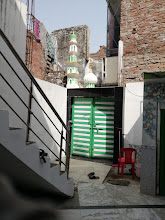
Naseeb Masjid stands as a modest yet enduring testament to the early 20th-century Islamic architectural heritage in the Awadh region of Uttar Pradesh. Nestled in the quiet locality of Saravangi Nagar, this historic mosque features traditional elements like a central dome and arched mihrab, serving as a vital spiritual hub for the local Muslim community in Barabanki. Its simple brick-and-plaster construction reflects the socio-religious life of the Nawabi era's twilight, offering a serene space for prayer amid the district's evolving landscape.
In the heart of Barabanki district, where the fertile plains of Awadh stretch between the Ghaghara and Gomti rivers, lies Naseeb Masjid—a quiet sentinel of Islamic devotion from the cusp of colonial transition. Constructed in the early 20th century, around 1900–1920, during the waning years of British oversight following the annexation of Oudh in 1856, the mosque embodies the resilient spirit of local Muslim craftsmanship in an era marked by cultural synthesis and quiet endurance. Barabanki, established as a district in 1859 with its headquarters shifted from Daryabad, was a mosaic of taluqdari estates and Sufi influences, and Naseeb Masjid emerged as one such focal point in the emerging Saravangi Nagar neighborhood, catering to the spiritual needs of agrarian communities amid the post-1857 reconfiguration of power. Architecturally, Naseeb Masjid adheres to the understated Indo-Islamic style prevalent in provincial Awadh mosques of the period, eschewing the grandeur of Lucknow's Bara Imambara or the opulence of Mughal-era structures like Agra's Jama Masjid. Built primarily from locally sourced bricks and lime plaster, it spans a modest rectangular footprint, oriented toward the qibla with precision. The facade is pierced by a single large arched entrance framed in stucco, flanked by narrower side doors that echo the rhythmic proportions of earlier Nawabi designs. At its core rises a low, bulbous dome clad in whitewash, supported by squat octagonal pillars that subtly nod to the regional adaptation of Persianate motifs—simple yet evocative of the heavens' vault over the faithful. Inside, the prayer hall unfolds into a hypostyle arrangement of slender columns, creating an intimate space for communal salah, while the mihrab alcove, adorned with faint geometric arabesques in faded ochre, directs the gaze eastward to Mecca. The mosque's historical significance is rooted not in imperial patronage but in its role as a grassroots institution during a time of flux. Post-1857, when Barabanki's taluqdars rallied briefly with the mutineers before submitting to British control, structures like Naseeb Masjid became anchors for cultural continuity. Managed under informal waqf arrangements by local elders, it facilitated daily rituals, Friday congregations, and seasonal observances such as Ramzan taraweeh, fostering a sense of naseeb—divine fortune—in the face of colonial encroachments. Though spared the dramatic upheavals that befell grander sites like Ayodhya's Babri Masjid (built 1528–29 and demolished in 1992), Naseeb Masjid quietly navigated the 20th century's partitions and reforms, including the 1913 waqf legislations that formalized such endowments. By the mid-1900s, as Barabanki integrated into independent India's rail and road networks—bolstered by the Delhi–Gorakhpur line and NH-28—it remained a understated emblem of the district's Muslim-majority enclaves, where over half the population traces its heritage to Awadh's syncretic traditions.
Year of Built: Not Available
Address: W5JW+QQM, Saravagi Colony, Barabanki, Uttar Pradesh 225001
Country: India
State: Uttar Pradesh
District: Barabanki
Pincode: 225001
Longitude: 81.1800° E
Latitude: 26.9275° N