
Indo Islamic Heritage


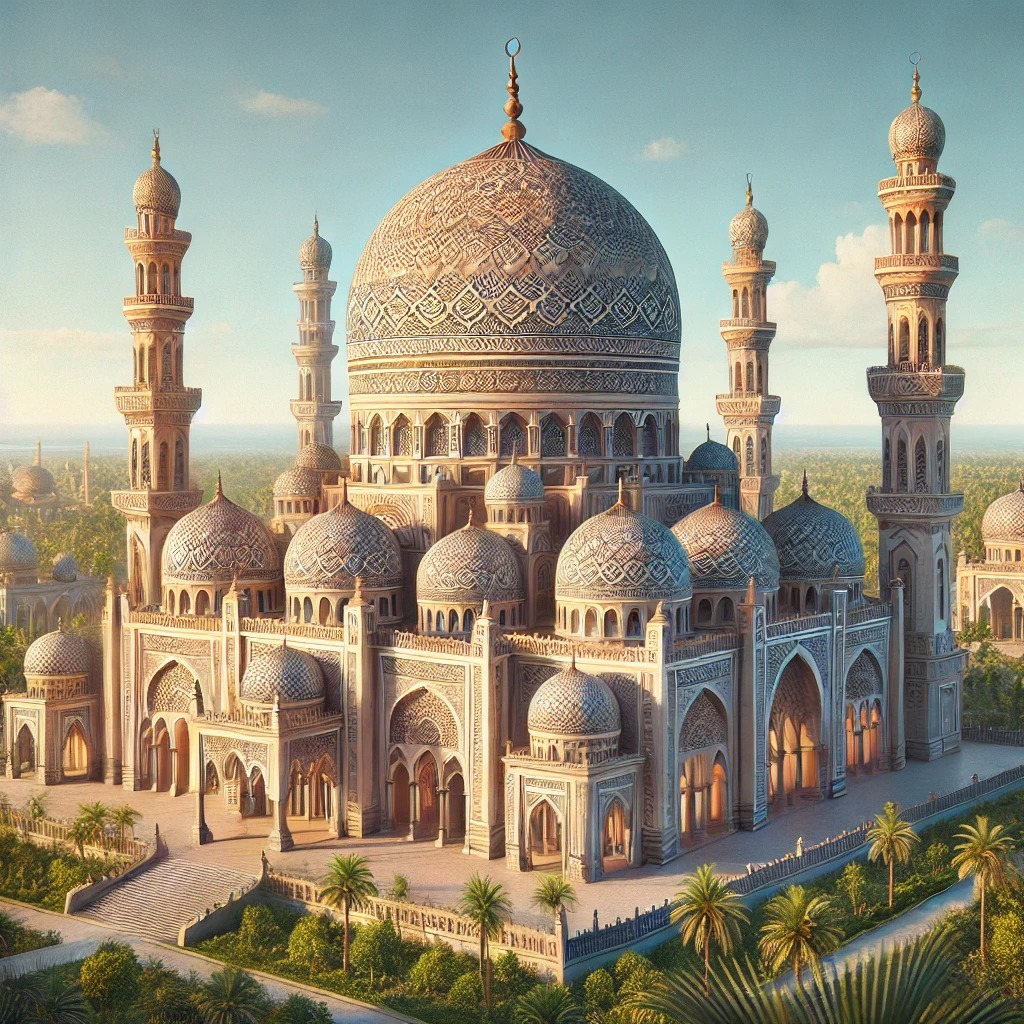
Masjid Jahangeeri stands as a modest yet enduring testament to the Nawabi architectural legacy in the heart of Barabanki's Jahangirabad area. Nestled in the quiet Saravagi Colony, this historic mosque exemplifies the blend of Mughal-inspired design with local Awadhi influences, featuring a simple yet elegant prayer hall, arched mihrab, and minarets that have silently witnessed the socio-cultural evolution of Uttar Pradesh's Muslim heartland for over 170 years.
In the verdant landscape of Barabanki district, where the Ghaghara and Gomti rivers carve gentle boundaries through fertile plains, Masjid Jahangeeri emerges as a serene emblem of Islamic heritage from the twilight of the Awadh Nawabi period. Constructed in the mid-19th century—around the 1850s, amid the reign of Nawab Wajid Ali Shah—this mosque reflects the region's deep-rooted Islamic traditions, drawing from the syncretic architectural ethos that flourished under the taluqdars and nawabs of Oudh. Barabanki, established as a district by the British in 1856 following the annexation of Awadh, was already a mosaic of sacred sites, and Masjid Jahangeeri, located in the taluqa of Jahangirabad, embodies the continuity of Muslim piety in this "entrance to Poorvanchal." The mosque's origins are intertwined with the taluqdar lineage of Jahangirabad, a prominent estate granted in the early 19th century to Raja Farzand Ali Khan, a favored courtier of the Nawabs. Historical accounts suggest the structure was commissioned as a private place of worship for the local Muslim community, possibly under the patronage of the Raja himself, who rose from humble beginnings to manage vast estates with prudence. This era, marked by cultural efflorescence in Lucknow and its environs, saw mosques like Jahangeeri adopting understated grandeur: a rectangular prayer hall oriented toward the qibla, framed by slender minarets that pierce the skyline with subtle grace. The facade, adorned with subtle jaali work and cusped arches reminiscent of Mughal prototypes, speaks to the craftsmanship of local artisans who blended Persianate elements with Awadhi motifs, such as floral motifs echoing the gardens of nearby Nawabganj. At its core, the mosque's mihrab—intricately carved with Quranic verses in elegant thuluth script—serves as the focal point, inviting devotees into a space of quiet reflection. Flanking it are side bays for additional worshippers, while the courtyard, though modest in scale, once hosted communal iftars and Eid prayers, fostering bonds in Saravagi Colony's close-knit neighborhood. Unlike grander imperial mosques, Jahangeeri's scale underscores its role as a community anchor, resilient through the upheavals of 1857's Revolt, when Barabanki's revolutionaries, including figures like Raja Balbhadra Singh Chehlari, clashed with colonial forces nearby. Post-annexation, the mosque endured as a symbol of continuity, its minarets tolling the adhan amid the shifting tides of British rule and India's independence struggle. Today, Masjid Jahangeeri remains a vital spiritual hub for Barabanki's Muslim-majority populace, its walls echoing centuries of sermons on faith, resilience, and harmony. Restored periodically by local waqf boards, it stands as a poignant reminder of Awadh's lost Nawabi splendor—simple in form, profound in legacy—inviting pilgrims and historians alike to trace the threads of India's pluralistic past in its unassuming arches.
Year of Built: Not Available
Address: W5JW+8QW, Saravagi Colony, Barabanki, Uttar Pradesh 225001
Country: India
State: Uttar Pradesh
District: Barabanki
Pincode: 225001
Longitude: 81.3274° E
Latitude: 26.9386° N