
Indo Islamic Heritage


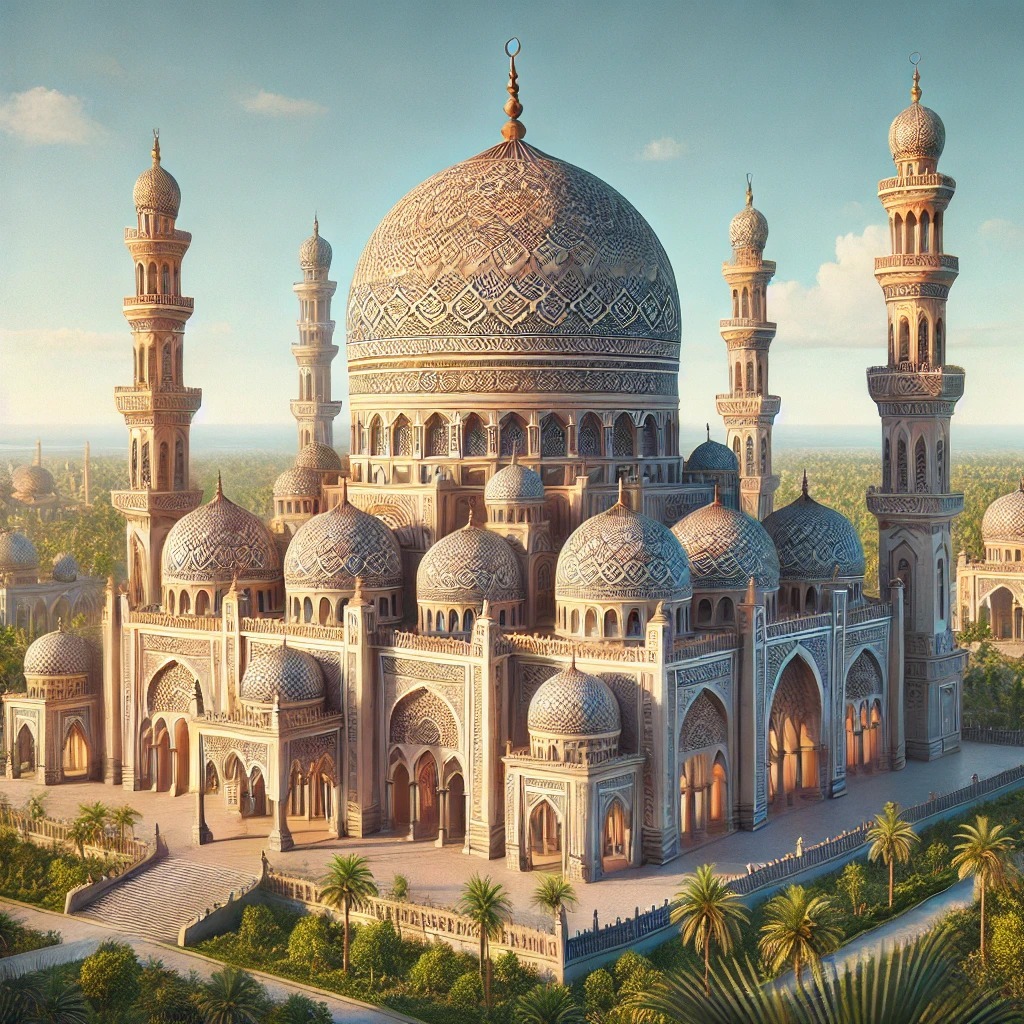
The Eidgah in Banki, a historic open-air prayer ground in Barabanki district, Uttar Pradesh, serves as a central site for Eid celebrations and communal Islamic prayers. Constructed during the Mughal era, it embodies the architectural simplicity and spiritual significance of Islamic open-air structures, offering a serene space for worship amidst the lush Awadh landscape.
Nestled in the heart of the Awadh region, the Eidgah of Banki stands as a testament to the enduring Islamic heritage of Uttar Pradesh, reflecting the region's deep-rooted Mughal influences and its role as a hub of Muslim cultural and religious life. Located in Banki, a tehsil town within Barabanki district, this historic open-air enclosure—known as an Eidgah— was built in the 17th century during the reign of Mughal Emperor Aurangzeb, a period marked by prolific patronage of Islamic architecture across northern India. The structure, though modest in design compared to ornate urban mosques, exemplifies the functional elegance of Eidgahs, which were essential for accommodating large congregations during the two major Eid festivals. Its construction aligns with the broader wave of Mughal-era religious endowments in Awadh, where local talukdars and imperial officials supported such sites to foster community devotion and social cohesion. Architecturally, the Eidgah features a long, rectangular raised platform oriented toward the qibla (direction of Mecca), flanked by simple brick walls and arched gateways that provide shade and enclosure. The platform, elevated slightly above the surrounding terrain to prevent flooding from the nearby Gomti River, allows for orderly rows of worshippers during prayers. Unlike enclosed mosques, its open design promotes accessibility and communal participation, a hallmark of Islamic prayer grounds dating back to the Prophet Muhammad's time in Medina. Over the centuries, the Eidgah has witnessed the ebb and flow of Awadh's history, from the talukdar-dominated landscape of the 19th century—when Barabanki's lands were divided among twelve influential Muslim landowners—to the British colonial period, during which it remained a vital center for local Muslim identity. Post-independence, it continues to host not only Eid prayers but also occasional Friday congregations and community events, preserving its role as a living monument to faith. The site's historical significance is amplified by its location in Banki, a town that traces its etymology to the Awadhi term for "brave" or "bully," evoking the spirited land divisions following the Muslim conquests in the region. While specific records of its exact founding patron are scarce, its alignment with Aurangzeb's era (1658–1707) underscores the emperor's emphasis on religious infrastructure in provincial areas like Awadh. Today, the Eidgah remains a symbol of continuity, drawing devotees from across Barabanki and beyond, and stands as a quiet reminder of India's syncretic Islamic legacy amid the district's fertile plains and ancient riverine heritage.
Year of Built: Not Available
Address: 55, Banki, Barabanki, Mohammadpur, Uttar Pradesh 225001
Country: India
State: Uttar Pradesh
District: Barabanki
Pincode: 225001
Longitude: 81.510°E
Latitude: 26.915°N