
Indo Islamic Heritage


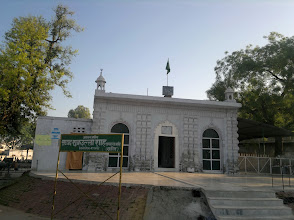
The Shrine of Sayyad Shukarullah Shah stands as a serene Sufi landmark in the historic town of Banki, Barabanki district, Uttar Pradesh, embodying the region's deep-rooted Islamic spiritual heritage. Dedicated to the revered saint Sayyad Shukarullah Shah, it attracts pilgrims seeking solace and divine intercession amid its tranquil environs.
Nestled in the verdant landscapes of Banki, a quaint town in the culturally rich Barabanki district of Uttar Pradesh, the Shrine of Sayyad Shukarullah Shah emerges as a poignant testament to India's syncretic Sufi traditions. Barabanki, long revered as a cradle of Islamic mysticism in the Gangetic plains, has been a beacon for spiritual seekers since the medieval era, when Sufi saints traversed these lands to disseminate messages of love, tolerance, and unity. The shrine, honoring the pious Sayyad Shukarullah Shah—a figure emblematic of the Qadiri-Chishti silsila (spiritual order)—continues this legacy, drawing devotees from across the region to its hallowed grounds. The shrine's architecture, though modest in scale, reflects the understated elegance typical of provincial Sufi mausoleums in Uttar Pradesh. Constructed likely in the early 20th century during a period of renewed devotion to local saints amid colonial transitions, it features a simple yet evocative dome-crowned mazar (tomb) adorned with intricate chikankari-inspired latticework and verses from the Quran etched in subtle calligraphy. Surrounding the central sanctum is a courtyard paved with weathered stones, where qawwalis (devotional songs) echo during annual urs (death anniversary) celebrations, fostering an atmosphere of communal harmony. Unlike grander monuments such as the iconic Dargah of Haji Waris Ali Shah in nearby Dewa Sharif, this shrine maintains an intimate character, emphasizing personal piety over opulent display—a hallmark of grassroots Sufism in rural Awadh. Sayyad Shukarullah Shah, whose life and teachings remain shrouded in oral traditions passed down through generations of local khadims (caretakers), is venerated for his embodiment of tawhid (divine oneness) and service to the marginalized. Legends, preserved in community recitations, portray him as a healer and mediator who bridged communal divides in an era of social flux, aligning with the broader Chishti ethos of inclusivity that permeated Barabanki's spiritual fabric. The shrine thus serves not merely as a burial site but as a living repository of these values, where pilgrims offer chadars (offerings) and perform fatiha (prayers) to invoke the saint's barakah (blessings) for health, prosperity, and reconciliation. Geographically, the shrine occupies a strategic yet serene spot in Banki, approximately 25 kilometers northeast of Lucknow, the erstwhile nawabi capital whose architectural influences subtly echo in the site's mihrab (prayer niche). Accessible via the Lucknow-Faizabad highway, it invites reflection on Uttar Pradesh's layered Islamic history—from the 11th-century incursions of Ghaznavid forces that first sowed seeds of Muslim settlement here, to the 19th-century resurgence of Sufi orders under British rule. Today, amid the district's mosaic of mosques and madrasas, the Shrine of Sayyad Shukarullah Shah endures as a quiet sentinel of faith, underscoring how such sites weave the threads of history, devotion, and cultural resilience into the tapestry of Indian Islam. For those tracing the footsteps of Awadh's saints, a visit here offers a profound encounter with the unadorned soul of Sufi sanctity.
Year of Built: Not Available
Address: W5MH+MVW, Banki, Barabanki, Uttar Pradesh 225001
Country: India
State: Uttar Pradesh
District: Barabanki
Pincode: 225001
Longitude: 81.1761° E
Latitude: 26.9368° N