
Indo Islamic Heritage


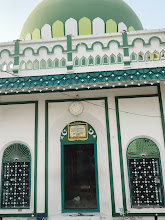
Dargah Hazrat Peerbhatawan Shahid, located in the serene village of Peerbatwan in Barabanki district, Uttar Pradesh, is a modest yet spiritually resonant Sufi shrine dedicated to the martyrdom of Hazrat Peerbhatawan Shahid, a revered saint whose legacy embodies the region's deep-rooted Islamic heritage. Nestled in the fertile plains of Awadh, this dargah serves as a quiet haven for devotees seeking solace and remembrance of the saint's sacrifices.
In the verdant heart of Uttar Pradesh's Barabanki district, where the Ghaghara and Gomti rivers weave their timeless paths through the Awadh plains, lies the understated yet profoundly evocative Dargah Hazrat Peerbhatawan Shahid. This Sufi shrine in the rural village of Peerbatwan stands as a poignant testament to the indomitable spirit of Islamic mysticism and martyrdom that has long permeated the cultural fabric of northern India. Far from the grandeur of urban monuments, the dargah's simple architecture—adorned with intricate chikankari-inspired latticework and whitewashed domes—invites pilgrims into a realm of quiet reflection, where the echoes of qawwali chants and the scent of rose attar linger in the air. The origins of the dargah trace back to the early 19th century, a time when Awadh was a mosaic of Nawabi patronage, Sufi scholarship, and simmering socio-political unrest. Hazrat Peerbhatawan Shahid, a humble Sufi peer of the Chishti lineage, is venerated for his unwavering devotion to spiritual enlightenment and communal harmony. Born in the late 18th century amid the opulent courts of Lucknow, the saint traversed the Awadh countryside, preaching the timeless tenets of love, tolerance, and divine submission that define Sufism. His life, marked by ascetic wanderings and miraculous intercessions—tales of healing the afflicted and reconciling feuding clans—earned him the affectionate title "Peerbhatawan," evoking the image of a wandering mendicant whose very presence illuminated shadowed hamlets like Peerbatwan. Tragedy, however, cemented his eternal legacy. During the chaotic 1820s, as British influence encroached upon Nawabi territories, Hazrat Peerbhatawan Shahid met his martyrdom in a skirmish defending local Muslim communities from marauding forces. Local oral traditions, preserved through generations of villagers, recount how the saint, unarmed and serene, faced his end with invocations of the Prophet's name, his blood staining the earth that now cradles his mazar (tomb). The dargah was erected soon after, around 1825, by devoted murids (disciples) who interred his remains beneath a modest cenotaph. Over time, the structure evolved modestly: a central mihrab etched with Quranic verses in elegant thuluth script, flanked by arched iwans that open to a courtyard shaded by neem trees. Unlike the opulent mausoleums of Delhi or Ajmer, this shrine eschews ostentation, its unadorned brick facade a deliberate echo of the saint's humility. The dargah's spiritual significance endures through its role as a beacon of interfaith amity in Barabanki, a district historically intertwined with both Hindu asceticism and Islamic piety. Pilgrims, predominantly from rural Awadh, flock here during the urs (annual commemoration of the saint's martyrdom) in the month of Rajab, when the courtyard fills with the rhythmic beats of dholak and soul-stirring recitations from the Diwan-e-Hafiz. Devotees offer chadars (embroidered shrouds) draped over the mazar, alongside earthen lamps fueled by ghee—a ritual symbolizing the illumination of the soul. The shrine's well, said to hold water blessed by the saint's touch, draws the ailing in search of barakah (divine favor), underscoring the dargah's reputation as a site of miraculous reprieve. Architecturally, the dargah reflects the understated Indo-Islamic style prevalent in 19th-century Awadh, blending Mughal remnants with local craftsmanship. The tomb chamber, oriented toward the qibla, features a low dome supported by cusped arches, while subtle jaali screens filter sunlight into geometric patterns that dance across the marble floor. Adjoining the main sanctum is a small musalla (prayer hall) for Jumu'ah congregations, its walls inscribed with hadiths on compassion—fitting tributes to the saint's teachings. Though modest in scale, the dargah has withstood the vicissitudes of time, including the 1857 Revolt's upheavals that swept through Barabanki, emerging as a symbol of resilience. Today, the Dargah Hazrat Peerbhatawan Shahid remains a vital thread in India's tapestry of historical Islamic sites, quietly preserving the Sufi ethos that once bridged empires and communities. For those traversing the dusty roads from Lucknow or Faizabad, it offers not just a historical interlude but a living sanctuary where the past whispers promises of peace. In an era of division, this unassuming shrine in Peerbatwan endures as a reminder of the martyrs who sowed seeds of unity in blood-soaked soil.
Year of Built: Not Available
Address: W5PX+7CM, Peerbatawan, Barabanki, Uttar Pradesh 225001
Country: India
State: Uttar Pradesh
District: Barabanki
Pincode: 225001
Longitude: 81.10°E.
Latitude: 26.85°N