
Indo Islamic Heritage


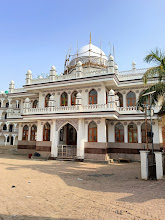
Nestled in the verdant plains of Awadh, Khanqah-E-Ismailya stands as a revered Sufi hospice and spiritual beacon in Masauli Sharif, embodying the Qadri Sufi tradition's emphasis on devotion, knowledge, and communal harmony. Founded under the patronage of the Nawabs of Awadh, it serves as a center for Islamic learning, prayer, and the remembrance of Allah, drawing pilgrims to its serene courtyards and hallowed shrines.
In the heart of Barabanki district, where the Ghaghara and Gomti rivers cradle the fertile landscapes of Uttar Pradesh, lies Khanqah-E-Ismailya, also known as Astana Aaliya Ismailiya Masauli Sharif—a luminous testament to India's rich tapestry of Sufi heritage. This khanqah, or spiritual lodge, represents the pinnacle of Qadriyat (the Qadiri Sufi order) in the historic region of Oudh, a land steeped in the syncretic traditions of Mughal and Nawabi patronage that fostered Islam's gentle integration into the subcontinent's cultural mosaic. The khanqah's origins are intertwined with the legacy of its patron saint, Sayyed Mir Muhammad Ismail Wasti Qadri, a Zaidi Syed descendant of Imam Zayd Shahid (d. 740 CE), the revered martyr-grandson of Imam Husayn. Arriving in Awadh during the 18th century amid the flux of Sufi migrations from Central Asia and Persia, Mir Muhammad Ismail settled in Masauli, a village then emerging as a nexus of scholarly and mystical pursuits under the benevolent gaze of the Nawabs of Awadh. It was during this era of cultural efflorescence—marked by the Nawabs' encouragement of Sufi orders to promote social cohesion—that the khanqah was formally established, likely in the early 19th century. Historical accounts from the khanqah's own chronicles describe it as a "sarkar-e-masauli" (spiritual seat of Masauli), envisioned as a sanctuary for dervishes, scholars, and seekers, where the rigors of ascetic discipline met the warmth of communal iftar and dhikr (remembrance of God). Architecturally, Khanqah-E-Ismailya reflects the understated elegance of Awadh's Indo-Islamic style, with its whitewashed courtyards, arched iwans (vaulted halls), and domed mausoleum housing the saint's tomb. The complex centers around a spacious sahn (open quadrangle), flanked by cells for resident murids (disciples) and a modest masjid for the five daily salah. Adjoining the prayer hall is the dargah of Mir Muhammad Ismail, its mihrab adorned with intricate stucco work invoking Quranic verses on divine unity (tawhid). Unlike the grand minarets of Lucknow's imambaras, the khanqah's design prioritizes introspection, with latticed jali screens filtering light into patterns that evoke the Sufi metaphor of divine illumination piercing the soul's veil. Expansions in the 20th century, including the Al Jamiatul Ismailiya madrasa, have added libraries and classrooms, preserving the order's commitment to ilm (knowledge) alongside irfan (gnosis). At its core, the khanqah upholds the Qadiri silsila (chain of transmission), tracing unbroken lineage from Abdul Qadir Jilani (d. 1166 CE), the Baghdad-born reviver of Sunni mysticism whose teachings emphasized ethical living, charity, and love for the Prophet Muhammad. Successive sajjada nashins (spiritual successors), including the venerated Sarkar-E-Masauli, have perpetuated this through annual urs (death anniversary commemorations) on the 13th of Dhu al-Hijjah, where qawwali recitations and sama (spiritual music) gatherings draw thousands, fostering an atmosphere of ecstatic union with the divine. Miracles (karamat) attributed to the saint—such as healings and visions—underscore its role as a site of barakah (blessing), drawing devotees from across the Indo-Gangetic plain. In an India where Sufi shrines have long bridged communal divides, Khanqah-E-Ismailya endures as a quiet guardian of this legacy. Amid the Nawabi-era decline and colonial upheavals of the 1857 revolt, it remained a haven for the displaced, its gates open to all irrespective of caste or creed. Today, under the stewardship of Syed Shah Gulzar Ismail Wasti Qadri, it continues to blend classical fiqh (jurisprudence) with modern education, offering courses in Arabic, Hadith, and tasawwuf (Sufism). As pilgrims circumambulate the saint's tomb, whispering supplications beneath the neem-shaded arches, the khanqah whispers back the timeless Qadiri invocation: "Ya Qadiru, Ya Ghaffaru"—O All-Powerful, O All-Forgiving—echoing the eternal rhythm of India's pluralistic soul. For those tracing the footsteps of Sufi saints, this unassuming edifice in Masauli is not merely a historical site, but a living portal to the divine mercy that has shaped the subcontinent's spiritual contours for centuries.
Year of Built: Not Available
Address: Masauli, Uttar Pradesh 225412
Country: India
State: Uttar Pradesh
District: Barabanki
Pincode: 225412
Longitude: 81.2022° E
Latitude: 26.9316° N