
Indo Islamic Heritage


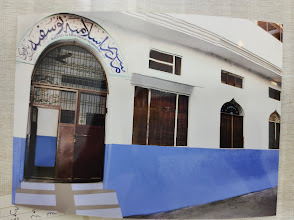
Madrasa Islamia Yusufiya, nestled in the serene village of Peer Battawan in Barabanki district, Uttar Pradesh, stands as a venerable center of Islamic learning and spirituality. Established in the early 20th century, this historic madrasa embodies the enduring tradition of Deobandi scholarship, fostering the study of Quranic sciences, Hadith, and Islamic jurisprudence amid the lush landscapes of Awadh.
In the heart of Uttar Pradesh's Barabanki district, where the Ghaghara and Gomti rivers have long cradled the fertile plains of Awadh, lies the unassuming village of Peer Battawan—a place whispered about in scholarly circles for its quiet dedication to Islamic education. Here, Madrasa Islamia Yusufiya emerges not merely as an institution but as a living testament to the resilient spirit of Muslim intellectual pursuit in India. Founded in 1920 by the visionary scholar Maulana Yusuf Ali, the madrasa was conceived as a beacon for religious and moral instruction, drawing inspiration from the reformist ideals of the Deoband movement that swept across northern India in the late 19th and early 20th centuries. Named in honor of its founder, who envisioned it as a "Yusufiya" (pertaining to Yusuf) haven for knowledge, the madrasa quickly became a hub for students seeking rigorous training in the classical Islamic sciences. The architecture of Madrasa Islamia Yusufiya reflects the understated elegance typical of early 20th-century Indo-Islamic educational complexes. Its central mosque, with its whitewashed minarets and arched prayer halls adorned with intricate geometric jaali work, serves as the madrasa's spiritual core. Built with local bricks and lime mortar, the structure harmonizes with the surrounding agrarian landscape, its courtyards echoing with the rhythmic recitation of the Quran during dawn and dusk. The madrasa's curriculum, rooted in the Dars-e-Nizami syllabus, emphasizes Tafsir (Quranic exegesis), Fiqh (Islamic law), and Arabic grammar, attracting pupils from across Uttar Pradesh and neighboring states. Over the decades, it has produced generations of ulema (scholars) who have contributed to community leadership, interfaith dialogue, and the preservation of Urdu and Persian manuscripts in regional libraries. Historically, the madrasa's establishment coincided with a pivotal era in India's Muslim renaissance, following the decline of Mughal patronage and amid the rising tide of colonial reforms. Maulana Yusuf Ali, a graduate of the famed Darul Uloom Deoband, selected Peer Battawan for its strategic location—proximate to the spiritual centers of Lucknow and Faizabad—yet insulated from urban distractions. Under his stewardship, the institution weathered the challenges of partition and post-independence secularization, expanding its library to house over 5,000 rare texts on Islamic theology and philosophy. Today, it continues to thrive as a nonprofit entity, supported by waqf endowments and community donations, underscoring the madrasa's role in sustaining cultural continuity in a rapidly modernizing India.
Year of Built: 1920
Address: W5PX+Q77, Peerbatawan, Barabanki, Uttar Pradesh 225001
Country: India
State: Uttar Pradesh
District: Barabanki
Pincode: 225001
Longitude: 81.25°E
Latitude: 26.65°N