
Indo Islamic Heritage


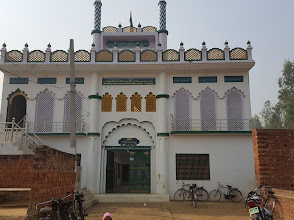
Madarsa Razzakiya Akhtarul Uloom stands as a revered center of Islamic learning in the quiet village of Bansa Sharif, Barabanki district, Uttar Pradesh. This traditional madrasa embodies the enduring spirit of Islamic scholarship in the Awadh region, offering education in Qur'anic studies, Hadith, Fiqh, and Arabic sciences to generations of students. Nestled in a historic Sufi-influenced locale, it serves as a beacon for spiritual and intellectual growth, fostering a community dedicated to the preservation of Sunni Islamic traditions.
In the verdant heart of Uttar Pradesh's Awadh region, where the Ghaghara River's gentle flow has long nourished both land and legacy, lies the unassuming yet profound Madarsa Razzakiya Akhtarul Uloom in Bansa Sharif. This madrasa, a cornerstone of Islamic pedagogy in Barabanki district, emerges not merely as an educational outpost but as a living testament to India's rich tapestry of Muslim intellectual and spiritual heritage. Established amid the socio-religious ferment following the 1857 uprising—when reformist movements like Deoband sought to fortify Islamic learning against colonial erosion—the madrasa draws its name from the divine attributes of sustenance (Razzak) and stellar enlightenment (Akhtarul Uloom), evoking the Qur'anic call to seek knowledge as a path to divine proximity. Bansa Sharif itself whispers of antiquity, its name evoking the "sharif" or noble lineages of Sufi saints who once traversed these plains. The madrasa occupies a modest yet sanctified space in Mohalla Katra Nayi Basti, along the Saidanpur Road, where the air carries echoes of recitations from dawn prayers to evening discourses. Here, under the shade of neem trees that have witnessed decades of scholarly gatherings, students—drawn from nearby villages and beyond—immerse themselves in the classical Dars-e-Nizami curriculum. This time-honored syllabus, inherited from the great madrasas of Lucknow and Firangi Mahal, encompasses Tafsir (exegesis of the Qur'an), intricate explorations of Sahih al-Bukhari and Sahih Muslim, principles of Usul al-Fiqh, and the eloquence of Arabic rhetoric. Teachers, often alumni who embody the madrasa's ethos of humility and rigor, guide pupils through memorization of the Qur'an and dialectical debates, ensuring that the flame of ilm (knowledge) burns undimmed. The architectural simplicity of the madrasa belies its cultural depth: whitewashed walls enclose courtyards where young voices blend in harmonious tilawat, and arched doorways frame views of the surrounding fields that recall Awadh's agrarian piety. Though precise records of its inception remain elusive—mirroring the oral traditions of many regional madrasas—it aligns with the late 19th-century surge in Uttar Pradesh's Islamic institutions, a period when luminaries like Muhammad Qasim Nanautawi inspired grassroots centers of learning to counter Western influences while reviving Hanafi jurisprudence. Local lore ties it to the Barelvi school's emphasis on devotional practices, evident in the madrasa's observance of milads and urs celebrations, which draw devotees to honor the Prophet Muhammad (PBUH) and foster communal bonds.
Year of Built: Not Available
Address: Mohalla katra nayi basti, saidanpur road, Bansa, Uttar Pradesh 225412
Country: India
State: Uttar Pradesh
District: Barabanki
Pincode: 225412
Longitude: 81.33°E
Latitude: 26.85°N