
Indo Islamic Heritage


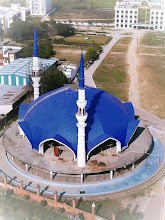
Hamidi Masjid stands as a serene architectural gem in the heart of Bareilly Cantt, embodying the rich Islamic heritage of Rohilkhand. Constructed in the early 20th century, this elegant mosque features classic Indo-Islamic design elements, including arched facades and a spacious prayer hall, serving as a vital spiritual hub for the local Muslim community in Uttar Pradesh's historic landscape.
Nestled within the bustling cantonment area of Bareilly, a city steeped in the annals of Mughal and Rohilla history, Hamidi Masjid emerges as a poignant testament to the enduring legacy of Islamic architecture and devotion in northern India. Established in 1927 during the British colonial era, the mosque was meticulously crafted to meet the religious needs of the burgeoning Muslim population in this strategic military outpost, reflecting the fusion of traditional Persian influences with pragmatic colonial adaptations. Its name, "Hamidi," evokes reverence for divine praise, aligning with the mosque's role as a sanctuary for reflection and communal worship. The structure exemplifies understated elegance in Indo-Islamic style, characterized by a prominent central dome crowned with a finial, flanked by minarets that pierce the skyline with graceful symmetry. The facade boasts intricate jaali work—perforated stone screens that filter light into ethereal patterns across the courtyard—and cusped arches that frame the mihrab, the niche indicating the direction of Mecca. Built primarily from locally sourced brick and lime mortar, the mosque's robust yet refined construction has withstood the test of time, its walls adorned with subtle geometric motifs that echo the opulence of earlier Mughal edifices like those in nearby Agra or Delhi, albeit on a more modest scale suited to its cantonment setting. Historically, Hamidi Masjid's inception coincides with a period of relative stability in Rohilkhand following the turbulent Rohilla Wars of the late 18th century, when Afghan-descended Rohilla chieftains shaped the region's cultural fabric before British consolidation. By the 1920s, Bareilly had evolved into a key administrative and military center under the Raj, and the mosque served not only as a place of daily salah (prayers) but also as a focal point for community gatherings, including Eid celebrations and scholarly discourses on Islamic jurisprudence. Though not as grand as the era's imperial monuments, its strategic location near military barracks underscores its significance in fostering spiritual resilience amid colonial governance, where it provided solace to soldiers and civilians alike from the Pashtun and local Muslim diaspora. Today, Hamidi Masjid remains an active place of worship, accommodating a diverse congregation that upholds traditions passed down through generations. Its well-maintained ablution areas and expansive ablution pools facilitate ritual purity, while the adjacent madrasa space—though modest—continues to impart Quranic education to the youth. As a preserved relic of early 20th-century Islamic architecture in Uttar Pradesh, the mosque invites visitors to appreciate its quiet dignity, a microcosm of India's syncretic heritage where faith and history intertwine seamlessly against the backdrop of Bareilly's verdant plains. For those tracing the threads of Islamic sites across the subcontinent, Hamidi Masjid offers a humble yet profound chapter in the narrative of devotion amid change.
Year of Built: 1927
Address: C967+99M, Bareilly, Uttar Pradesh 243502
Country: India
State: Uttar Pradesh
District: Bareilly
Pincode: 243502
Longitude: 79.4633° E
Latitude: 28.3158° N