
Indo Islamic Heritage


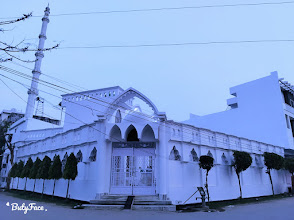
Masjid Asif Jamal is a modest yet cherished mosque in Bareilly, Uttar Pradesh, serving as a serene place of worship for the local Muslim community. Named after a historical benefactor, it embodies the simple elegance of regional Islamic architecture, reflecting Bareilly's rich Rohilkhand heritage. Built in the 18th century, it stands as a quiet testament to the city's Mughal-influenced past amid the bustling urban landscape.
Nestled in the heart of Bareilly, a city renowned for its blend of spiritual fervor and historical depth in the Rohilkhand region of Uttar Pradesh, Masjid Asif Jamal emerges as a poignant symbol of enduring Islamic devotion. Constructed in the mid-18th century during the height of Rohilla influence under Afghan rulers who shaped the area's cultural and architectural identity, the mosque was commissioned by Asif Jamal, a prominent local figure whose philanthropy extended to community welfare and religious endowments. This period marked a time of relative prosperity in Bareilly, following the city's founding in 1657 by Mughal governor Makrand Rai, when mosques like this one became focal points for communal prayers and social cohesion in the face of shifting political tides, including the Rohilla-Afghan migrations and later British incursions. The architecture of Masjid Asif Jamal adheres to the understated Indo-Islamic style prevalent in 18th-century Rohilkhand, characterized by clean lines, arched doorways, and a central dome that evokes the simplicity of provincial Mughal designs rather than the grandeur of imperial structures like Delhi's Jama Masjid. Crafted primarily from local brick and lime plaster, with subtle jaali (lattice) work on the windows to allow filtered light and ventilation, the mosque features a rectangular prayer hall oriented toward Mecca, flanked by modest minarets that rise just enough to call the faithful to prayer without dominating the skyline. Its courtyard, though compact, invites quiet reflection, lined with verandas that once sheltered devotees during Bareilly's sweltering summers. Unlike the ornate minbar and mihrab of larger shrines, Masjid Asif Jamal's interior maintains a humble aesthetic, with geometric tile patterns in muted earth tones adorning the qibla wall—a nod to the practical adaptations of regional builders who prioritized functionality over opulence. Historically, the mosque has witnessed the ebb and flow of Bareilly's fortunes, from the 1857 Revolt—when nearby sites like Noumahla Masjid served as revolutionary hubs—to the 20th-century communal harmonies that defined the city's multicultural fabric. Asif Jamal's legacy, tied to the mosque's founding, underscores the era's emphasis on waqf (endowment) traditions, ensuring the structure's maintenance as a public good. Today, it remains a vital congregational space, hosting Friday prayers and Ramadan observances, while its preserved form offers visitors a glimpse into the lived Islam of Rohilkhand's past. In an age of rapid urbanization, Masjid Asif Jamal endures as a sanctuary of tranquility, reminding all who enter of the timeless principles of faith, community, and architectural restraint that have defined India's Islamic heritage for centuries.
Year of Built: Not Available
Address: 9F35+9QG, Faiq Enclave Phase-II, Khushboo Enclave, Bareilly, Uttar Pradesh 243006
Country: India
State: Uttar Pradesh
District: Bareilly
Pincode: 243006
Longitude: 79.4200° E
Latitude: 28.3622° N