
Indo Islamic Heritage


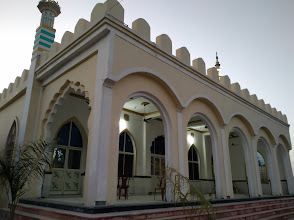
Aala Hazrat Masjid, integral to the Bareilly Sharif Dargah complex, stands as a revered Sufi shrine and place of worship honoring Ahmed Raza Khan Barelvi (1856–1921), the founder of the Barelvi movement. Constructed in 1921 in Bareilly, Uttar Pradesh, it exemplifies modern Indo-Islamic architecture with intricate Arabic calligraphy, a distinctive matchstick-designed dome, and four minarets, drawing pilgrims for its spiritual legacy in Sunni scholarship and opposition to reformist ideologies.
Nestled in the historic city of Bareilly, Uttar Pradesh—a region steeped in Mughal-era Islamic heritage—Aala Hazrat Masjid forms the spiritual heart of the Bareilly Sharif Dargah, a monumental shrine dedicated to one of India's most influential 19th-century Islamic scholars, Ahmed Raza Khan Barelvi, reverently known as A'la Hazrat. Born in 1856 in Bareilly itself, Khan emerged as a prolific jurist, theologian, poet, and Sufi mystic, authoring over 1,000 works on Islamic law, philosophy, and spirituality. His unyielding defense of traditional Sunni practices, particularly against the rising tide of Wahhabism and Deobandi reformism during British colonial rule, solidified his role as the architect of the Barelvi movement, which emphasizes devotion to the Prophet Muhammad and veneration of saints. Following his passing in 1921, the masjid-shrine was swiftly erected that same year as a mausoleum to enshrine his tomb, transforming a modest neighborhood into a global pilgrimage beacon for millions of adherents. Architecturally, Aala Hazrat Masjid blends contemporary innovation with timeless Indo-Islamic motifs, reflecting the adaptive spirit of early 20th-century Muslim sacred spaces in northern India. The complex features a prominent central dome, ingeniously conceptualized and crafted by the visionary artisan Shah Mahmood Jaan Qadri using thousands of matchsticks as a structural model—a testament to resourcefulness amid post-World War I material constraints. This dome crowns the mausoleum, crowned by the saint's marble cenotaph adorned with intricate geometric tilework and Quranic verses in elegant Arabic calligraphy. Flanking it are four slender minarets that pierce the skyline, evoking the grandeur of Mughal-era mosques like those in nearby Agra or Delhi, while the facade orients westward toward Mecca, in line with Islamic liturgical tradition. The prayer hall within the masjid accommodates large congregations, its floors laid with Persian carpets and walls etched with floral arabesques that whisper of the Chishti and Qadiri Sufi orders Khan championed. Encompassing 13 subsidiary shrines for his descendants and disciples, the site functions not merely as a place of ritual prayer but as a living repository of Barelvi jurisprudence, housing rare manuscripts and fatwas issued by Khan that continue to guide contemporary Islamic thought. Historically, Aala Hazrat Masjid has transcended its role as a local mosque to become a bastion of cultural and religious resilience. During the British Raj, Bareilly served as a hotbed of Muslim intellectual ferment, and Khan's teachings from this very locale—delivered through madrasas and public discourses—fostered a devotional Islam that countered colonial disruptions to indigenous traditions. The annual Urs-e-Razvi, commemorating Khan's death anniversary, draws scholars and devotees from across India and abroad, evolving into a week-long festival of qawwali music, scholarly debates, and communal feasts that echo the syncretic ethos of Sufism in the subcontinent. In 2014, the gathering at the masjid made headlines when assembled clerics issued a resounding fatwa denouncing Taliban extremism and Wahhabi puritanism, reaffirming the site's commitment to tolerant, love-centered piety amid global sectarian tensions. Today, as a protected heritage ensemble, Aala Hazrat Masjid endures as a serene oasis in urban Bareilly, its minarets calling the faithful to prayer five times daily and inviting reflection on the enduring interplay of faith, scholarship, and artistry in India's Islamic tapestry. For pilgrims and historians alike, it remains an indelible emblem of spiritual fortitude, where the echoes of A'la Hazrat's verses still resonate through the corridors of time.
Year of Built: Not Available
Address: 9C57+824, NH-24, Bhoor, Bareilly, Uttar Pradesh 243003
Country: India
State: Uttar Pradesh
District: Bareilly
Pincode: 243003
Longitude: 79°24′31″E
Latitude: 28°21′43″N